
 English
 Français
 Español

How to Loosen Ratchet Straps: Release Stuck Ratchets Fast
2026-08-21
You have just finished a long haul, and the load is still tight. You pull the release lever, but the ratchet strap will not budge. If you searched "how to loose ratchet straps," you are not alone. The correct action is to loosen or release the ratchet mechanism: pull the release lever away from the strap, open the handle fully, feed slack out of the spool, and pull the webbing free. This guide walks through that process, plus how to release a stuck ratchet, why straps sometimes come loose on the road, and how to choose gear that is easier to use.
Whether you are securing a trailer, a flatbed, an ATV, or a household load, understanding the ratchet's release path is more important than brute force. The mechanism is simple, but it can be confusing when the handle is loaded, the webbing is over-wound, or the hook has no room to rotate. The first principle is to protect the ratchet's pawl system. Once you understand how the pawls engage, every release method feels intuitive.
Why a Ratchet Strap Locks In the First Place
A ratchet strap uses a small set of metal teeth, springs, and a spool to hold tension. The handle drives a pawl that advances the spool when you open and close the handle. A second locking pawl prevents the spool from turning backward. When you pull the release lever, you lift that locking pawl and allow the spool to rotate in the loosening direction.
If the handle is not opened far enough, the pawl can catch again and the strap stays tight. That is why most release problems are not broken straps; they are incomplete movements. People often open the handle slightly, feel resistance, and assume the ratchet is jammed. In reality, the release lever may need to travel one more centimeter, or the handle may need to be folded all the way back until it lies flat against the webbing.
Release lever
The release lever or release tab lifts the locking pawl. Pull it away from the strap side until it stops.
Handle
The handle drives the tightening pawl. Opening it fully frees the spool for releasing or adjusting slack.
Spool / mandrel
The spool holds the webbing. Tightening wraps webbing around it; releasing allows the spool to turn backward.
Locking pawl
The locking pawl is the safety that stops backward rotation. It must be disengaged before you can loosen the strap.
Drive pawl
The drive pawl pushes the spool forward while you ratchet the handle. It also resets when you return the handle to its starting position.
Hooks and fittings
Hooks connect the strap to anchor points. Hook shape affects how easy it is to remove after tension is released.
Why Do Some Ratchet Straps Feel Impossible to Loosen?
The most common reason is that the release lever was not pulled far enough. The second most common reason is that the handle was not opened to the end of its travel. The third reason is that the webbing is wrapped over itself on the spool, pinning the lower layers and preventing free rotation. Less common causes include rust, dirt, weak springs, or a bent handle pivot.
Another factor is the direction the strap faces. If the ratchet housing is upside down or reversed, the release lever can be harder to reach. Some users try to pull the lever upward when the mechanism is designed to be pulled away from the webbing. The safest way to understand your specific strap is to watch the movement of the pawls as you open and close the handle before the strap is loaded.
How to Loosen a Ratchet Strap Safely: Step-by-Step
Before you do anything, position yourself beside the load rather than directly in front of it. If a heavy load shifts while you release tension, you do not want to be in line with the hooks, the strap, or the gap between anchor points. Wear gloves, keep your fingers clear of the spool, and never put your hand between the ratchet and the cargo.
- Reduce pressure on the tiedown point if possible. If the cargo is a vehicle, ensure the parking brake is on. If the load has settled, remove some of the weight from the strap or reposition the anchor so the ratchet is not under maximum tension.
- Pull the release lever fully open. On most Xstrap ratchet straps, the release lever is located near the handle pivot. Pull it away from the strap and hold it until the handle is open. Do not let go too early.
- Open the handle all the way. Pull the handle back until it is fully open and flat against the free end of the webbing. This separates the drive pawl from the spool and lets the locking pawl release.
- Pull the webbing to remove slack. Grasp the free end of the strap and pull it away from the ratchet. If the webbing is trapped under another layer, pull from the free end while guiding it off the spool with your other hand.
- Close the handle gently. Once the strap is loose, let the handle return to the closed position. This resets the pawls and prevents the spool from spinning freely when you unhook the strap.
- Remove the hooks. Unhook the end fittings from the anchor points. Never yank the hook by the webbing if it is still under tension. If a hook is stuck, release a bit more slack and try again.
Partial loosening: If you only need to adjust the load by a few centimeters, you do not need to open the handle all the way every time. Pull the release lever, open the handle enough to free the pawl, pull the webbing to the desired tension, then close the handle and test the lock. This keeps the strap under control and reduces the chance of a sudden slack release.
What Should You Do if the Ratchet Is Under Heavy Load?
A ratchet strap under heavy load stores energy in the webbing. Releasing that energy in a controlled way is normal, but the release must be steady. Do not slam the handle open. Do not hit the ratchet with a hammer while it is under load. Do not try to loosen a strap by cutting the webbing unless it is the last safe option and you have controlled the load first.
If the strap is so tight that the release lever will not move, your first action should be to reduce the load on the anchor. Move the vehicle slightly, remove cargo that is pressing on the strap, or create a small amount of slack by raising the cargo with a jack. Once the strap is lightly tensioned, the release lever usually works normally.
How to Unlock a Stuck or Jammed Ratchet Strap
A stuck ratchet strap is different from a strap that is simply hard to release. A jam occurs when the webbing is pinched, the pawl spring is weak, the pivot is rusted, or the spool is overloaded with webbing. In many cases, you can free the strap without cutting it by working slowly and using the ratchet's own design.
| Symptom | Likely cause | Safe fix |
|---|---|---|
| Release lever moves, but the handle will not open | Dirt, debris, or a folded edge of webbing is blocking the pivot | Close the handle slightly, slide a thin plastic tool between the webbing and the housing, then open the handle again |
| Handle opens, but the webbing will not pull out | The webbing is wrapped over itself and pinning the lower layers | Pull the free end firmly while rotating the spool backward by hand if there is enough access |
| Release lever is stiff and will not return to its normal position | Rust or corrosion on the pawl spring or pivot | Apply a small amount of penetrating oil, let it soak for several minutes, then work the lever back and forth |
| Ratchet releases but immediately catches again | The locking pawl is not fully lifted, or the spring is weak | Pull the release lever farther, or replace the ratchet if the spring is worn |
| The strap is still tight even after the release lever is opened | Cargo weight is still pushing on the strap, or the spool teeth are worn | Reduce the load on the strap first, then release; do not force the handle |
How to Unjam a Strap With the Spool Overloaded
An overloaded spool happens when the webbing is too long for the ratchet housing and is wound in thick, uneven layers. The lower layers become compressed, and even after the locking pawl releases, the spool cannot rotate freely. To free it, pull any loose webbing out of the ratchet by hand. If no loose webbing is available, hook the free end to a fixed point and pull the ratchet away from the anchor. That motion opens a small gap in the webbing layers and often releases the pinch.
Using Penetrating Oil on a Rusted Ratchet
Do not use heavy grease on the inside of a ratchet because grease collects dust and can stop the pawls from seating correctly. A light penetrating oil works better because it flows into the spring and pivot area without leaving a thick residue. Spray the oil onto the pawl openings and the release lever pivot. Wait a few minutes, then open and close the handle several times. Wipe away excess oil with a clean cloth.
When Cutting the Strap Is the Last Option
Cutting a ratchet strap destroys the product and can be dangerous if the webbing is under tension. Only cut after you have removed as much load as possible and after you have confirmed that no person or cargo is in the line of the recoil. Cut the webbing slowly with sharp scissors or a knife, and stand to the side. After cutting, remove the strap and replace it before the next load.
How to Stop Ratchet Straps From Coming Loose on the Road
There is a second meaning behind the phrase "how to loose ratchet straps." Some users want to know why their straps loosen themselves during transport. A strap that releases accidentally is more dangerous than one that is hard to unlock. The locking pawl is supposed to hold, but several field conditions can defeat it.
Hook seating
If the hook is not fully seated on the anchor point, vibration can bounce it off. The strap then loses tension even though the ratchet is still locked.
Webbing threading
If the webbing is not threaded through the slot correctly, it can slip inside the spool and slowly unwind.
Load settlement
Cargo settles, compresses, or shifts during the first miles. A strap that was tight in the driveway can become loose at highway speed.
Overload
When a strap is overloaded beyond its working load limit, the webbing stretches and the ratchet body can deform. A deformed ratchet cannot hold the pawl in its proper position.
Worn pawl spring
A weak spring allows the locking pawl to bounce out of position when the ratchet hits a bump. The spool then rotates backward a tooth at a time.
Incorrect angle
If the strap pulls at an extreme angle, the hook can bend or twist, and the ratchet can rotate around the anchor instead of holding the load.
Field inspection priority for loose ratchet straps
Hook seating
High
Load settlement
High
Threading error
Medium
Worn pawl
Medium
Overload
Lower
Check the Locking Pawl Before Every Trip
After you tension a ratchet strap, close the handle and push against it with your palm. The handle should not move backward. Then pull the release lever and open the handle slightly. You should feel the locking pawl release with a clear click. If there is no click, or if the handle moves freely without resistance, the pawl system needs inspection.
Re-Tension After the First Few Miles
Load settlement is the biggest reason for loose straps on a short trip. Even if the strap is locked correctly, a pallet can compress, a vehicle can settle on its suspension, or lumber can shift. Plan to stop after 10 to 20 miles, check the tension, and re-tension if the strap feels loose. This is not a sign of a bad strap; it is normal cargo movement.
Secure the Excess Tail Webbing
A long tail of loose webbing flapping in the wind can rub against the ratchet release lever and, in rare cases, partially open it. It can also cause the strap to fray. Fold the excess webbing over the handle and secure it with a rubber band or hook it back through the tensioning slot. Some retractable ratchet straps store the excess webbing inside the housing, which is a cleaner solution for frequent users.
Working Load Limits and Choosing a Ratchet Strap That Releases Easily
The easiest ratchet strap to loosen is one that matches the load. A strap that is too strong may have a stiff mechanism and bulky webbing that is hard to pull. A strap that is too light may deform under load and make the release lever impossible to move. The label on every strap shows the working load limit, the break strength, and the strap width. Use that information, not the color or the size of the handle, to choose the right product.
Working load limit is not the same as break strength. Break strength is the point at which the strap fails. Working load limit is the maximum force you should apply during normal use. A typical polyester tie-down strap has a safety factor that may be three times or more between working load and breaking strength. Exceeding the working load limit puts unnecessary strain on the handle, the hooks, and the stitching.
| Strap width | Typical working load range | Common uses |
|---|---|---|
| 1 inch | 300 to 500 lb | Light household items, luggage, small tarps, motorcycles with lighter loads |
| 1.5 inch | 500 to 750 lb | ATVs, small trailers, furniture, camping equipment |
| 2 inch | 1,000 to 2,000 lb | Vehicles, flatbed cargo, industrial equipment, heavier trailer loads |
| 3 inch | 2,500 to 3,500 lb | Heavy equipment, steel, lumber, larger flatbed loads |
| 4 inch | 3,300 lb and above | Heavy machinery, coils, construction materials, towed equipment |
Heavy-Duty Options for High-Tension Loads
For loads that need extra grip and a release mechanism that can tolerate thick webbing, a heavy-duty ratchet strap is the better choice. The wider webbing spreads pressure over the cargo surface, while the larger handle gives you more surface area to operate. If you regularly secure loads that require the upper range of a 2-inch or 3-inch strap, the Xstrap 61400 4-piece heavy-duty ratchet tie-down set is designed for that kind of work.
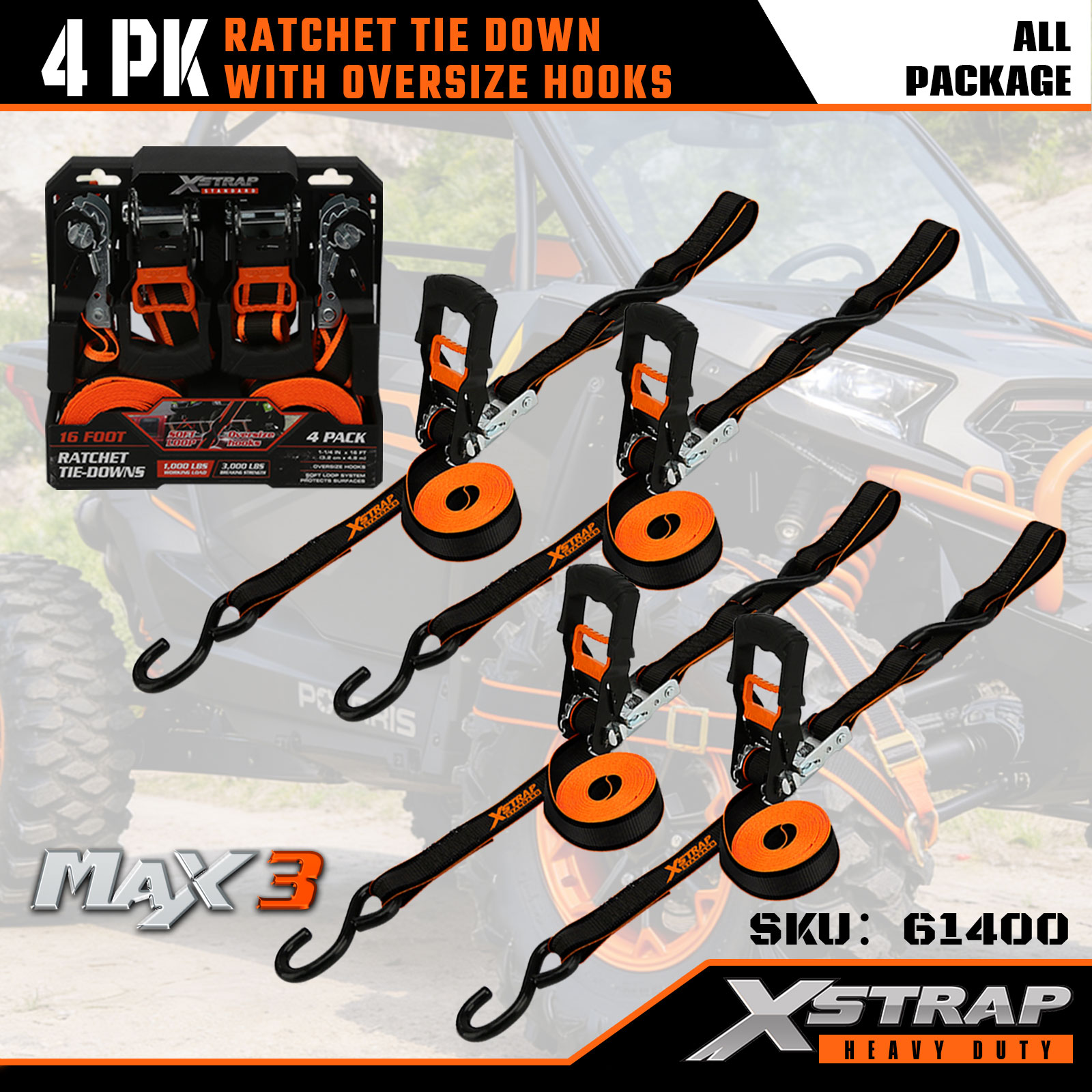 Custom Xstrap 61400 1-1/4” x 16’ 4PK Ratchet Tie Down with Oversize Hooks 1000lbZhangjiagang SMK MFG. Co., Ltd is top China Xstrap 61400 1-1/4” x 16’ 4PK Ratchet Tie Down with Oversize Hooks 1000lb SWL Suppliers and O...View Product →
Retractable Ratchet Straps Reduce Loose Tail Problems
Retractable ratchet straps use an internal reel to store extra webbing. The release process is the same: pull the release lever, open the handle, and pull the strap. The difference is that you do not have to manage a long flapping tail. After loosening, the slack webbing retracts automatically into the housing. That keeps the floor cleaner and makes the strap ready for the next load. The Xstrap retractable ratchet strap set is a practical choice for users who strap and unstrap several times a day.
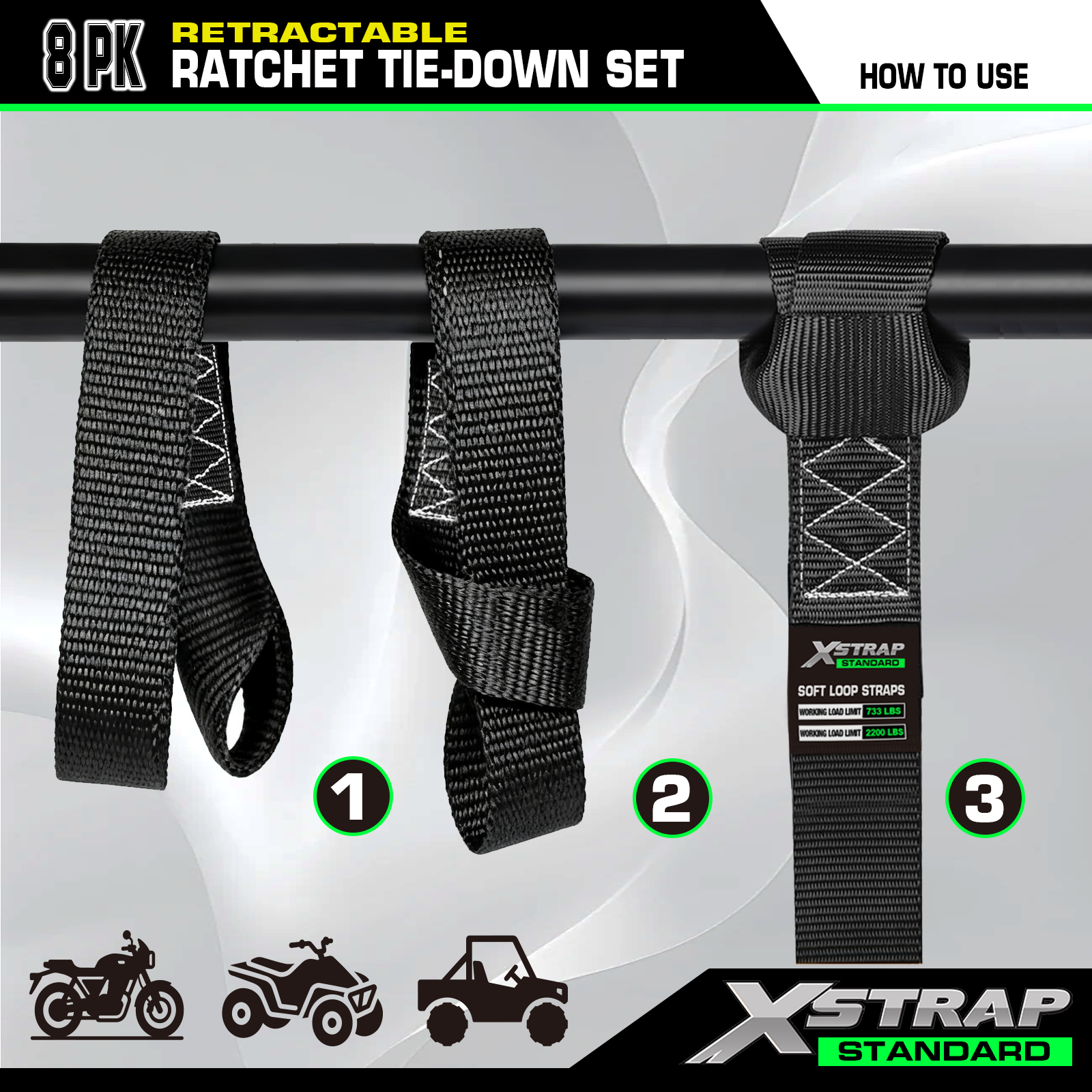 Custom Xstrap 61789 Retractable Ratchet Tie Down Straps 1 in x 10 ft Secure TieZhangjiagang SMK MFG. Co., Ltd is top China Xstrap 61789 Retractable Ratchet Tie Down Straps 1 in x 10 ft Secure Tie-Downs for Motorcycl...View Product →
Handle Design Affects Release Comfort
Handle design changes how much effort you need to release a strap. Long handles provide leverage for tightening, but they can also make the release throw longer. Low-profile handles fit tight spaces, but they may be hard to grip when your hands are gloved. A T-handle gives you a larger grip area and makes it easier to pull the handle open under light or medium tension. For small trailers, vehicles, and household loads, the Xstrap 1.5-inch T-handle ratchet tie-down straps offer a comfortable balance between tightening speed and release control.
 Custom Xstrap 66111 1.5Zhangjiagang SMK MFG. Co., Ltd is top China Xstrap 66111 1.5View Product →
How Hook Style Affects the Release Step
Hook style is not only about the anchor point. A hook that fits the anchor correctly allows the strap to hang in a straight line, which makes the release lever easier to operate. If a hook is too small for the anchor, the strap twists, the ratchet body tilts, and the release lever binds against the webbing. Flat hooks, wire hooks, S-hooks, and snap hooks each have their own strengths. Choosing a hook that matches your trailer or vehicle anchor is one of the easiest ways to make future releases more reliable.
Daily Inspections and Maintenance That Prevent Release Problems
Most ratchet strap release failures are predictable. You can catch them before they become roadside problems by spending two minutes inspecting the strap before you load. A visual check of the webbing and a quick feel of the release lever can save you from a jammed strap on a rainy night.
- Check the webbing. Look for cuts, frayed edges, discoloration, abrasion, and UV damage. A small cut can grow under tension and cause the strap to jam.
- Check the stitching. Inspect the sewn loops and the stitching around the hooks. If threads are pulled or missing, the hook can separate from the webbing.
- Check the hooks. Look for bent hook openings, cracks, and worn latches. A hook that does not close completely can slip and let the load shift.
- Check the ratchet handle. Open and close the handle several times without a load. The motion should be smooth. If you feel grinding, dirt or rust may be inside.
- Check the release lever. Pull the release lever and open the handle fully. Confirm that the spool rotates freely in one direction and locks in the other.
- Check the label. If the rating label is missing or unreadable, the strap should be replaced. You cannot verify the working load limit without a label.
Cleaning and Lubricating a Ratchet Strap
Ratchets do not need much maintenance, but they do need to be clean. Dirt and road salt can build up inside the mechanism and slow down the springs. To clean a ratchet, wipe the outside with a dry cloth and use compressed air on the pivot area if available. Do not submerge a ratchet in water. Water gets inside the springs and causes rust that is hard to remove.
After cleaning, apply a small drop of light penetrating oil or dry lubricant to the moving parts. Work the handle and release lever several times to spread the lubricant. Then wipe away any excess. The goal is a film that protects the metal, not a wet coating that attracts dust.
Storage Advice for Easier Future Releases
Store ratchet straps in a dry place away from direct sunlight. Polyester webbing can handle a lot of abuse, but prolonged UV exposure makes the fibers brittle. Coil the strap loosely and avoid kinking the webbing. Hang the straps or place them in a sealed container. If you store them in a truck bed or trailer box, make sure the hooks do not poke through the webbing of another strap.
Replace Damaged Straps Instead of Risking a Release Incident
A strap is a safety item, not a disposable piece of rope. If the ratchet housing is cracked, if the pawl springs are weak, or if the webbing has a deep cut, replace the strap. Attempting to repair the stitching or bend a hook back into shape may work temporarily, but the repair will not have the same strength as the original factory assembly. For a more complete look at selection, maintenance, and safe use, see our ultimate ratchet strap guide. If you are loading a vehicle for the first time, review safe ratchet strap loading practices before you tighten anything.
Frequently Asked Questions
How do you loosen a ratchet strap without cutting it?
Pull the release lever fully away from the strap, open the handle all the way, and then pull the free end of the webbing to remove slack. The handle must be fully opened so the locking pawl cannot catch the spool while you loosen.
How do you unjam a ratchet strap that is stuck?
First reduce pressure on the strap. Then pull the release lever and open the handle. If the webbing is pinched, pull the free end while turning the spool backward by hand. If rust is the problem, apply a small amount of penetrating oil and work the release lever back and forth.
Why does my ratchet strap keep coming loose while driving?
The most common causes are a hook that is not fully seated, webbing that was threaded incorrectly, cargo settlement, or a worn locking pawl. Stop after the first 10 to 20 miles and re-tension the strap if needed.
Do I have to pull the release lever every time?
Yes. The release lever lifts the locking pawl that stops the spool from turning backward. If you do not pull the release lever, the ratchet will hold tension and the webbing will not loosen.
Can I use a screwdriver to help release a ratchet strap?
In a jammed situation, a plastic wedge or small screwdriver can be used carefully to help lift the locking pawl. Do not pry hard on the release lever, and always keep your fingers away from the moving parts. Replace the strap if the pawl is damaged.
What should I do if the strap is too tight to release?
Remove weight from the anchor point first. If a vehicle is tied down, make sure the parking brake is on and shift the load if possible. Once the strap has less tension, pull the release lever and open the handle fully. Do not hammer the ratchet while it is under load.
Popular Products
Recent News
 How Do You Choose the Right Utility Tie Downs and Bungee Cords for Your Needs
Introduction
When it comes to securing your gear for transport, storage, or organization, Utility Tie Downs and Bungee Cords are essential tools. Whether you're hauling heavy loads...
 The Ultimate Guide to Ratchet Straps: Choosing, Using, and Maintaining Them
Introduction to Ratchet Straps
What Are Ratchet Straps?
Ratchet straps, also known as tie-down straps or cargo straps, are a type of load securement tool widely used in transportat...
 How Can Ratchet Tie Down Standard Duty Straps Ensure Safe and Reliable Cargo Securement
What Are Ratchet Tie Down Straps and Why Are They Important for Cargo Securement?
Introduction to Ratchet Tie Down Straps
Ratchet tie down straps are essential tools for anyone inv...
 What are Ratchet Straps and how do they help you transport your items safely
What Are Ratchet Straps?
Ratchet straps, also known as ratchet tie-downs or cargo straps, are heavy-duty fastening tools designed to secure items during transportation. They consis...
 How to Properly Use Light Duty Ratchet Tie Downs for Maximum Load Security
Understanding the Basics of Ratchet Tie Down Light Duty Straps
Ratchet tie-down straps are a critical tool in the transportation, storage, and securement of goods. They are used to...
-
 +86-18112697781qindan355@gmail.comNo. 21 Yuefeng Road, Yangshe Town, Zhangjiagang City, Suzhou City, Jiangsu Province
 -
Quick Links
Social Media
-
OEM Partner
-


Copyright © 2025 Zhangjiagang SMK MFG. Co., Ltd. All rights reserved.
 Wholesale Tension Strap Manufacturers
Wholesale Tension Strap Manufacturers