
 English
 Français
 Español

Home / News / Industry News / How Many Ratchet Straps Do I Need? Practical Rules for Securing Any Load
How Many Ratchet Straps Do I Need? Practical Rules for Securing Any Load
2026-09-11
How Many Ratchet Straps Do You Really Need?
A logistics dispatcher sent us this exact question last month. He had loaded a 26-foot flatbed with nine steel channels, each weighing about 900 lb, and planned to run five 2-inch ratchet straps across the entire stack. The mathematics did not add up. Nine channels at 900 lb each meant the cargo weighed more than 8,000 lb, and five standard 1,000 lb straps provided a combined working load limit of only 5,000 lb, which was barely enough to satisfy the 50 percent weight rule. By the time we added the length rule, his plan needed at least six straps: five to cover the length of the stack and a sixth to satisfy the weight requirement.
The right number of ratchet straps is not a guess and it is not a habit. It is the result of three simple checks: cargo length, cargo weight, and the working load limit printed on each strap. Here is the short answer before we break it down.
Quick answer: one strap is enough only when the item is 5 feet or shorter and weighs no more than 1,100 lb. Anything longer or heavier needs at least two straps. After 10 feet of cargo length, add one extra strap for every additional 10 feet or fraction of 10 feet. Finally, the combined working load limit of all straps must be at least half the cargo weight.
These rules come from the U.S. Federal Motor Carrier Safety Administration (FMCSA) regulation 49 CFR Part 393, the same standard used by highway patrol and DOT officers during roadside inspection. Whether you carry cargo commercially or simply want to avoid property damage on your personal trailer, the logic is identical.
The Minimum Count at a Glance
Use this table as a starting point. It combines the FMCSA minimums, the aggregate weight rule, and real-world practice for personal and commercial use.
| Cargo or situation | Minimum number of straps | When to add more |
|---|---|---|
| Boxes and appliances 5 ft or shorter, 1,100 lb or lighter | 1 | Add a second when the item is round, top-heavy, or exposed to side wind. |
| Lumber, pipe, furniture, 6 to 10 ft long | 2 | Add one if the item can roll or shift sideways. |
| Single article 10 to 20 ft long | 3 | Add one per additional 10 ft or fraction of cargo length. |
| Passenger car on a trailer | 4 | Use 6 for an SUV, pickup truck, or a heavy sedan. |
| Motorcycle or ATV | 4 | Use 5 to 6 for off-road trips or long highway runs. |
| Household load inside a 16 to 20 ft moving truck | 4 to 6 | Add straps when you stack a second layer of furniture or boxes. |
Notice that the table does not say "two straps per wheel" or "one strap per item." The legal minimum is often lower than what experienced operators feel comfortable using. When in doubt, use one more strap than the law requires. A spare strap is cheap insurance; a shifted load is not.
The Two Rules That Decide the Number
The cargo-length rule
FMCSA regulation 393.110(b) states that cargo which is 5 feet or shorter and weighs 1,100 lb or less needs a single tie-down. If the article is longer than 5 feet or heavier than 1,100 lb, two tie-downs become the minimum. Then, for an article longer than 10 feet, one additional tie-down is required for each additional 10 feet of length or fraction of 10 feet.
Let us apply that to a very common case. A 16-foot I-beam weighs only 700 lb, well under the 1,100 lb weight threshold, but it is 16 feet long, so it needs two straps because it exceeds the 5-foot length limit. Since it is also over 10 feet, it needs one additional strap for the remaining 6 feet of length. That gives a total of three straps for a single light beam.
The weight rule and the 1,100 lb threshold
The length rule tells you how many straps to place, but the weight rule tells you whether those straps are strong enough. Under 49 CFR 393.106, the aggregate working load limit of all tie-downs used to secure an article must be at least 50 percent of the cargo weight.
Here is a practical example. You are hauling a 2,400 lb machine that is 6 feet long. The length rule demands two straps. Each strap has a working load limit of 1,200 lb, so two straps give you a combined WLL of 2,400 lb. Fifty percent of the cargo weight is 1,200 lb, so two straps pass comfortably. Change the numbers and the answer changes. A 6-foot steel bundle weighing 6,000 lb, secured with two 1,000 lb straps, fails the weight rule completely because 2,000 lb of combined WLL is far below the 3,000 lb minimum. You would need three 1,000 lb straps even though the length rule only requires two.
Chart: How the Length Rule Scales
This chart shows the minimum number of straps for a single article based on length alone, assuming the strap rating is sufficient. It makes the one-more-per-10-feet pattern easy to visualize.
Minimum straps by cargo length
One important detail: this chart assumes the cargo is one single article. When a trailer carries several separate articles, count each article with the same method and place straps over each article independently. Do not stretch one strap across five different boxes and call it five tie-downs.
Working Load Limit vs Break Strength
Why WLL matters more than break strength
The working load limit, often marked SWL or WLL on the strap tag, is the maximum force you should apply during normal use. The break strength is the force at which the webbing finally separates. Industrial polyester ratchet straps are typically built with a safety factor between 3:1 and 4:1, so a strap with a 3,000 lb break strength usually has a WLL of around 1,000 lb.
Never do your calculation with break strength. A strap rated at 9,000 lb breaking strength but only 3,000 lb WLL still counts as 3,000 lb when you calculate the 50 percent cargo weight rule. If you use the break strength instead, you could end up with a plan that fails inspection and, worse, fails on the highway.
Strap width and capacity table
| Webbing width | Typical WLL range | Typical break strength | Best suited for |
|---|---|---|---|
| 1 inch | 300 – 733 lb | 900 – 2,200 lb | Motorcycles, ATVs, furniture, luggage |
| 2 inch | 1,000 – 3,335 lb | 3,000 – 10,000 lb | Cars, small machinery, flatbed freight |
| 3 inch | 3,000 – 5,400 lb | 9,000 – 16,200 lb | Heavy machinery, steel profiles, coils |
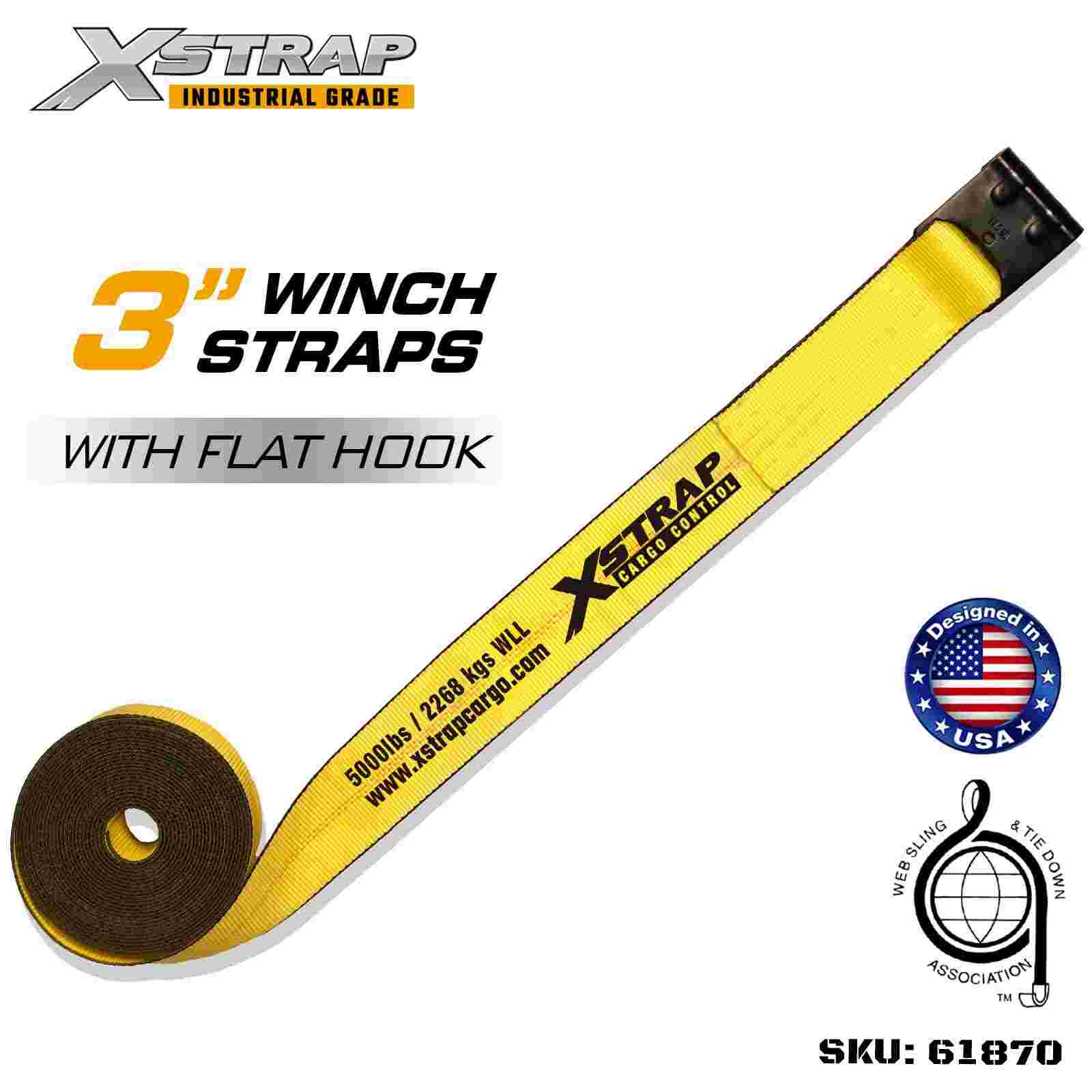
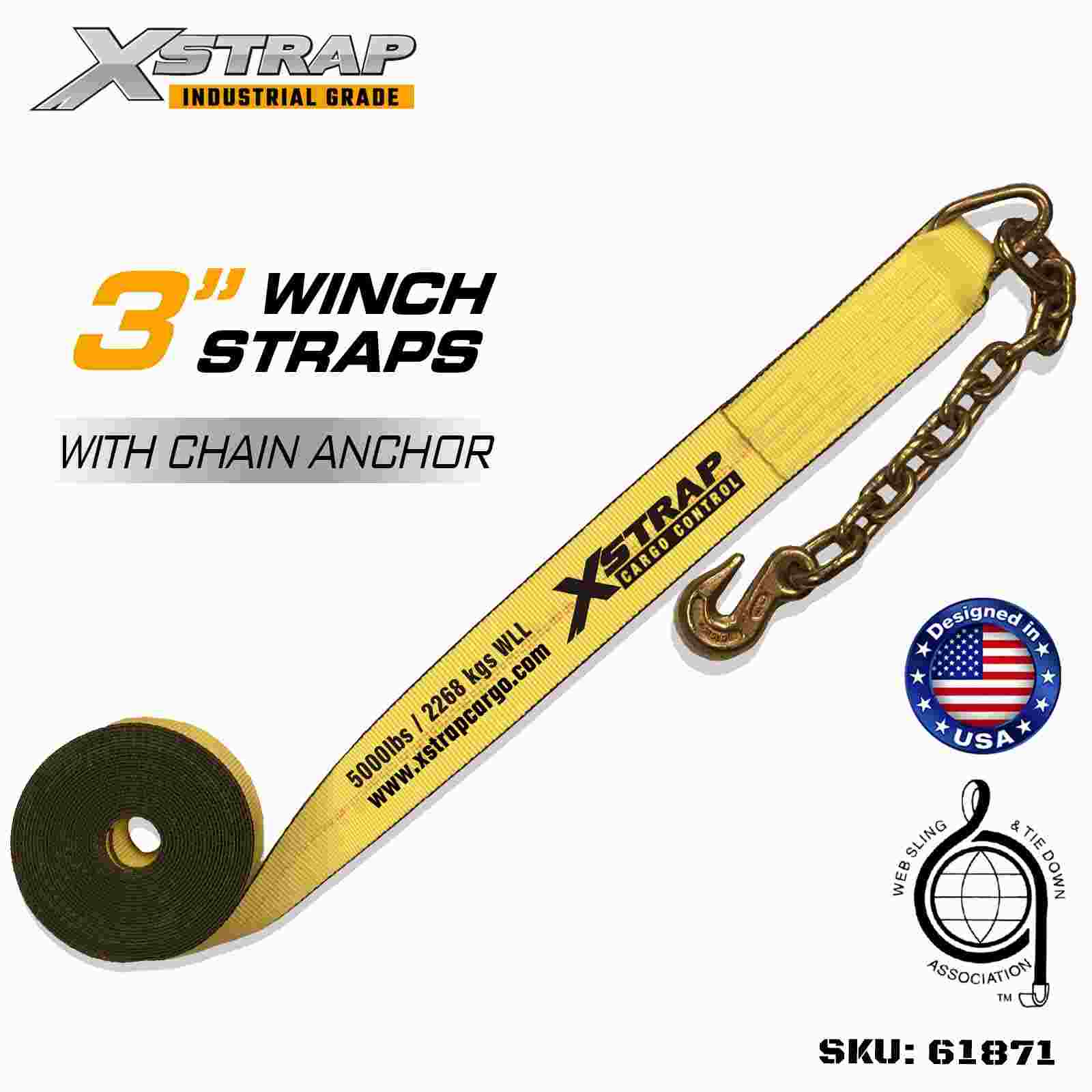
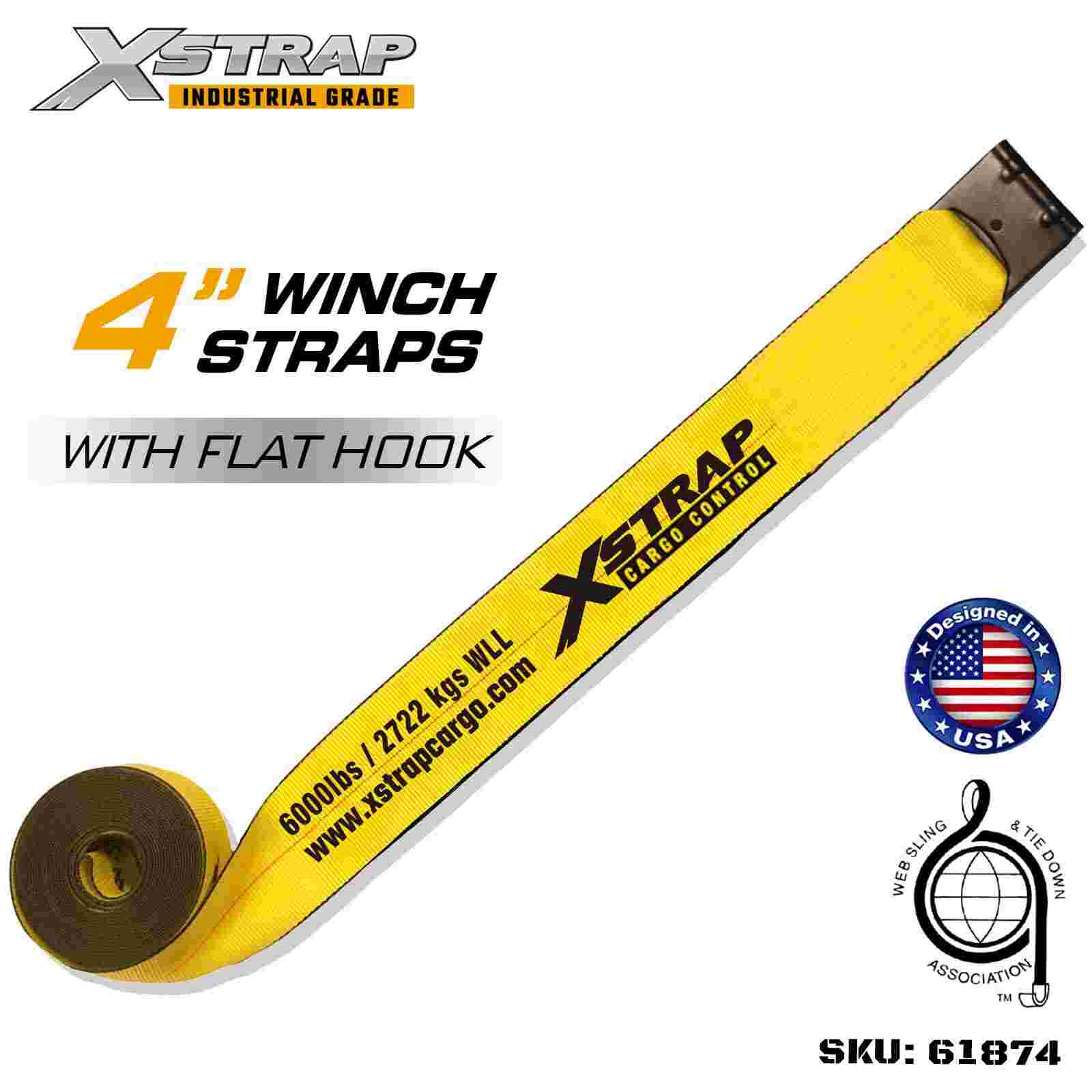
| 4 inch | 5,000 – 6,666 lb | 15,000 – 20,000 lb | Flatbed winch straps, containers, equipment |
These ranges reflect products from established strap manufacturers. A 4-inch winch strap is rarely your first choice for a small moving job; its 5,000 lb WLL simply cannot be tensioned properly on lightweight cargo. Pick the narrowest strap that comfortably covers the weight and length required, then leave a safety margin.
Counting Straps by Application
Flatbed freight and steel products
Flatbed loads feel like the most complicated case, but the math stays the same. Take a bundle of steel angles, 18 feet long and weighing 7,200 lb. The length rule requires three straps: two for the base, plus one for the extra 8 feet. Now check the weight: half of 7,200 lb is 3,600 lb. If you use 2-inch straps rated at 1,800 lb WLL, three straps provide 5,400 lb of combined WLL, which covers the requirement. If your straps are rated at 1,000 lb WLL, three straps provide only 3,000 lb, so you need a fourth strap.
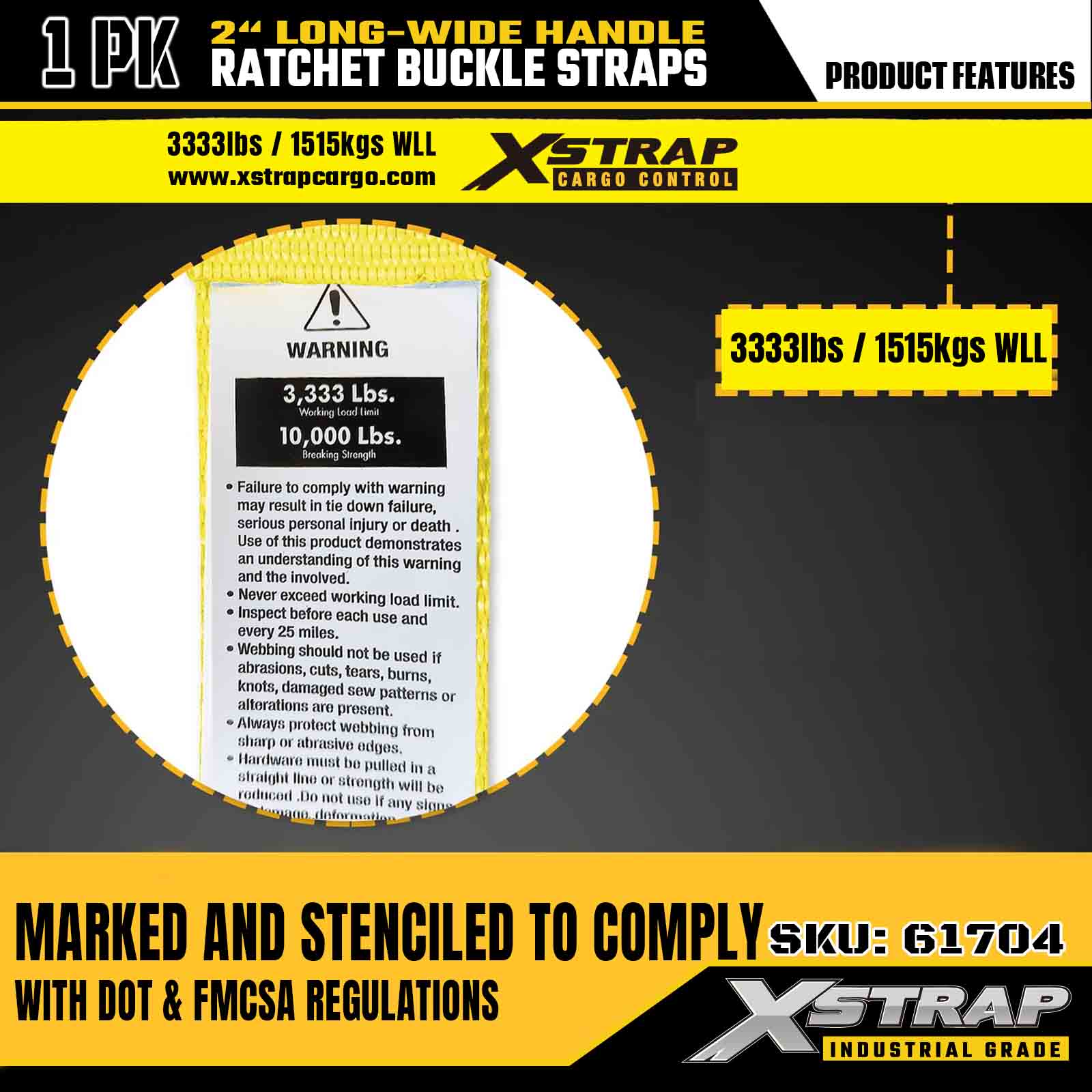
For this kind of load, a 2-inch x 30-foot ratchet strap with a wide handle is a practical workhorse. The longer strap length clears tall loads, and the wide handle lets you apply more tension with less effort when heavy bundles settle during the first few miles.
Cars, SUVs, and pickup trucks
A standard passenger car on a tow dolly or car trailer should be secured with four straps: two pulling forward from the front axle and two pulling backward from the rear axle. Some operators use one strap per wheel, which gives eight straps total, but four properly placed axle straps are the accepted minimum.
For a heavy SUV or a pickup truck, use six. The extra two straps should cross over the rear axle at an angle to prevent lateral movement. The 50 percent weight rule almost always passes with four straps because a 4,000 lb car only needs a combined WLL of 2,000 lb, and four 1,000 lb straps already provide 4,000 lb. The real risk with vehicles is not vertical pull but side-to-side shift during cornering, which is exactly why crossing the straps matters.
Motorcycles, ATVs, and powersports
For a motorcycle, four straps is the accepted minimum: two on the handlebars and two on the rear frame. On a trailer, these should be crossed in an X-pattern to hold the bike upright. Add a fifth or a sixth strap when you expect off-road conditions or a long highway trip, because vibration loosens even a well-tensioned strap over time.
We built the motorcycle tie-down strap set rated at 733 lb SWL specifically for this job. The 1-inch webbing is soft enough to avoid scratching handlebar finishes, while the 733 lb working load limit gives a comfortable margin around the 400 to 500 lb weight of most street motorcycles.
Household moving and enclosed van loads
Inside an enclosed moving truck, the walls and the cargo itself provide part of the securement, so the strap count is less formal. For a small one-bedroom apartment, plan on four to six straps: two straps over each furniture layer, plus two straps to hold the last row of boxes against the rear door. Mattresses and sofa frames should be strapped individually before anything is stacked on top.
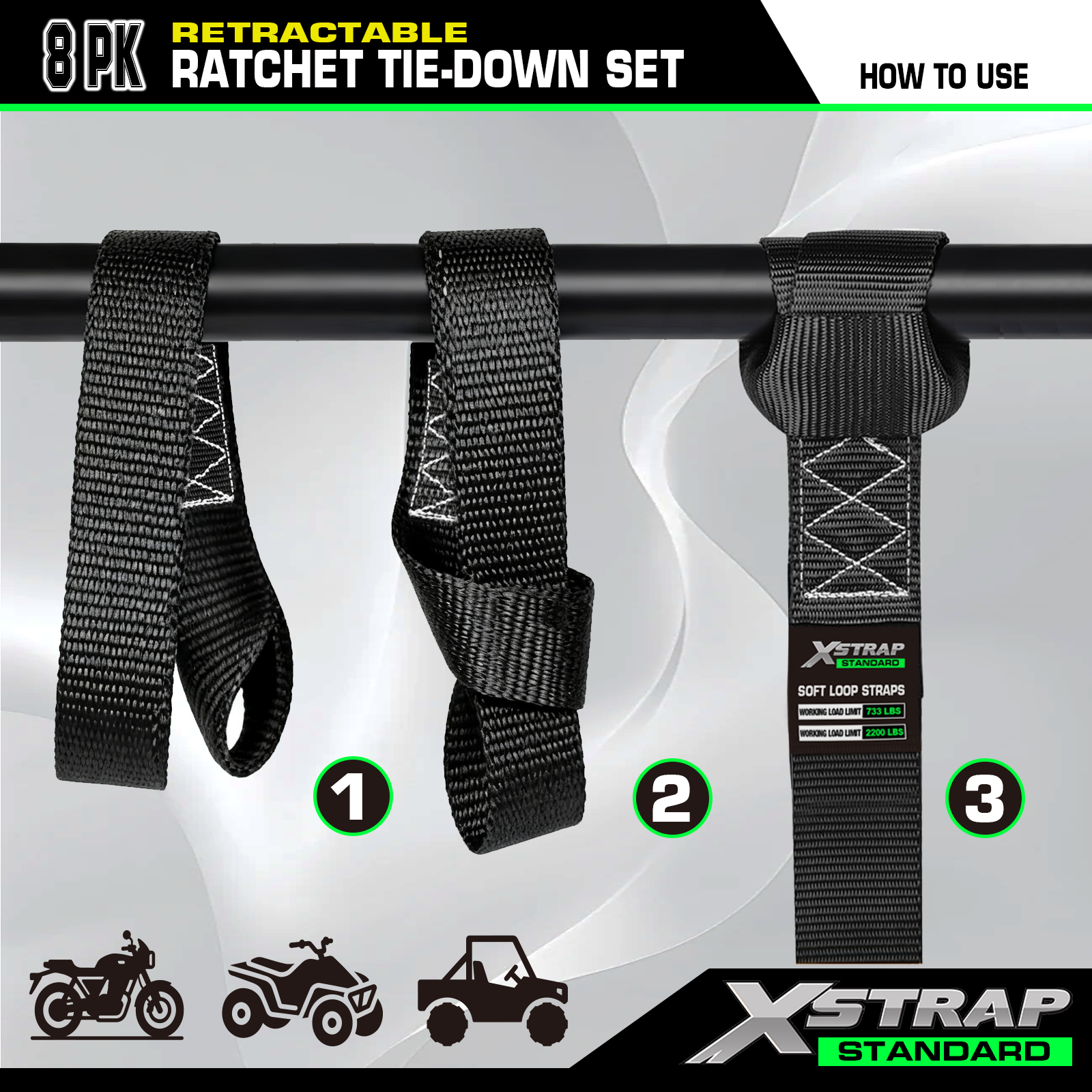
This is the ideal job for a retractable ratchet strap set, because the ratchet mechanism stores the excess webbing inside the handle. That keeps the floor of the truck clear of loose strap tails, which is a surprisingly common tripping hazard during a move.
Hook Styles Affect the Count More Than You Think
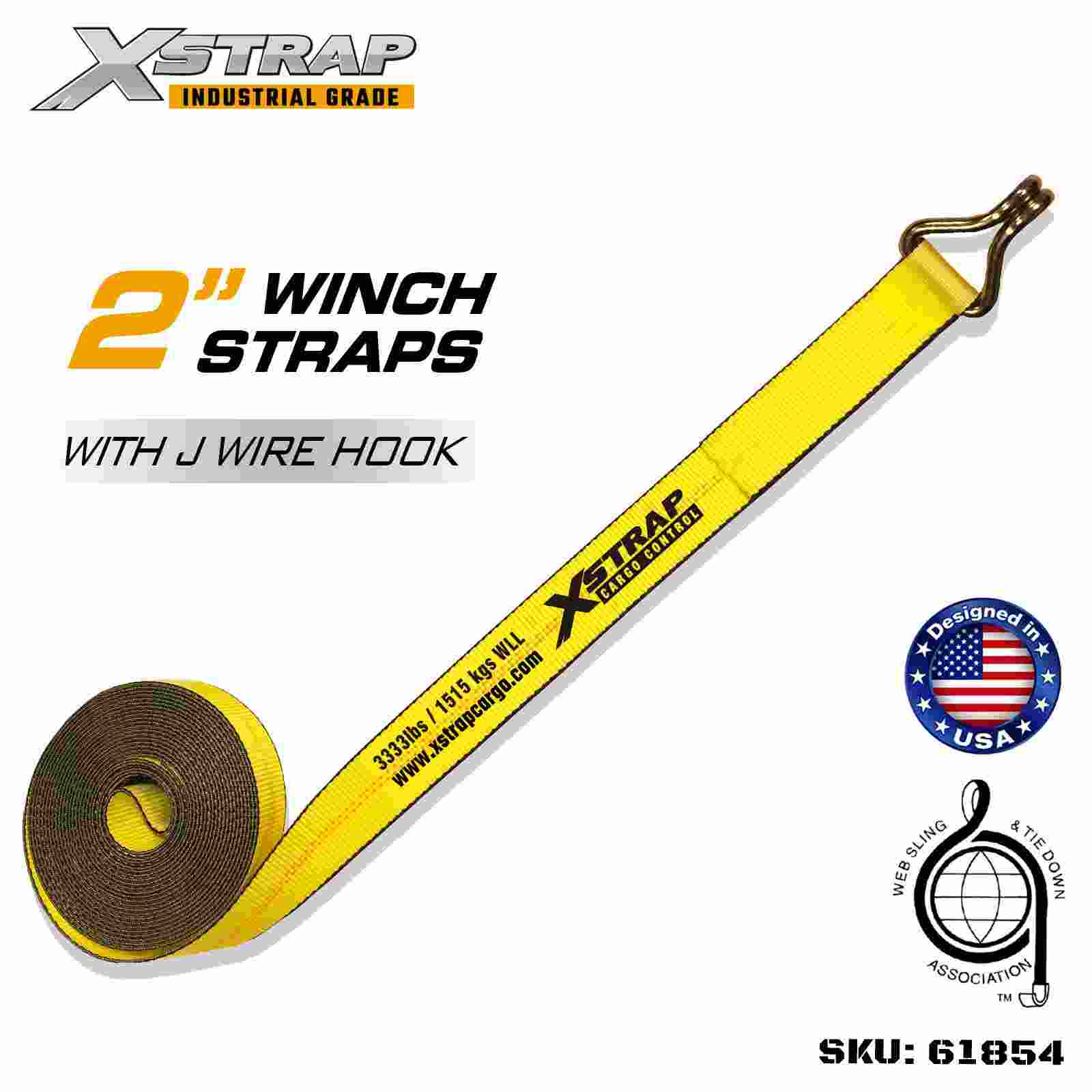
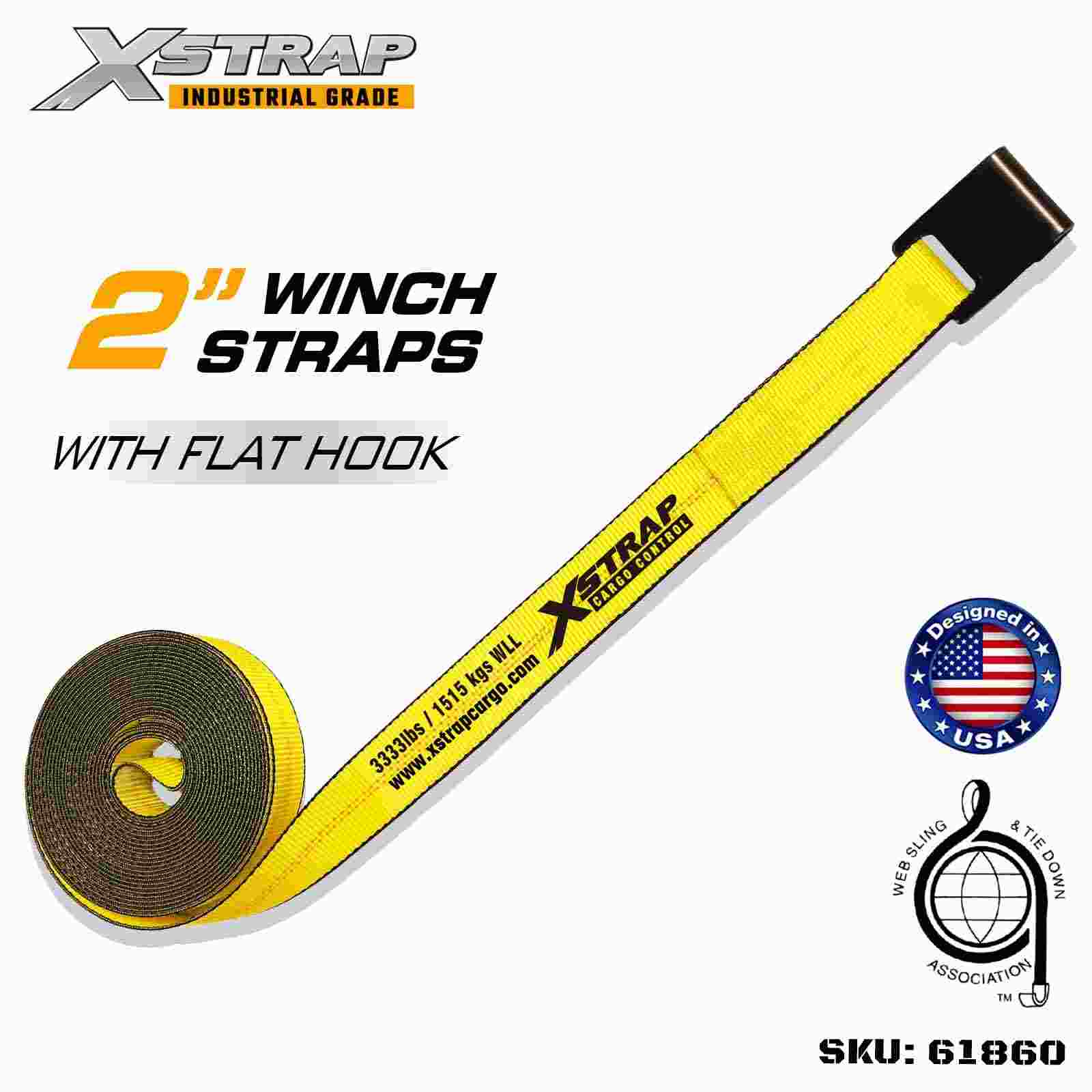
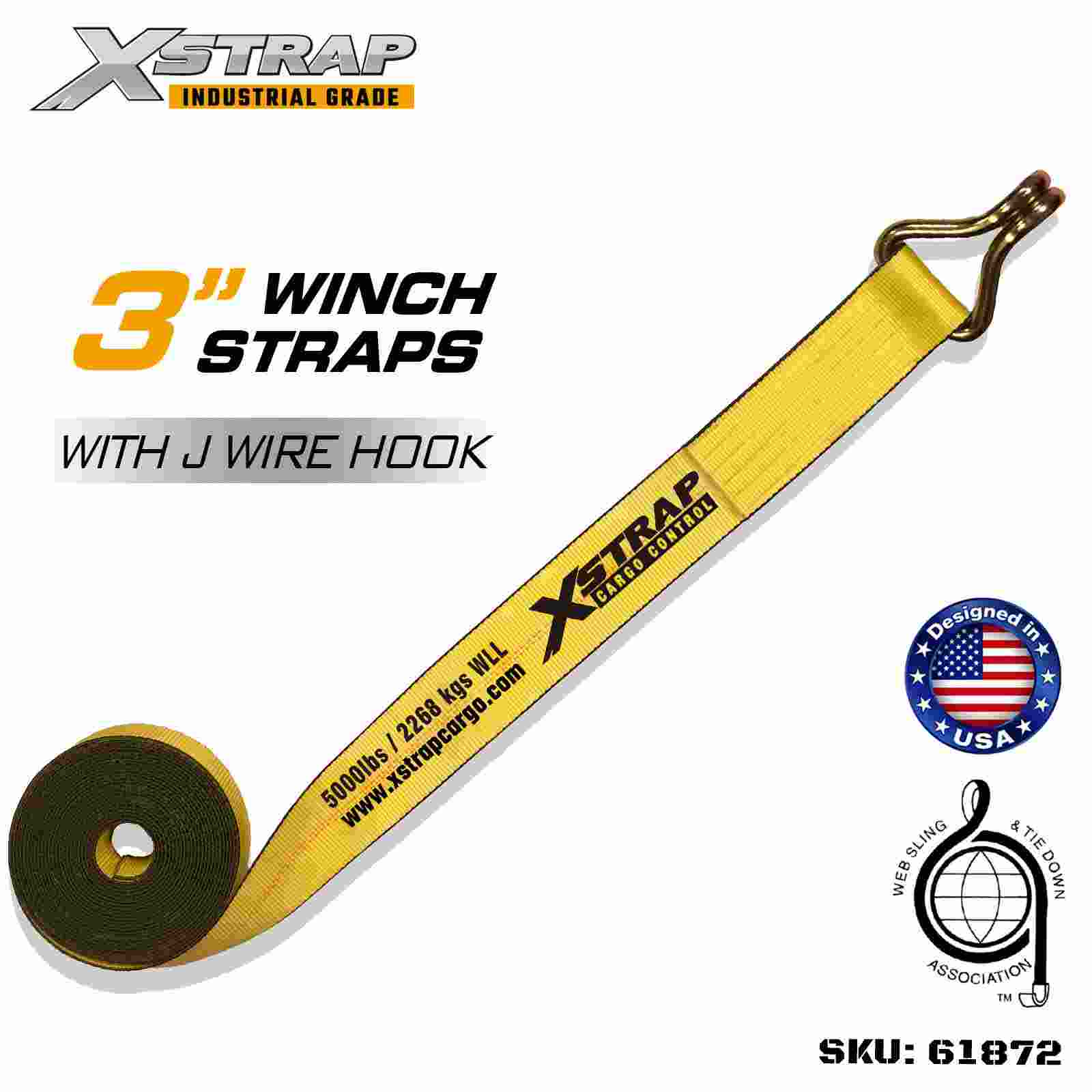
Hook style does not change the legal minimum, but it changes the practical minimum. A flat hook needs a slot or a rail to grip, a wire hook wraps around cargo loops, and an S-hook clips onto frame rails. If the hook does not fit your anchor point, the strap cannot reach its rated load and effectively does not count toward the 50 percent requirement.
This is why we keep a separate test for how different hook styles impact cargo securement on 2-inch ratchet straps. The short version: match the hook to the anchor, not to the color of the webbing. When you cannot find a perfect match, add an extra strap as compensation rather than forcing a loose hook into a partial grip.
Angles and Patterns: Placement Changes the Result
Crossing pattern for vehicles
Straps that run straight down from a vehicle axle to a trailer anchor hold the vehicle vertically but allow it to slide sideways. Crossing the straps to the opposite anchor creates a triangle that resists both vertical motion and lateral motion. For a car, cross both front straps and both rear straps. For a motorcycle, cross all four straps.
Angle affects every strap
When a strap is pulled at an angle, most of the tension goes into compressing the cargo instead of holding it down. The effective holding force drops as the angle increases. A strap at 45 degrees provides roughly 70 percent of the holding force it would provide at a direct vertical or straight pull. If your anchor geometry forces steep angles, add an extra strap to restore the missing holding capacity.
Common Mistakes That Ruin the Calculation
Most strap-count mistakes happen before the first strap is tightened. Here are the ones we see most often in our workshop and in customer photos:
- Using break strength instead of WLL — This is the single most dangerous error. The tag on every strap lists a working load limit and a break strength. Only the WLL counts.
- One strap over multiple items — A strap that passes over five separate boxes only secures them as one group if the whole group is stable. Count each article separately.
- Damaged straps still in use — A strap with frayed webbing or a bent hook no longer provides its rated WLL. It should be retired, not counted.
- Missing edge protection — A sharp steel edge can cut a strap during the first mile. A cut strap is equivalent to no strap at all.
- Over-tightening — Cranked far beyond the WLL, a ratchet can crush fragile goods; the strap still shows its printed rating while the actual force on the cargo exceeds it.
- Mixing old and new straps — The weakest strap in a pattern sets the limit for the whole load. If you do not know the history of a strap, replace it before it matters.
If one strap fails, redo the calculation with one fewer strap and you will immediately see why inspectors also check the condition, not just the quantity.
Inspect Before You Count
A ratchet strap is a piece of safety equipment, not a disposable cord. The daily inspection should take less than two minutes: check the webbing for cuts, fraying, discoloration caused by UV, and broken stitches; check the ratchet for smooth operation; check every hook for distortion or cracks. If any component shows damage, the strap fails and must be removed from service.
The official standards for daily inspection and scrapping are described in detail in the regulations regarding daily inspection and scrapping standards. The practical summary is simple: when in doubt, throw it out. A single failed strap can turn a four-strap pattern into a three-strap pattern at the worst possible moment.
Frequently Asked Questions
Do I need two or four straps for a car?
Four is the accepted minimum for a car on a trailer: two on the front axle and two on the rear axle. Heavy vehicles like SUVs and pickup trucks should use six. The extra straps are placed on the rear axle at opposing angles to prevent sideways movement during cornering.
Can one ratchet strap secure two separate items?
No. The regulation treats each article separately for the minimum-count rule. A single strap stretched across two boxes may hold them together but does not satisfy the requirement for each article. In practice, the two boxes will shift independently, and one strap will quickly loosen.
How many straps do I need for a 20-foot trailer full of furniture?
Four to six straps. Use two straps over each layer of furniture and block the last row so it cannot reach the rear doors. If the furniture is heavy, add a strap across the highest point of the stack to prevent the load from rocking.
What does SWL mean on a strap tag?
SWL means Safe Working Load and is the same as WLL, or Working Load Limit. It is the maximum recommended force under normal use. The number printed next to SWL is the one you use when calculating whether your straps cover at least half of the cargo weight.
Do I need more straps in rain or wind?
Weather does not change the regulation, but it changes the risk. Wet cargo can become heavier, wind can catch tarps and increase dynamic forces, and temperature changes can loosen polyester webbing. Adding one extra strap on a rainy or windy day is a cheap way to keep the same safety margin.
Count First, Then Choose the Right Strap
Once you know how many straps you need, the next question is which strap to buy. Start with the width: 1-inch straps for motorcycles and furniture, 2-inch straps for cars and general freight, and 3-inch or 4-inch straps for heavy machinery and flatbed loads. Then check the working load limit on the tag, confirm the length reaches your anchor points, and select a hook that matches the anchor.
Some users ask whether a cam buckle could replace a ratchet for the same job. The answer depends on the load and the tension you need; the comparison between ratchet straps and cam buckle straps explains where each one wins. For loads that need repeated re-tensioning or a high holding force, a ratchet remains the better choice.
At Xstrap, we manufacture ratchet straps, winch straps, and tie-down hardware with the same factory discipline that allows us to serve customers across freight, automotive, and outdoor markets. The strap count you calculate with the rules above will only work if the straps themselves are honest: correct WLL marking, solid stitching, and hardware that matches the rating.
Flatbed freight
2-inch x 30-foot wide-handle ratchet strap
A long strap for tall bundles, with a wide handle that makes heavy tensioning more comfortable.
Motorcycles and ATVs
733 lb SWL motorcycle tie-down straps
1-inch webbing that is gentle on handlebar finishes and strong enough for highway trips.
Moving and household
Retractable ratchet strap set
Self-storing webbing keeps the truck floor clean and the straps ready for the next layer.
Start your count with the tables above, verify the WLL on each strap, and add an extra strap whenever the load shape, weather, or anchor condition leaves any doubt. The few dollars you spend on one additional strap are small compared with the cost of a load that moves.
Popular Products
Recent News
 How Do You Choose the Right Utility Tie Downs and Bungee Cords for Your Needs
Introduction
When it comes to securing your gear for transport, storage, or organization, Utility Tie Downs and Bungee Cords are essential tools. Whether you're hauling heavy loads...
 The Ultimate Guide to Ratchet Straps: Choosing, Using, and Maintaining Them
Introduction to Ratchet Straps
What Are Ratchet Straps?
Ratchet straps, also known as tie-down straps or cargo straps, are a type of load securement tool widely used in transportat...
 How Can Ratchet Tie Down Standard Duty Straps Ensure Safe and Reliable Cargo Securement
What Are Ratchet Tie Down Straps and Why Are They Important for Cargo Securement?
Introduction to Ratchet Tie Down Straps
Ratchet tie down straps are essential tools for anyone inv...
 What are Ratchet Straps and how do they help you transport your items safely
What Are Ratchet Straps?
Ratchet straps, also known as ratchet tie-downs or cargo straps, are heavy-duty fastening tools designed to secure items during transportation. They consis...
 How to Properly Use Light Duty Ratchet Tie Downs for Maximum Load Security
Understanding the Basics of Ratchet Tie Down Light Duty Straps
Ratchet tie-down straps are a critical tool in the transportation, storage, and securement of goods. They are used to...
-
 +86-18112697781qindan355@gmail.comNo. 21 Yuefeng Road, Yangshe Town, Zhangjiagang City, Suzhou City, Jiangsu Province
 -
Quick Links
Social Media
-
OEM Partner
-


Copyright © 2025 Zhangjiagang SMK MFG. Co., Ltd. All rights reserved.
 Wholesale Tension Strap Manufacturers
Wholesale Tension Strap Manufacturers