
 English
 Français
 Español

Home / News / Industry News / ATV and UTV Tie-Down Straps for Trailers: Sizing, Hook Choices, and Load Safety
ATV and UTV Tie-Down Straps for Trailers: Sizing, Hook Choices, and Load Safety
2026-11-27
Match Strap Capacity to the ATV or UTV, Trailer, and Tie-Down Points
Buy the tie-down system around the working load limit, not the pull strength printed in large type on the package. A strap marked with a high break strength can still be the wrong choice if its working load limit, hook opening, webbing width, and anchor geometry do not suit an ATV or UTV on a trailer. The practical decision is simple: identify the loaded machine weight, confirm four independent anchor points, then choose straps whose printed working load limit and hardware ratings cover the load with a sensible margin.
Break strength is the point at which a strap or assembly fails in a controlled test. Working load limit is the maximum load a manufacturer intends the assembly to secure in normal service. The two numbers are not interchangeable. A 2-inch ratchet strap may show a break strength in the thousands of pounds while its working load limit is far lower. For trailer use, read the label on the assembly, including the hook and ratchet, and use the lowest rated component in the system as the limiting value.
- Start with the machine: use the curb weight plus fuel, accessories, cargo, and any mud or water weight that may remain on the vehicle.
- Count real anchor points: four independent trailer points are a baseline for most ATVs and UTVs; six points are better for long-travel suspension, heavy accessories, or rough roads.
- Check the trailer too: a rated strap on an unrated or corroded D-ring is only as strong as the weakest connection.
- Allow for motion: suspension movement, braking, turning, and road crown create dynamic loads that a simple static weight calculation does not show.
A compact ATV on a utility trailer often works well with four 1-inch to 1.25-inch ratchet straps in good condition, provided the anchor points are solid and the route avoids sharp edges. A full-size UTV with a roof, bumper, spare tire, and tools needs more attention. Two-inch straps are common because the wider webbing spreads pressure and gives a more confidence-inspiring grip in the ratchet. On a long trailer, strap length matters as much as width: a strap that barely reaches the anchor may force a poor hook angle, while excessive tail length can flap against paint or tangle in the ratchet.
| Strap type | Typical working load range | Best trailer use | Purchase caution |
|---|---|---|---|
| 1-inch light-duty ratchet or cam strap | 300 lb to 500 lb | Small ATV, garden tractor, and light utility loads with direct frame anchors | Not ideal for a heavy UTV or high-speed highway trips; check hook opening and stitch quality |
| 1.25-inch to 1.5-inch ratchet strap | 500 lb to 1,000 lb | Mid-size ATV and utility vehicle four-point tie-down | Confirm the ratchet handle does not collide with body panels during tensioning |
| 2-inch ratchet strap | 1,000 lb to 3,333 lb depending on assembly | Full-size UTV, mixed fleet trailers, and repeated loading | Wide webbing needs compatible hooks and anchors; do not assume every 2-inch strap has the same rating |
| 2-inch retractable ratchet strap | 500 lb to 1,000 lb in many utility designs | Frequent loading, compact storage, and rental or shared trailers | Check the retractable housing clearance and confirm the working load limit on the complete assembly |
Use a simple planning rule and then verify it against the product label: the combined working load limit of the straps and anchors should exceed the loaded machine weight, with four or more independent points, and the arrangement should prevent forward, rearward, and lateral movement. Local road rules may set different requirements, so treat this as a practical selection baseline rather than a substitute for the regulation that applies where the trailer is used.
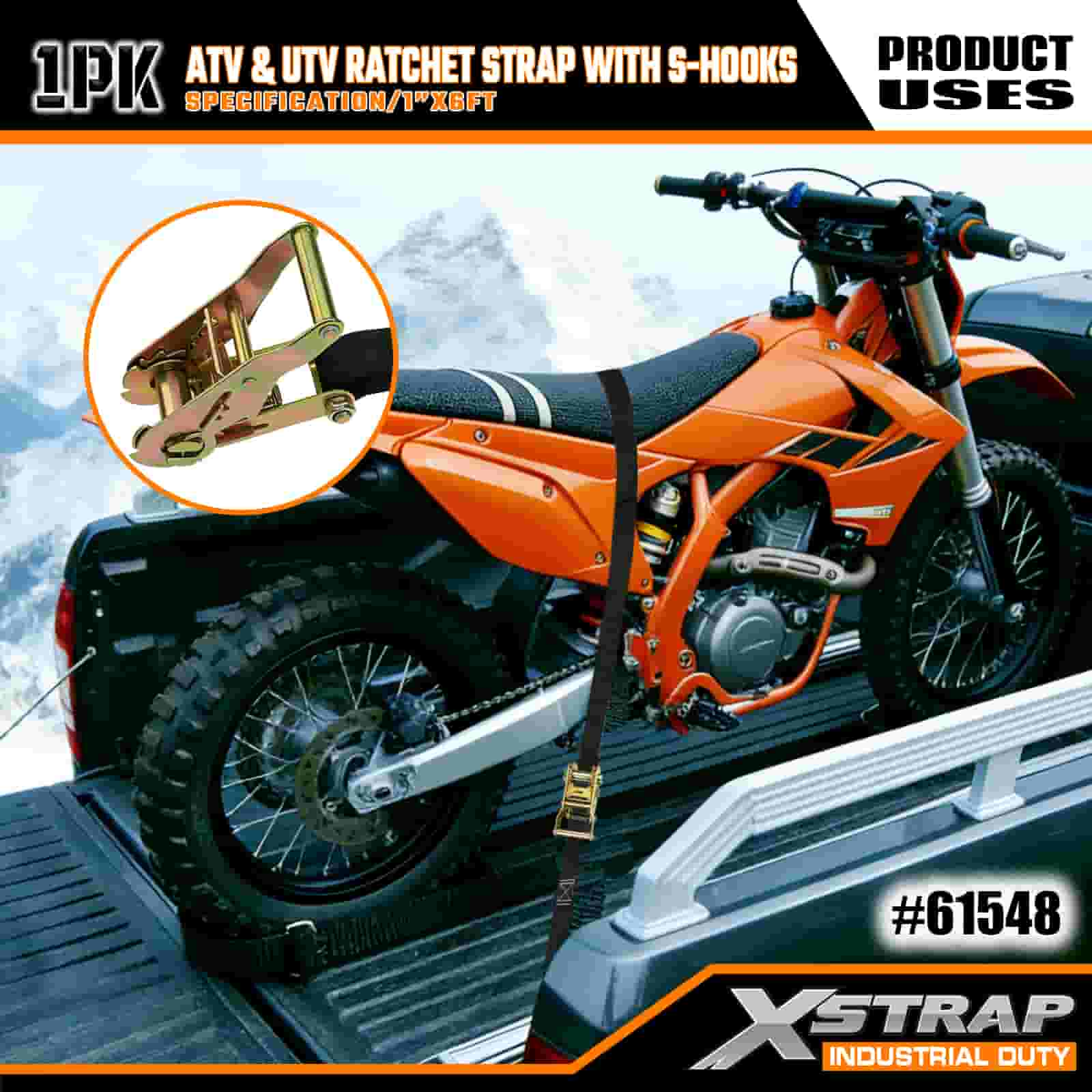 Xstrap 1-Inch x 6-Foot Ratchet Strap with S HooksA compact 833 lb SWL ratchet strap for securing ATVs and UTVs, with zinc-plated hardware and coated S hooks that help protect attachment points.View Product →
Choose the Strap Style by How Often You Load and How Tight the Trailer Is
Ratchet straps are usually the better default for ATV and UTV trailer work because the ratchet gives controlled mechanical tension. Cam buckles are faster and lighter, but they depend more on hand strength and are easier to leave under-tensioned. Retractable ratchets reduce loose tail management and speed up repeat loading, but the housing and retraction mechanism add bulk that may not fit every trailer rail or hook location.
Ratchet strap
Best for repeatable tension, heavier UTVs, and loads that travel at highway speed. Look for a wide handle if you wear gloves or load in cold weather. Check that the ratchet teeth engage cleanly and the release lever is reachable without trapping your hand.
Cam buckle strap
Useful for light ATVs, small equipment, and quick utility trips. It relies on the cam biting the webbing, so the strap must be clean and flat. A worn cam or glossy webbing can slip under vibration.
Retractable ratchet
Good for frequent loading, rental trailers, and tight storage. The self-storing design keeps excess webbing away from wheels and sharp edges. Confirm the mounting position and the available length before buying.
A 2-inch wide-handle ratchet strap is a practical upgrade for a UTV because the handle gives more leverage and the wider webbing is easier to inspect for abrasion. The trade-off is bulk. On a small folding trailer, a long 2-inch strap may be more than the frame and anchor points can use well. Match the strap to the trailer, not only to the vehicle.
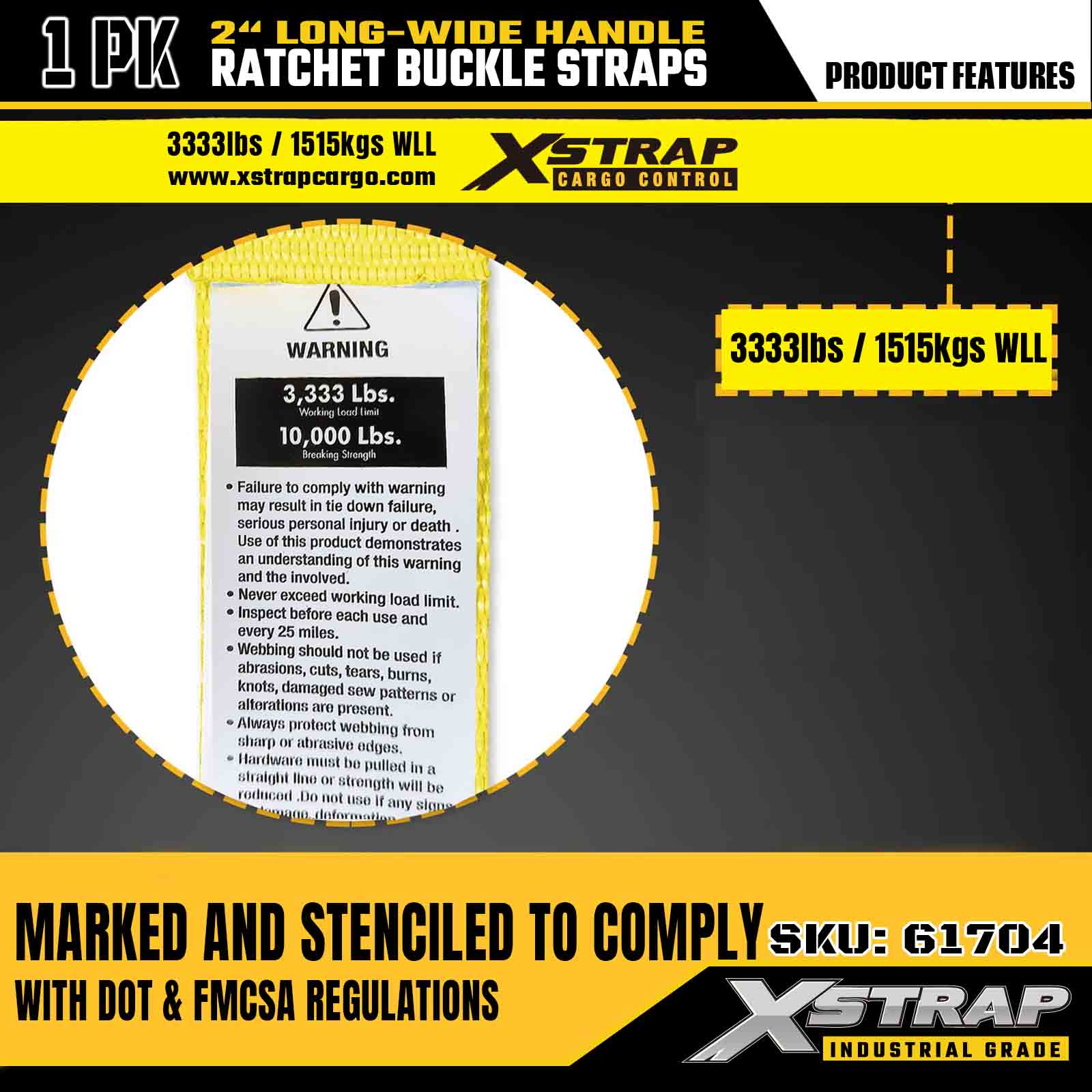 Xstrap 2-Inch x 30-Foot Wide-Handle Ratchet Strap with Chain HooksA heavy-duty 3,333 lb WLL strap with a long wide handle and chain hooks, suited to large cargo and long flatbed or trailer runs.View Product →
Strap length should be chosen with the full route in mind: from the trailer anchor, around or through the vehicle connection, back to the ratchet, and enough tail to thread the ratchet without a struggle. A 6-foot strap is often enough for a compact ATV on a short utility trailer; a 27-foot or 30-foot strap is more common on flatbed trailers, long ramps, and mixed loads. Extra length is not automatically better because the loose tail must be secured.
Hook Style and Anchor Geometry Decide Whether the Strap Stays Tight
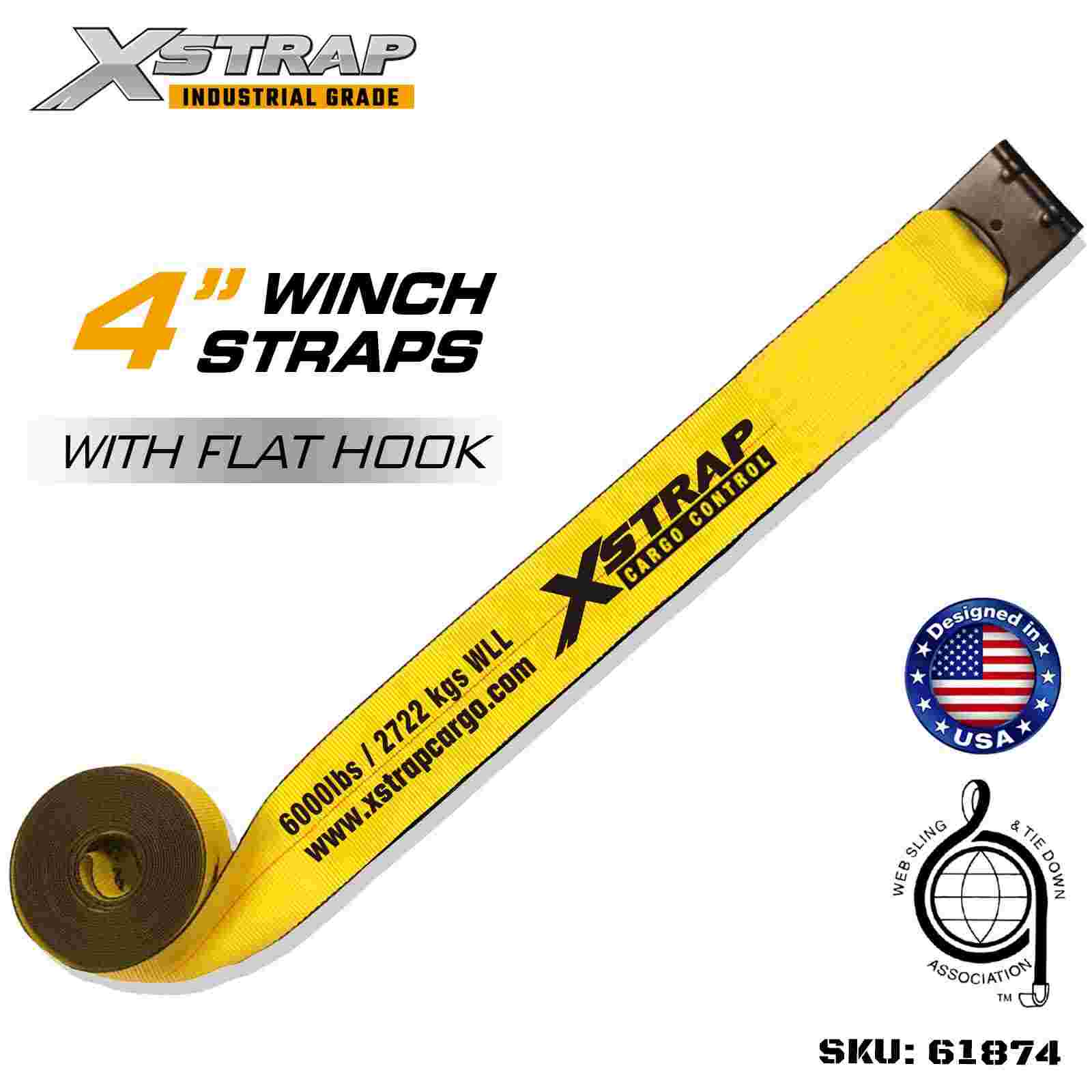
The hook is often the first part to reveal a bad tie-down plan. A hook that is partially seated, loaded across its tip, or pulled sideways can open or shift even when the strap itself is strong. The correct hook style depends on the anchor: a flat hook may sit well on a flatbed rail, a wire hook may fit a tight slot, and a chain anchor or grab hook may be better for a wide rail or a reinforced trailer point. For a closer look at how hook geometry affects securement, see this guide to hook styles and cargo securement.
- Flat hooks: useful on flatbed rails and wide anchor bars, but they need a flat, stable surface and should not be loaded on a narrow edge.
- Wire hooks: good for tight openings and recessed anchors; check that the wire is not bent or worn thin.
- S hooks: quick to attach, but more likely to fall off when tension is released; avoid them where the load can shift.
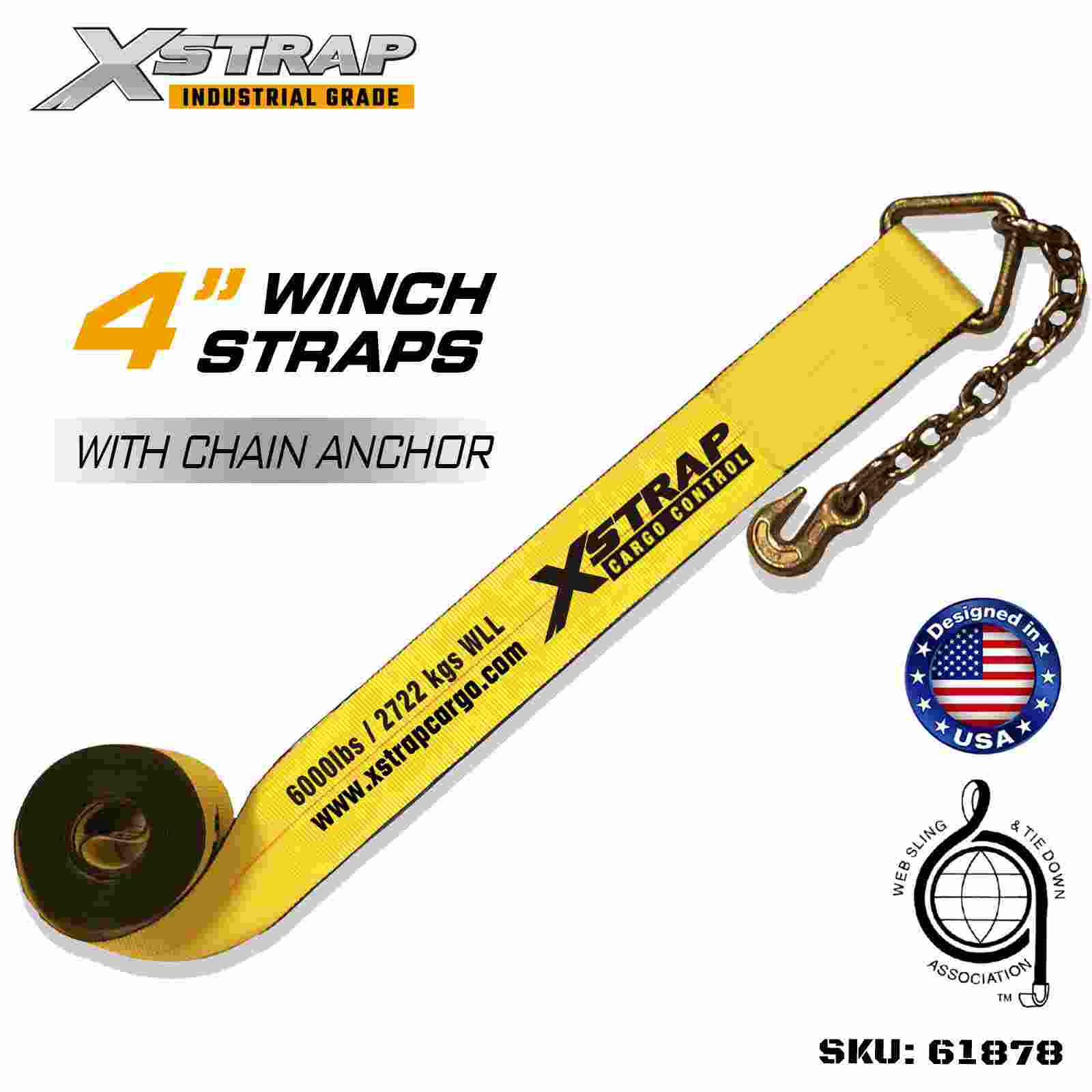
- Chain anchors and grab hooks: suitable for wider rails and heavy trailer points when matched to the chain grade and link size.
- Soft loops or axle straps: useful around suspension or frame areas where a metal hook could rub paint, brake lines, or wiring.
Keep the strap pull as straight as practical. A sharp angle across a hook or anchor concentrates load and can cause the hook to twist. If the trailer anchor is recessed, use a soft extension or a different hook rather than forcing a large hook into a small opening. If the hook can slide along a rail, position it so the strap pull holds it against a stop or in a stable corner.
Workshop check: after tensioning, push the ATV or UTV side to side by hand. If the hook rocks, the strap rubs a body panel, or the ratchet handle can catch on the trailer rail, adjust the route before moving.
Build a Four-Point or Six-Point Tie-Down Plan Before You Roll
A four-point plan is the minimum most ATV and UTV trailer users should plan around. Six points add control for long-travel suspension, heavy roof accessories, or a trailer with a short deck. The goal is not to crush the suspension. The goal is to keep the machine from walking forward, backward, or sideways while allowing the suspension to settle without slackening the straps.
- Place the machine: center it over the trailer axles where possible and leave clearance for the ramp, jack, and trailer lights.
- Choose frame or suspension points: use strong lower points. Avoid plastic body panels, thin sheet metal, brake lines, fuel lines, and wiring.
- Cross the straps where appropriate: a slight cross can resist lateral movement, but avoid routes that rub the tires or pull the hook sideways.
- Tension evenly: snug the front pair, then the rear pair, then recheck. Do not overcompress one corner while leaving another loose.
- Secure the tail: tie or clip excess webbing so it cannot reach the wheel, brake drum, or road.
- Recheck after the first few miles: stop in a safe place and confirm tension, hook position, and tail security.
On a UTV with a roof and windshield, watch how the straps pass around the cage. A strap that pulls inward on a roof pillar can distort the structure or rub the paint. Route the strap so the pull is primarily along the frame or lower cage. On an ATV with plastic fenders, a soft loop around a lower control arm or frame area is usually safer than hooking directly to a decorative bar.
Trailer Environment Changes the Strap You Should Buy
An open trailer exposes straps to sun, rain, road salt, dust, and heat. A strap that looks fine for a covered utility trailer may age quickly on a flatbed that sits outside. Polyester webbing is common for tie-downs because it resists stretch and handles outdoor exposure well. Hardware finish matters too: zinc-plated steel is common, while stainless steel is useful for coastal use, boat trailers, and repeated wet conditions. The hook, ratchet, and webbing should be selected as one system.
UV exposure
Fading, stiff webbing, and a chalky surface are warning signs. Store straps out of direct sun when possible and replace webbing that has become brittle.
Abrasion
Sharp trailer rails, ramp edges, and metal corners cut webbing. Use edge protectors or a soft sleeve where the strap changes direction.
Corrosion
Road salt and coastal air attack hooks and ratchet springs. Rinse and dry hardware after winter use; choose stainless or properly coated hardware for wet service.
Heat and cold
Hot metal rails can soften webbing, while cold makes some straps stiff and hard to thread. Inspect more often in severe conditions.
For utility trailers that carry more than vehicles, a mixed range of utility tie-down and bungee cord products can cover light cargo, tarps, and ATV/UTV accessories without forcing every job onto one heavy strap. Keep vehicle straps separate from general cargo straps so that a damaged utility strap is not accidentally used on a UTV.
Inspection and Retirement Rules That Prevent Trailer Surprises
A tie-down strap is a wear item. It should be inspected before every trip, not only when it looks dirty. Run the webbing through your hands, look at the stitching, and check the ratchet for smooth engagement. A strap that has been cut, melted, chemically stained, or badly abraded should be removed from vehicle securement duty even if the damage looks small. Damage concentrates load and can turn a routine trailer trip into a loose load.
| Check point | Acceptable condition | Retire or remove from service |
|---|---|---|
| Webbing surface | Firm, flexible, and free of deep cuts | Cuts, fraying, melting, chemical damage, or heavy abrasion through the outer weave |
| Stitching | Continuous and secure at both ends | Broken, loose, or pulled stitches; stitching that has opened at the hook or ratchet |
| Ratchet | Teeth engage cleanly and the release works | Cracked frame, missing teeth, bent handle, or a spring that does not hold |
| Hooks and anchors | Straight, fully seated, and free of cracks | Bent hooks, opened throats, deep corrosion, or hooks that no longer fit the anchor |
| Label | Working load limit and product details are readable | Label missing or unreadable; the assembly rating can no longer be confirmed |
Do not tie knots in webbing to shorten a strap. A knot reduces strength and creates a stress point that is difficult to inspect. If the strap is too long, use a proper strap management method or choose a shorter assembly. Keep straps away from exhaust parts, sharp metal, and pinch points. After winter use, rinse road salt from hardware and allow the strap to dry fully before storage.
Product Configurations That Fit Common ATV and UTV Trailer Setups
The right configuration depends on how often the trailer is loaded and who does the loading. A single ATV owner may prefer four simple 1-inch ratchet straps with clear labels and easy handles. A dealer, rental fleet, or shared trailer benefits from consistent 2-inch straps, replaceable components, and a place to store the tails. A mixed fleet may use retractable straps on enclosed trailers and conventional ratchet straps on open flatbeds.
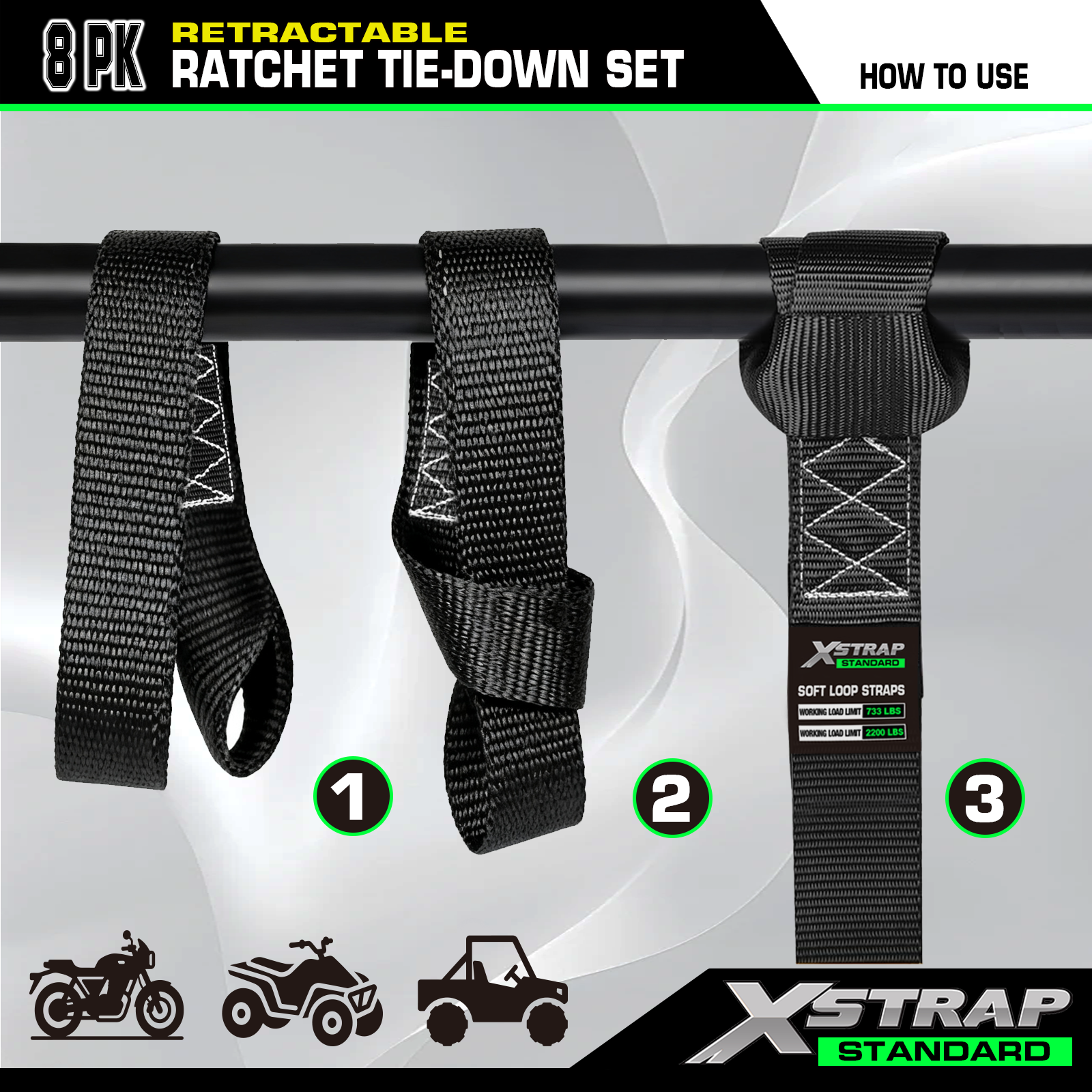 Xstrap Retractable Ratchet Tie-Down Set with Soft LoopsA four-strap 1-inch x 10-foot set with automatic retraction and soft loops, offering tidy setup for motorcycles, PWCs, kayaks, and ATVs.View Product →
Compact ATV utility trailer
Suggested setup: four 1-inch to 1.25-inch ratchet straps, 6 to 10 feet, with vinyl-coated hooks or soft loops at the vehicle end.
Why it works: lower weight, tight trailer frame, and easy handling. Inspect the cam or ratchet before every highway trip.
Full-size UTV on an open trailer
Suggested setup: four 2-inch ratchet straps with wide handles, plus two additional straps if the trailer has six rated points.
Why it works: wider webbing and more leverage suit heavier machines, roof accessories, and longer deck lengths.
Frequent loading and rental use
Suggested setup: retractable ratchet straps for the main four points, with a spare conventional strap for awkward loads.
Why it works: self-storing webbing reduces trip hazards and loose tails, while a spare strap handles nonstandard anchor positions.
Coastal or wet-climate trailer
Suggested setup: stainless steel hardware where available, plus routine rinsing and drying after each trip.
Why it works: salt and moisture attack plated hardware first; inspection becomes easier when corrosion is controlled.
For buyers comparing a new strap set, look beyond color and packaging. Check the working load limit on the assembly, the hook opening, the ratchet handle clearance, and whether replacement straps or hardware are available. A strap set that can be repaired and rechecked is more useful than a low-cost set that must be thrown away after one damaged hook.
Purchasing Checklist for Dealers, Fleet Buyers, and Trailer Owners
Before ordering a batch of ATV and UTV tie-down straps, verify the use case with the same care you would apply to a trailer hitch or wheel chock. The cheapest strap is not a saving if it slips, rusts, or fails inspection early. The most expensive strap is not automatically better if its hook does not fit the trailer anchor. Match the assembly to the vehicle, trailer, climate, and loading frequency.
- Confirm the working load limit: require a clear label on the finished assembly, not only on a roll of webbing.
- Measure the anchor opening: check hook throat width, wire diameter, and whether the hook can fully seat under load.
- Choose length by route: test the strap from trailer anchor to vehicle point with the ratchet in a comfortable position.
- Review the ratchet handle: a wide handle helps with gloves; a low-profile handle helps in tight trailers.
- Check the finish: zinc plating, coated hooks, stainless options, and webbing treatment should suit the climate.
- Plan storage: loose tails should be secured; retractable units need clearance and mounting space.
- Ask about replacement parts: hooks, ratchets, and replacement straps extend the useful life of a set.
- Set an inspection interval: daily for rental fleets, before each trip for owner-use trailers, and more often in salt or abrasive conditions.
For a factory-built strap program, consistent webbing width, stitch pattern, and hook specification make it easier to train users and inspect returned products. Custom labeling can include the working load limit, inspection notes, and a batch reference. Those details matter when a trailer is used by different drivers or when a fleet manager needs to replace one damaged component without replacing the entire set.
Frequently Asked Questions
How many tie-down straps do I need for an ATV or UTV on a trailer?
Four independent straps are a practical baseline for most ATV and UTV trailer loads. Use six when the machine is heavy, the suspension is long-travel, the trailer deck is short, or the route includes rough roads. Each strap should have a rated anchor and a clear path to the vehicle frame or a rated suspension point.
Can I use 1-inch straps for a full-size UTV?
Only if the complete assembly has a working load limit that suits the loaded machine and the anchors are rated for the load. In practice, many full-size UTVs benefit from 2-inch straps because the wider webbing and larger ratchet give more control. Do not judge by width alone; read the label on the finished assembly.
Is break strength the same as working load limit?
No. Break strength is the failure point in a test. Working load limit is the maximum load the manufacturer intends the assembly to secure in service. Use the working load limit and the lowest-rated component in the system for planning.
Are retractable ratchet straps suitable for trailer use?
Yes, when the complete assembly is rated for the load and the housing fits the trailer. They are convenient for frequent loading and loose-tail control. Check the working load limit, the hook style, and whether the retractable unit can be mounted or positioned without rubbing the vehicle or trailer.
Where should I attach the straps on a UTV?
Use strong lower frame points, rated suspension components, or dedicated tie-down loops. Avoid plastic body panels, thin sheet metal, brake lines, fuel lines, and wiring. Route the strap so it does not pull sideways on a hook or crush a roof pillar.
How tight should the straps be?
Tight enough to remove slack and control movement without collapsing the suspension or distorting the machine. Tension evenly, secure the tails, and recheck after the first few miles. If a hook rocks or a strap rubs, stop and adjust the route.
When should I replace a tie-down strap?
Replace it when the webbing is cut, melted, heavily abraded, chemically damaged, or stiff from UV exposure. Also replace the assembly when stitching is broken, the ratchet teeth are damaged, a hook is bent or opened, or the working load label is no longer readable.
Can I use the same straps for an ATV and general cargo?
It is better to keep vehicle straps separate from general cargo straps. A strap used around sharp cargo or rough equipment may develop abrasion that is easy to miss. Mark or store vehicle tie-downs separately so they are inspected and used consistently.
Popular Products
Recent News
 How Do You Choose the Right Utility Tie Downs and Bungee Cords for Your Needs
Introduction
When it comes to securing your gear for transport, storage, or organization, Utility Tie Downs and Bungee Cords are essential tools. Whether you're hauling heavy loads...
 The Ultimate Guide to Ratchet Straps: Choosing, Using, and Maintaining Them
Introduction to Ratchet Straps
What Are Ratchet Straps?
Ratchet straps, also known as tie-down straps or cargo straps, are a type of load securement tool widely used in transportat...
 How Can Ratchet Tie Down Standard Duty Straps Ensure Safe and Reliable Cargo Securement
What Are Ratchet Tie Down Straps and Why Are They Important for Cargo Securement?
Introduction to Ratchet Tie Down Straps
Ratchet tie down straps are essential tools for anyone inv...
 What are Ratchet Straps and how do they help you transport your items safely
What Are Ratchet Straps?
Ratchet straps, also known as ratchet tie-downs or cargo straps, are heavy-duty fastening tools designed to secure items during transportation. They consis...
 How to Properly Use Light Duty Ratchet Tie Downs for Maximum Load Security
Understanding the Basics of Ratchet Tie Down Light Duty Straps
Ratchet tie-down straps are a critical tool in the transportation, storage, and securement of goods. They are used to...
-
 No. 21 Yuefeng Road, Yangshe Town, Zhangjiagang City, Suzhou City, Jiangsu Province
-
Quick Links
Social Media
-
OEM Partner
-


Copyright © 2025 Zhangjiagang SMK MFG. Co., Ltd. All rights reserved.
 Wholesale Tension Strap Manufacturers