
 English
 Français
 Español

Home / News / Industry News / Heavy Duty Trailer Tie Down Anchors: Types, WLL Ratings & Selection Guide
Heavy Duty Trailer Tie Down Anchors: Types, WLL Ratings & Selection Guide
2026-10-02
A skid-steer loader weighing around 6,500 lb shifts two inches toward the trailer nose during a hard brake, and the two rusty stake-pocket rings behind it flex outward like they are made of soft clay. Nothing breaks that day. But the welds around both rings are now slightly out of true, and the crew keeps loading the same way for another full season. Scenarios like this are why heavy duty trailer tie down anchors deserve far more attention than they usually get: the strap, the ratchet, and the hook all inherit the strength of the point they clip into.
Here is the conclusion first. Specify forged anchor points with a stamped working load limit (WLL), match every anchor to the end hardware on your straps, and install enough points so the combined WLL is at least half the weight of your heaviest routine load. Those three decisions cover most of what actually matters. The rest of this guide breaks down each anchor type, the numbers to read before buying, placement and installation practice, and the mistakes that quietly cost trailer owners, fleet operators, and equipment importers money every year.
The one number to remember: federal cargo securement rules in the United States require the combined working load limit of all tie-downs to be at least one half the weight of the cargo being secured. Underrated anchors cannot be compensated by stronger straps — the system is only ever as strong as its weakest rated point.
What Heavy Duty Trailer Tie Down Anchors Actually Do
A trailer tie down anchor is any fixed, load-rated point that accepts a hook, chain anchor, strap eye, or track fitting and transfers restraint force from the tie-down assembly into the trailer frame. Everything upstream — webbing, buckle, hook — depends on that transfer happening without bending, cracking, or pulling loose.
The forces involved are larger than most people assume. The performance criteria used in US cargo securement treat forward restraint on the order of 0.8 g, meaning a 5,000 lb machine can briefly push forward with roughly 4,000 lb of force under severe braking. Rearward and lateral loads approach half a g in the same framework. Anchor points see these loads one at a time or in combination, at odd angles, with road vibration on top, for the entire life of the trailer.
Reading the load path is the fastest way to judge any anchor: the hook seats into the ring, the ring transfers load into its weld or bolts, and the weld or bolts transfer it into the frame rail. Weakness at any stage downgrades the whole chain. That is why a stamped WLL on the ring is not a marketing detail — it is the manufacturer's guarantee for that specific transfer point, backed by its material and geometry.
Before comparing types, check any anchor against four basics:
- A visible, stamped or tagged WLL — not just an advertising break-strength figure
- Forged construction for load-bearing rings, rather than thin stamped plate
- Geometry that lets your hooks seat fully without bearing at an angle
- A mounting method that suits the trailer frame: weld-on, bolt-on, recessed pocket, or track
Meet those four conditions and any of the anchor families below can do its job. Miss one, and the type name on the invoice matters very little.
The Main Types of Heavy Duty Trailer Tie Down Anchors
Not every trailer needs the same anchor strategy. Open-deck equipment trailers, enclosed cargo vans, and car haulers all solve the same problem — giving straps somewhere rated to attach — with different hardware. The six families below cover nearly everything on the road.
Weld-On Forged D-Rings
Forged D-rings welded flush to the frame are the workhorse anchor on flatbeds and equipment trailers. Forging aligns the steel's grain structure, which is why a forged ring handles shock loads better than a cast or stamped equivalent of the same size. Typical published WLLs run from roughly 2,000 lb on smaller rings to around 5,000 lb on full-size one-inch forged rings — always confirmed by the stamp, never by eye. Weld-on mounting keeps the profile low and eliminates the bolts that can work loose under vibration.
Xstrap 1-Inch Forged D-Ring with Weld-On Clip for Heavy Duty Trailer Tie Down Anchoring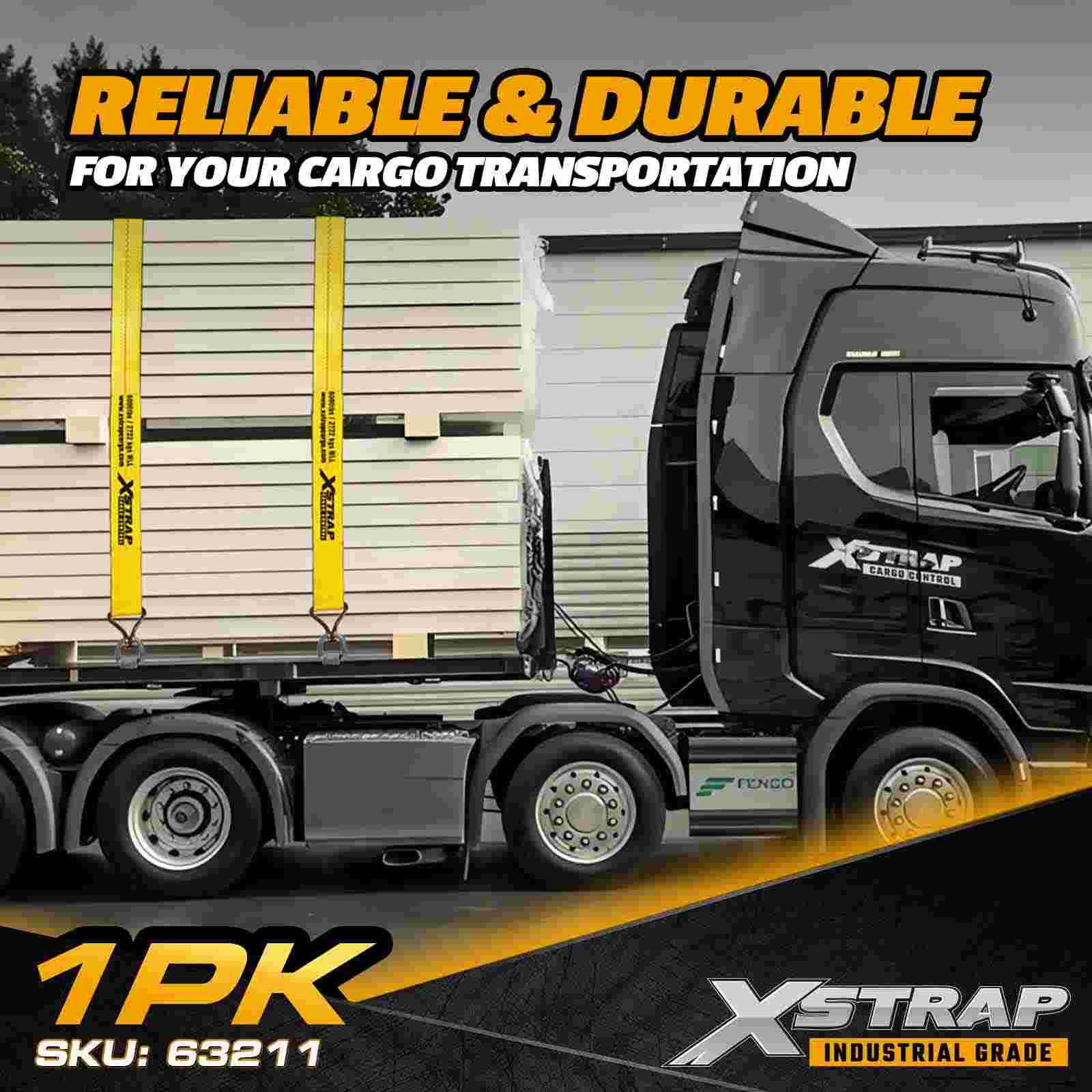 Xstrap 63211 1" Forged Weld-On D-Ring, 15,586 lbs WLLA 1-inch forged steel D-ring with weld-on clip rated at 15,586 lbs WLL. Forged grain structure handles shock loads on flatbeds, though performance depends on a proper full-perimeter weld by a qualified installer.View Product →
One practice note: a weld-on ring is only as good as its weld. The manufacturer supplies the rated ring; the installer is responsible for a full-perimeter fillet weld of the specified size, done on clean, prepared steel by a qualified welder.
Bolt-On D-Rings and Rope Tie-Offs
Bolt-on anchors trade a little capacity for installability. They make sense where welding is impractical — aluminum frames, finished trailers, and rental fleets that rotate equipment between units. Use grade 8 bolts (or class 10.9 metric), hardened washers on both sides, and a backing plate or heavy gusset inside the frame wherever possible, because thin C-channel walls will deform long before the ring itself fails. Smaller bolt-on rope tie-offs also serve light utility loads along the tongue and side rails.
Recessed (Flush-Mount) D-Rings
Recessed D-rings sit in a steel pocket that drops into a cut-out in the deck, so the ring lies flush when not in use. Car haulers favor them for an obvious reason: tires and equipment roll over the deck without snagging. The trade-offs are installation care — the cut-out needs sealing against rust — and the fact that true capacity depends on both the ring and the pocket welds, not the ring alone.
E-Track and Logistic Track Systems
Inside enclosed trailers, E-track puts an anchor point anywhere along horizontal or vertical rails. Slots on standard E-track repeat roughly every two inches, and spring fittings snap in without tools — exactly what a van operator wants when this week's load is boxed appliances and next week's is palletized freight. Properly installed steel E-track with matching fittings is commonly rated around the 2,000 lb WLL mark per fitting. The system's real advantage is flexibility: anchor positions move with the freight instead of the freight moving to fixed rings.
L-Track (Airline Track)
L-track descends from aviation cargo floors. It is lighter, lower profile, and usually aluminum, with round holes instead of E-track slots. Single-stud fittings suit lighter loads, while heavy-duty double-stud versions push the rating up substantially. It is the right choice where floor depth is scarce or added weight matters; it is the wrong choice when someone stretches it into repeated heavy-equipment duty it was never specced for.
Winch Track, C-Track, and Stake Pocket Anchors
Flatbeds add two more anchor families. Winch track — heavy steel C-track, often rolled from quarter-inch steel — is welded or bolted along both frame rails and accepts sliding winches, letting the operator position each strap point precisely along the length of the deck. At the deck edge, stake pocket anchors drop into the standard two-inch stake pockets of a utility trailer and convert an empty pocket into a rated D-ring tie-off. Both approaches move anchor points around cheaply; both still demand stamped ratings, because convenience hardware is exactly where unrated imports tend to appear.
Xstrap 6ft Heavy Duty Steel C-Track (1/4-Inch Steel) for Sliding Winch Trailer Tie Downs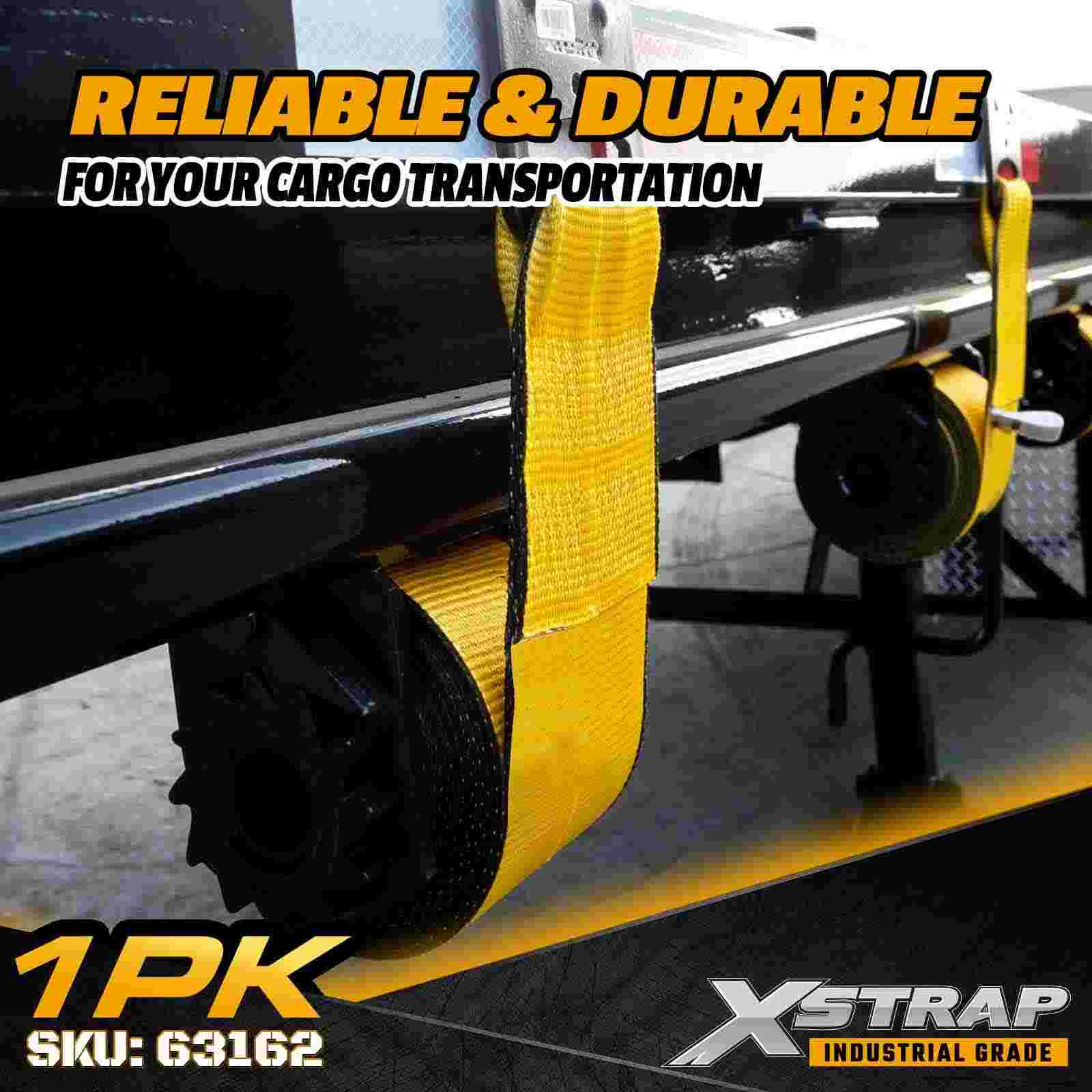 Xstrap 63162 6ft Sliding Winch Track, 1/4" Steel C-TrackThis 6-foot C-track is formed from 1/4-inch steel plate for weld-on mounting along flatbed frame rails, accepting sliding winches so operators can position strap tie-down points precisely along the deck.View Product →
| Anchor type | Typical WLL range | Best suited for | Installation method |
|---|---|---|---|
| Weld-on forged D-ring | 2,000 to 5,000 lb | Machinery, equipment, palletized freight on open decks | Full-perimeter weld by a qualified welder |
| Bolt-on D-ring | 1,200 to 3,300 lb | Aluminum or finished frames, rental fleets | Grade 8 bolts, washers, backing plate |
| Recessed D-ring | 2,000 to 4,000 lb | Car haulers and decks that must stay flush | Pocket welds with sealed cut-out |
| E-track with fittings | Around 2,000 lb per fitting | Enclosed vans, mixed and changing freight | Rails screwed or welded to walls and floor |
| L-track with fittings | 500 to 2,000 lb by fitting | Low-profile, weight-sensitive floors | Screwed into floor or wall panels |
| Winch track with sliding winch | Pairs with strap WLL; 2-inch strap is about 3,333 lb | Flatbeds, long or heavy loads | C-track welded or bolted along frame rails |
| Stake pocket anchor | 1,000 to 2,000 lb typical | Utility trailers, light equipment | Drops into the standard 2-inch pocket |
Working Load Limit vs Break Strength: Reading the Numbers Correctly
Buy on working load limit, not break strength. Break strength is the point where a component fails in a straight-pull test; WLL is the fraction of that number you are allowed to use in service. For manufactured web tie-down assemblies, US rules set the WLL at one third of breaking strength; for alloy transport chain it is one quarter. A strap advertising 10,000 lb break strength is telling you its WLL is about 3,333 lb — and your anchor must meet or beat that same logic.
The aggregate rule makes the arithmetic practical: all tie-downs on a load must total a WLL of at least half the cargo weight. Securing a 10,000 lb load means the combined WLL of straps and their anchor points must reach 5,000 lb. Two 2-inch winch straps at 3,333 lb each clear that comfortably, provided the rings or track behind them are rated equally.
Heavy items add another layer. Cargo over 10,000 lb must also be restrained against forward and rearward movement with dedicated devices in each direction. In practice that means planning anchor positions in pairs — ahead of and behind the load — rather than relying on friction between tires and deck.
Typical published WLL values shown for illustration; actual ratings vary by manufacturer and size — always load to the stamped figure on your specific hardware.
Notice what the chart implies: the anchor can be the bottleneck. A 5,000 lb forged D-ring lets a 3,333 lb winch strap work at its full rating; a 1,500 lb stake pocket ring quietly caps that same strap at less than half of it. This is why upgrading straps without upgrading anchors is one of the most common — and most useless — spending decisions in cargo control.
Matching Anchor Points to Strap Hardware
An anchor and a strap meet at a hook, and hook choice changes how the load actually travels. Chain anchors and grab hooks seat positively into D-rings and stake pockets; flat hooks are designed to capture a rub rail or pocket lip; wire hooks reach into rings and recessed pockets; snap hooks add a latch where rough roads or loaders may shake an open hook loose. For a closer look at how end fittings behave under real loads, this breakdown of how different hook styles impact cargo securement on 2-inch assemblies is worth five minutes of any buyer's time.
Two seating rules prevent most field problems. First, load hooks and rings in line with their designed direction: a D-ring pulled sideways over a deck edge works at a fraction of its rating and grinds away at its own weld line. Second, respect the throat. A hook that only sits half-seated on an oversize ring, or that bears on its tip instead of its bowl, has silently derated the whole system before the truck moves an inch.
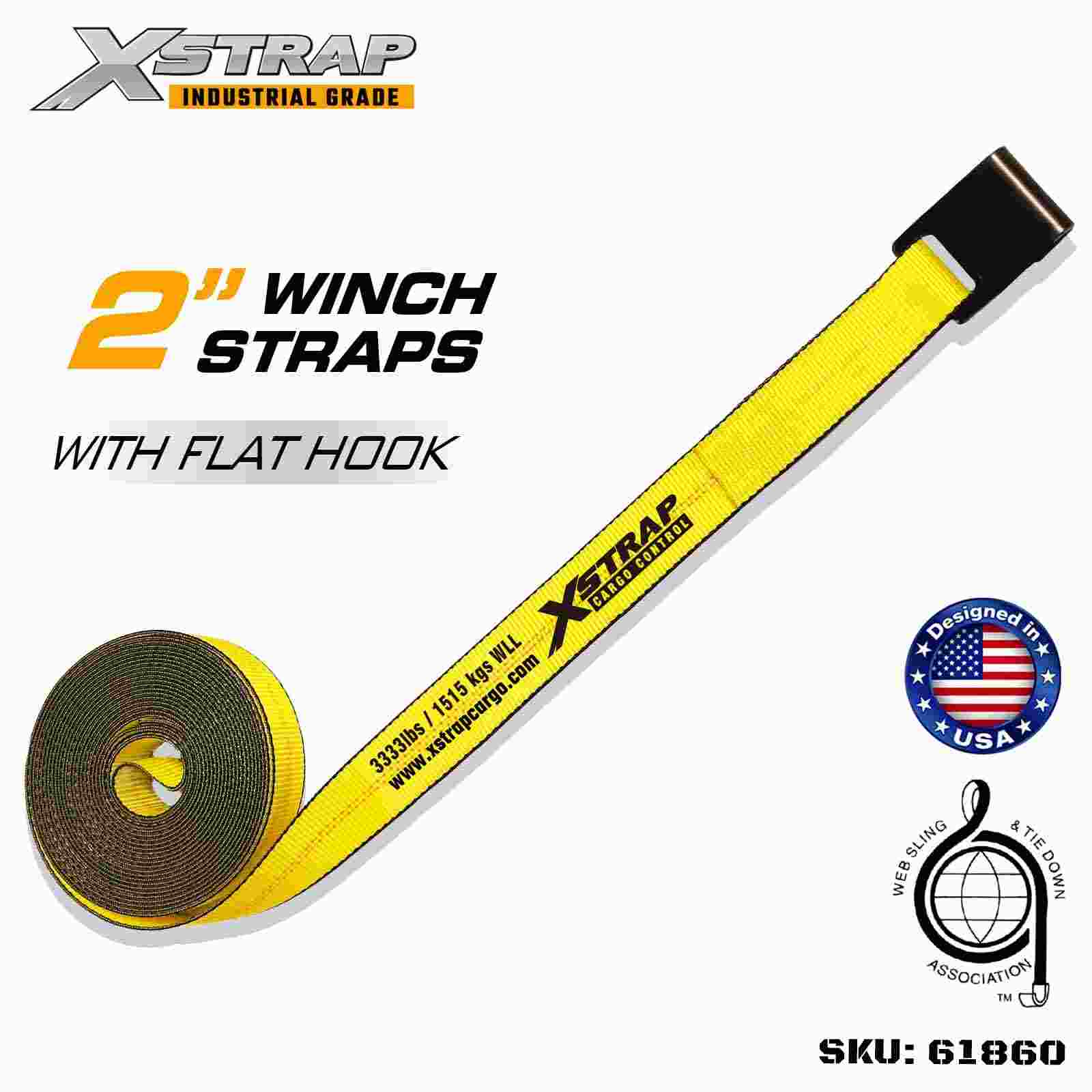
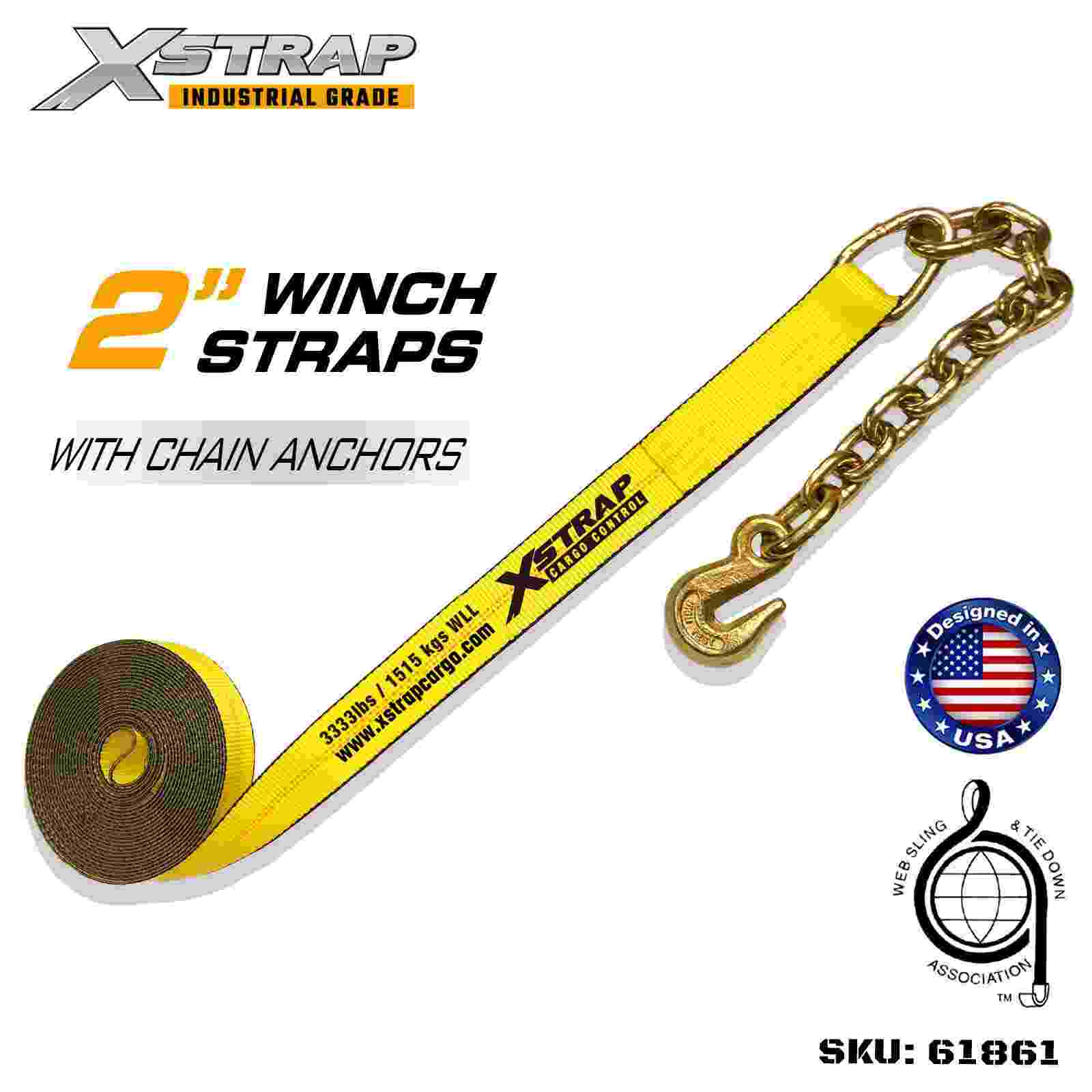
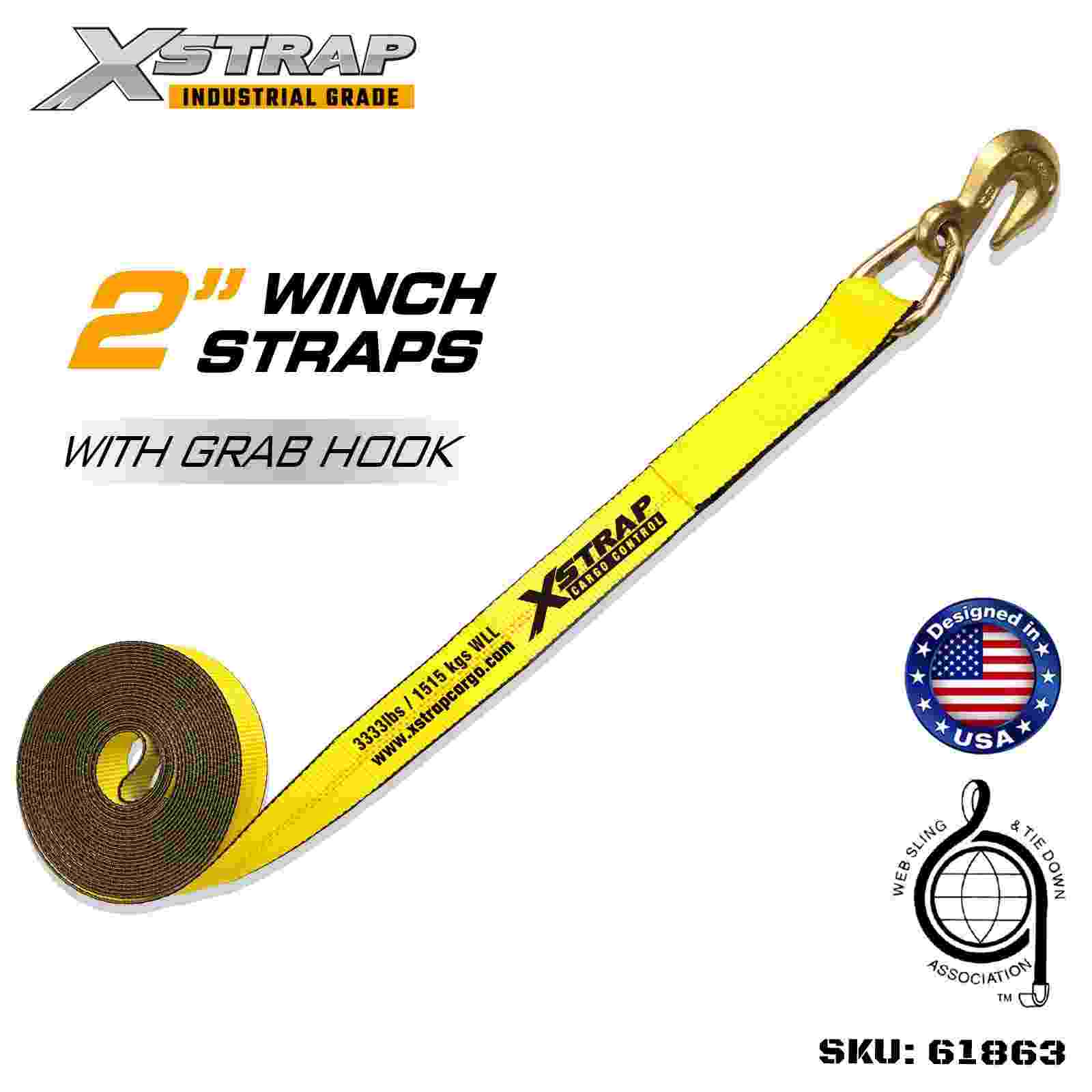
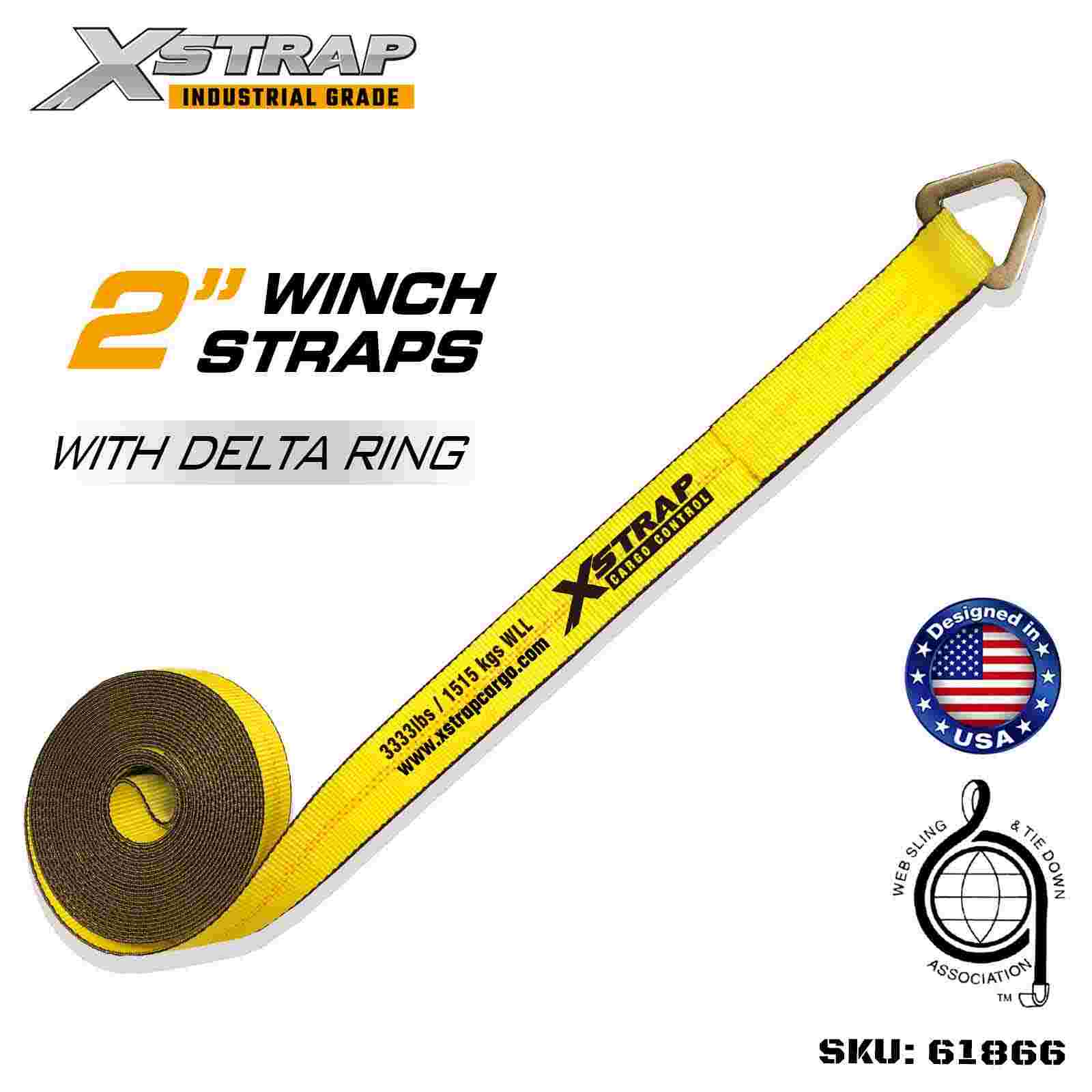
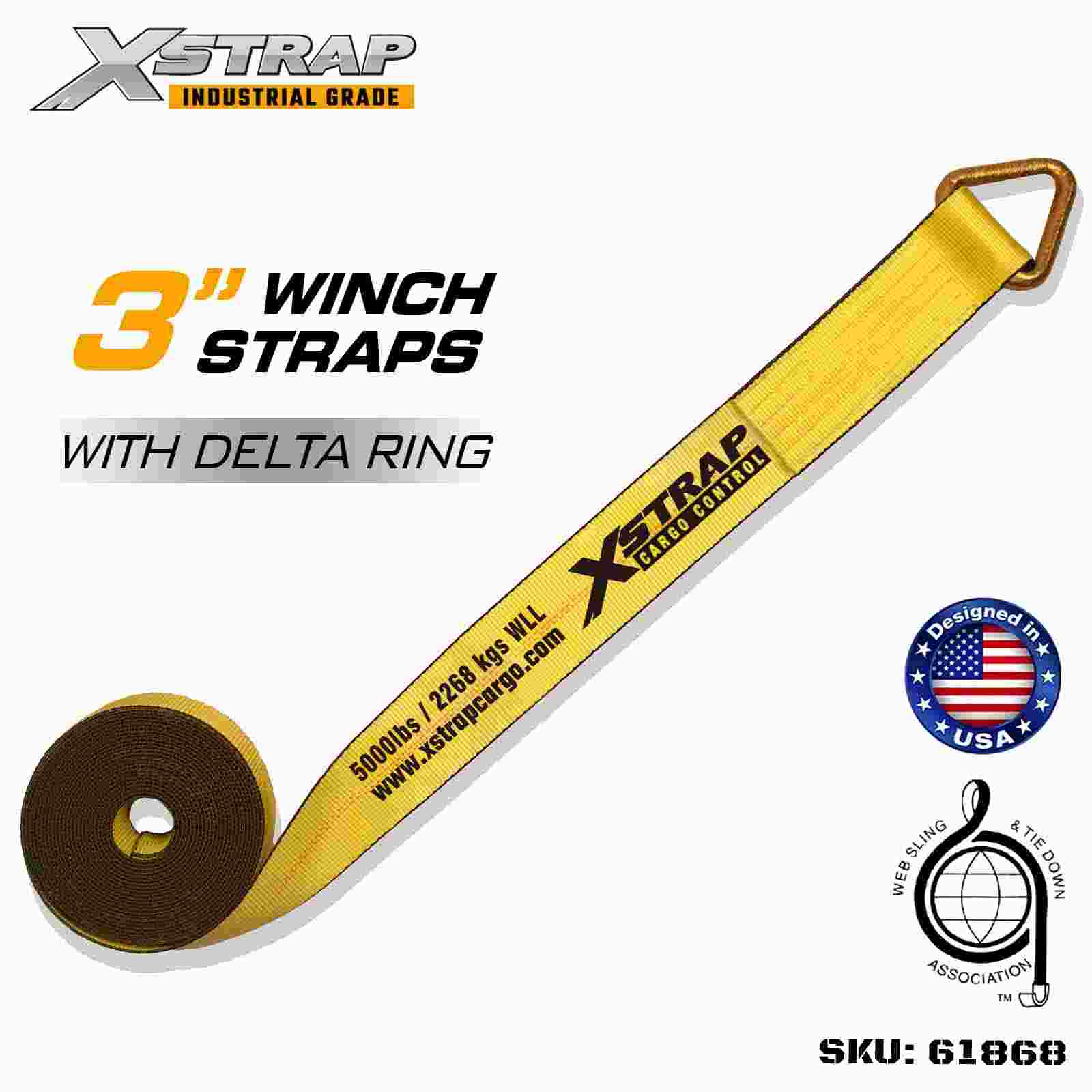
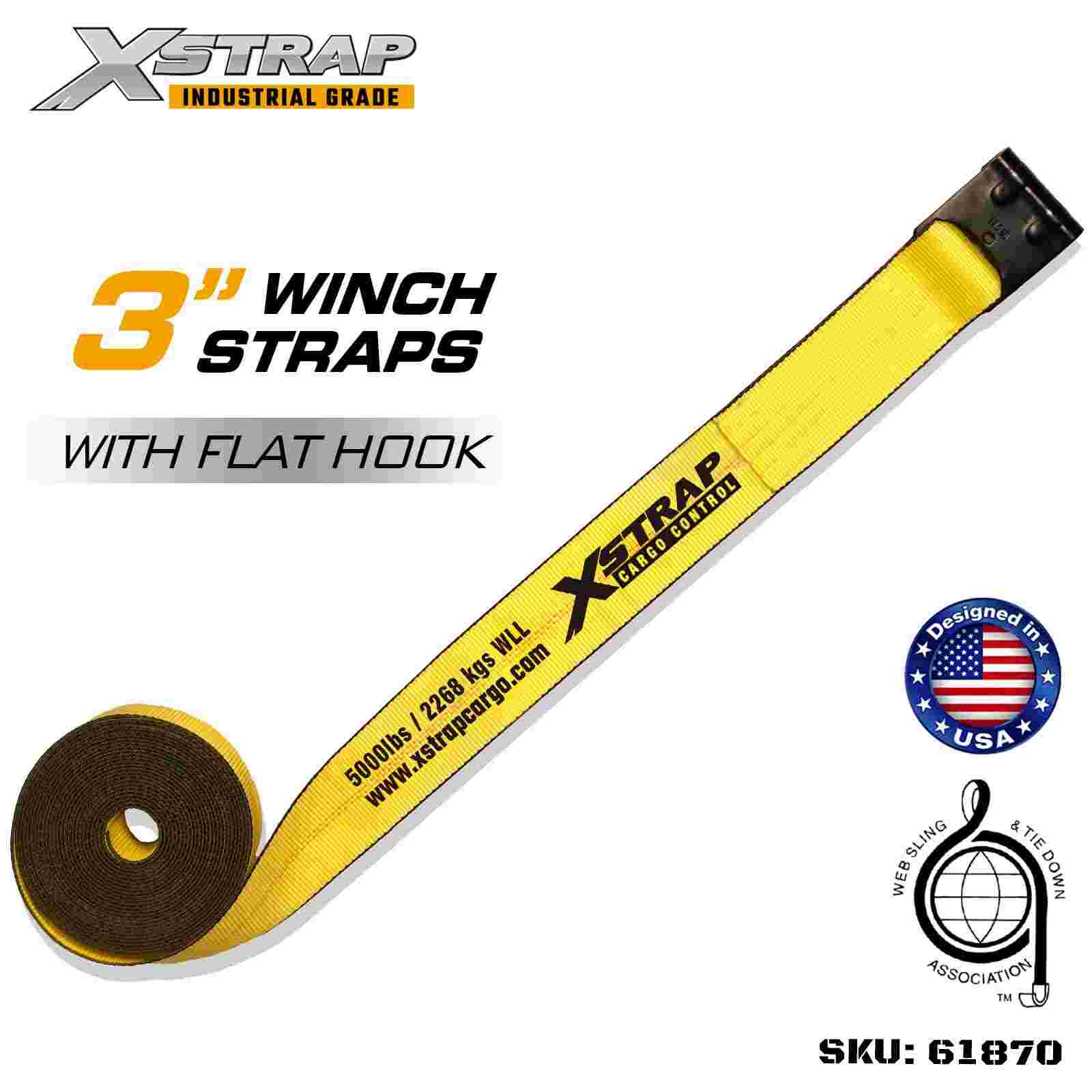
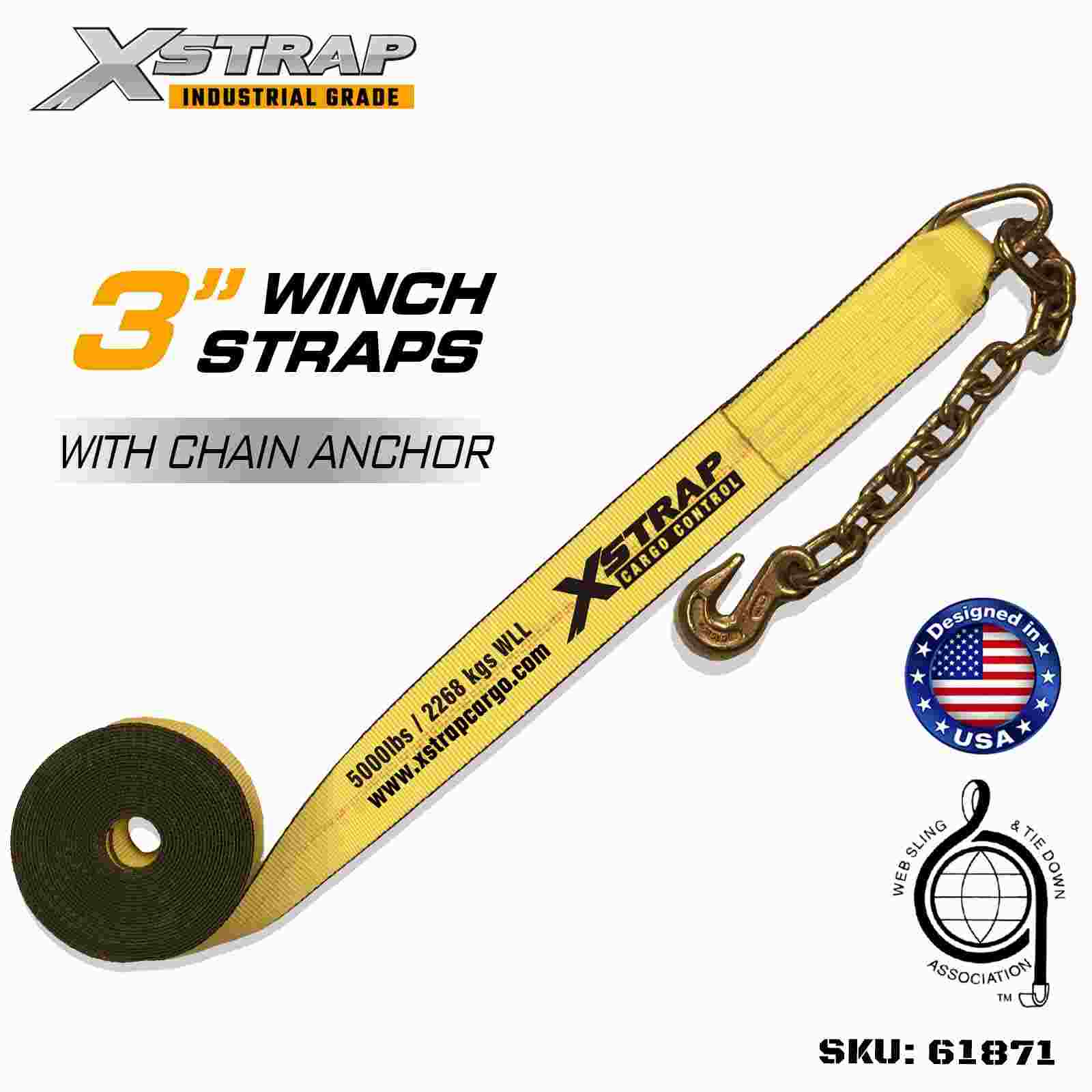
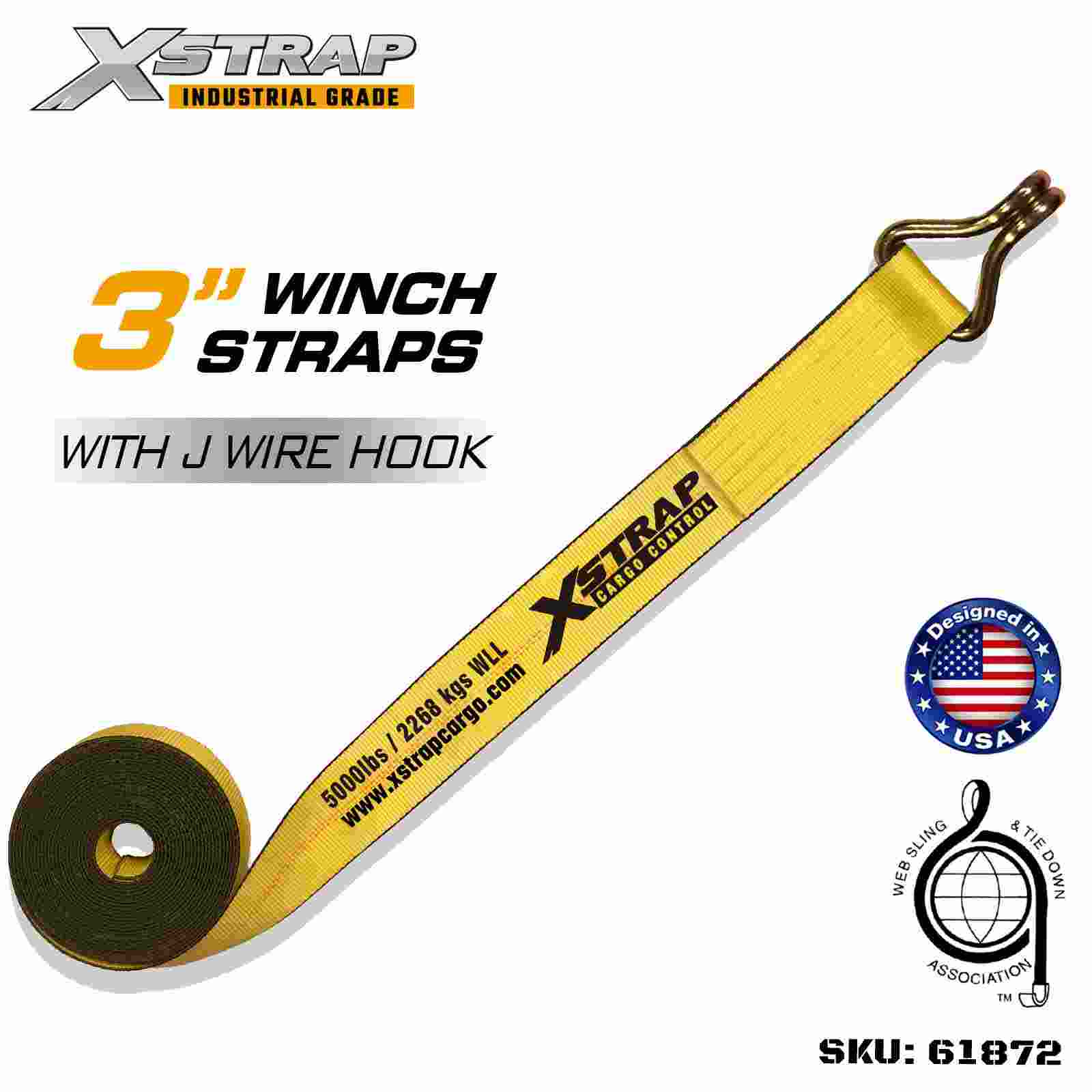
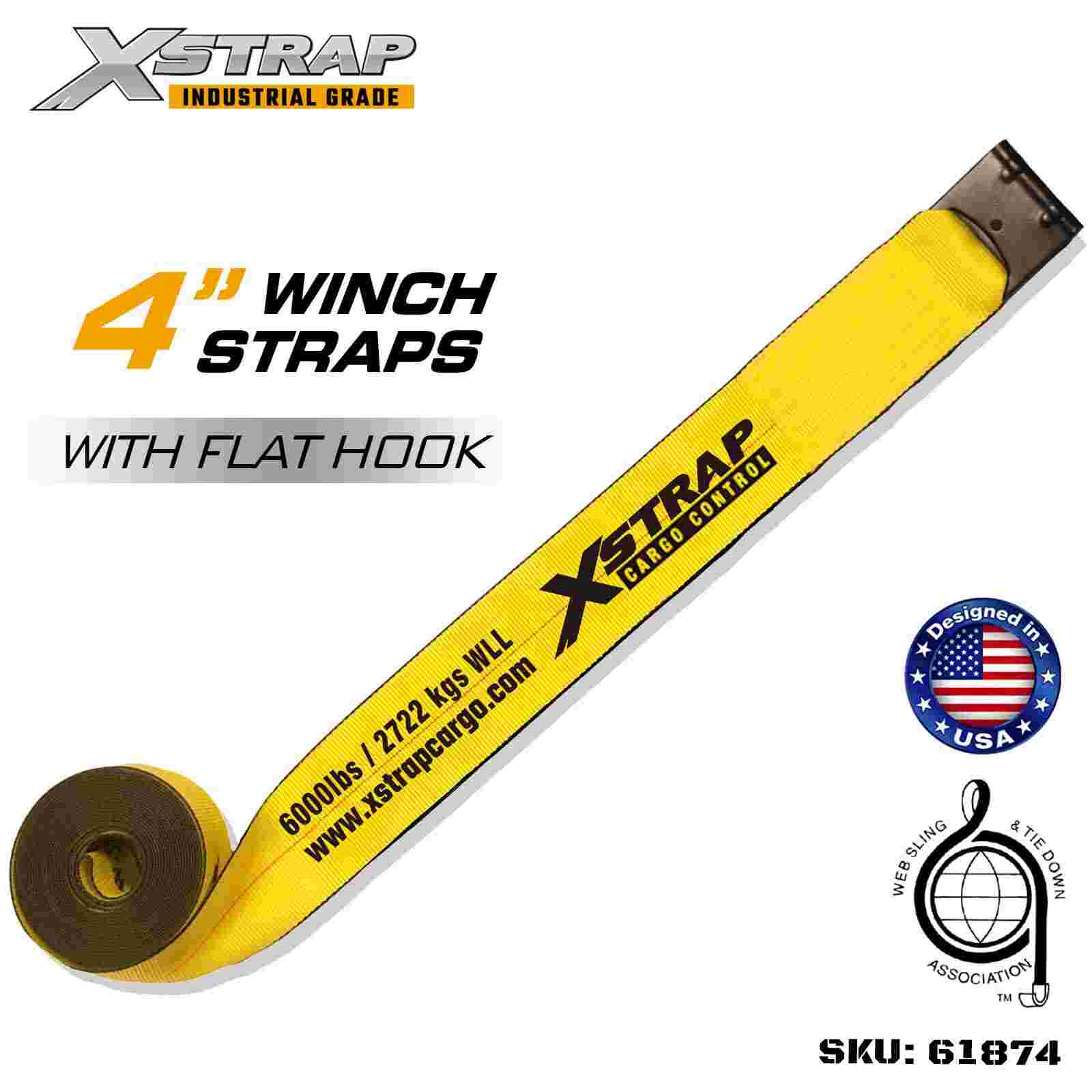
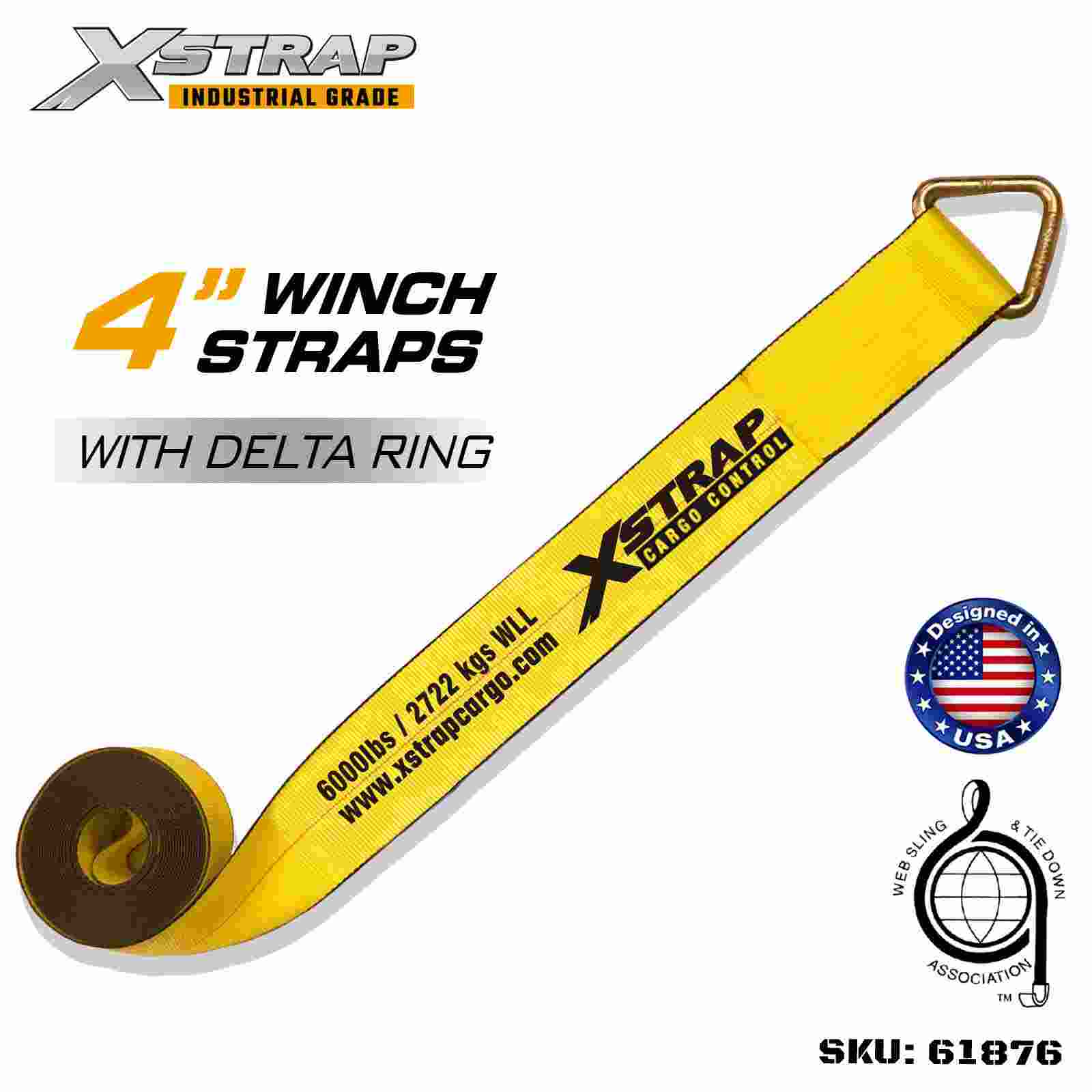
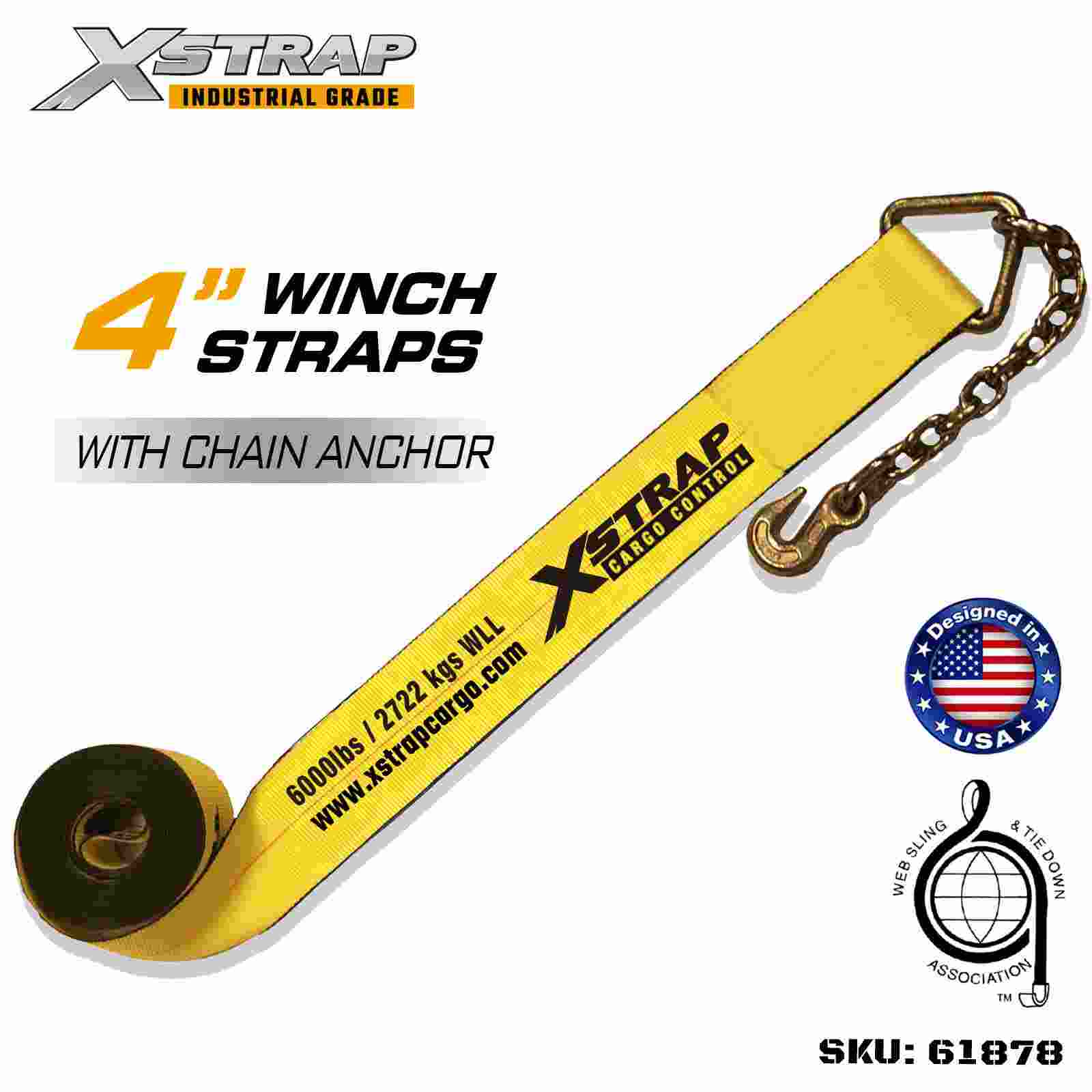
Winch straps simplify flatbed work because the anchor interface is built into the strap: it terminates in a chain anchor, flat hook, wire hook, or delta ring matched to track and rail hardware. When both ends of the equation come from the same production line, the WLL documentation lines up across the entire assembly instead of being reconstructed from three separate spec sheets.
Xstrap 2-Inch x 30ft Standard Winch Strap with Chain Anchors for Flatbed Anchor Points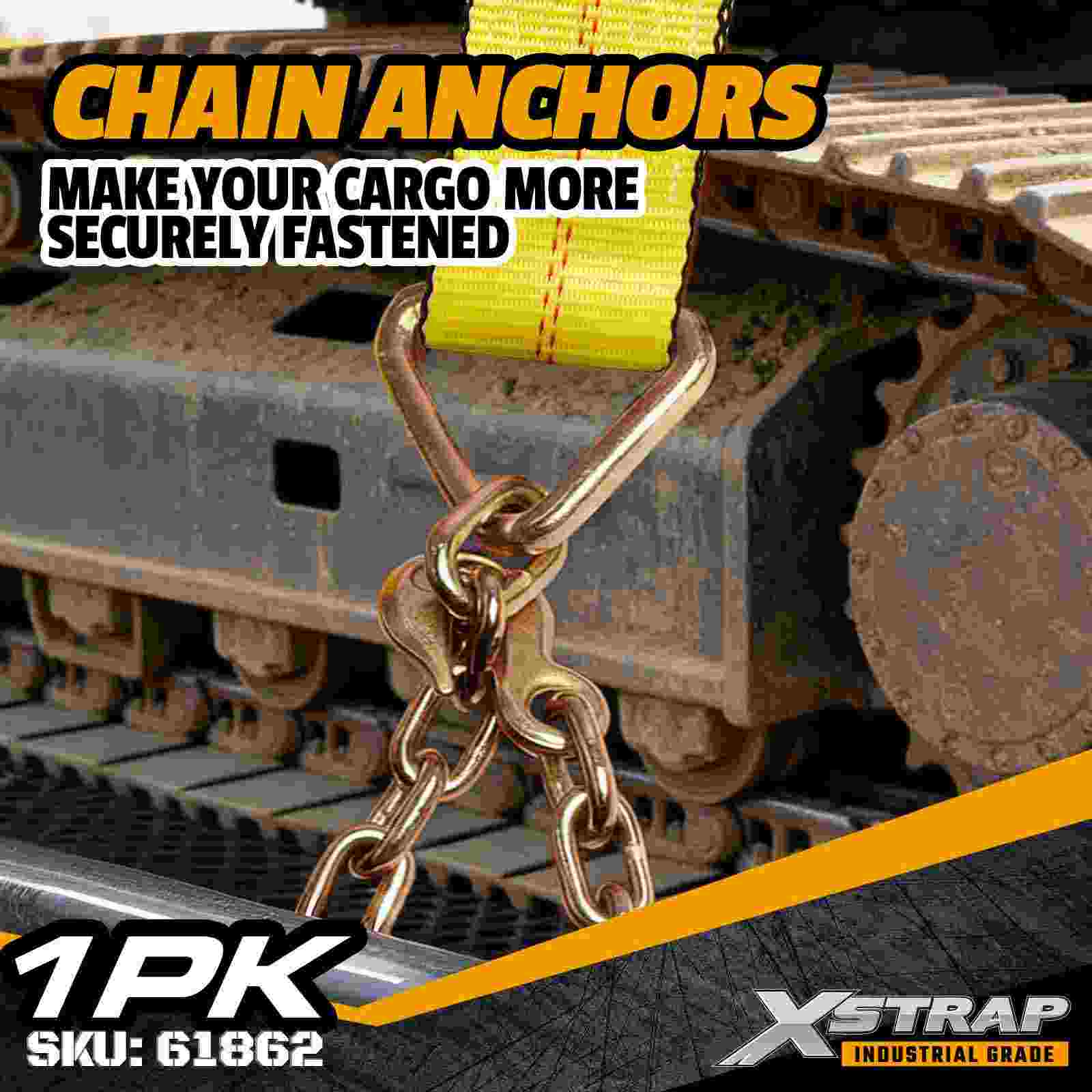 Xstrap 61862 2" x 30ft Winch Strap with Chain AnchorsA 30-foot, 2-inch winch strap with chain anchors, rated at 3,333 lbs WLL and 10,000 lbs break strength. Suited to four-point flatbed securement of pallets, lumber, and pipes where WLL matters more than break strength.View Product →
Anchor Placement: Planning the Layout Before You Drill or Weld
Placement determines whether rated hardware delivers rated performance. The default is the four-point pattern: restrain each corner zone of the cargo so at least one strap works against forward movement and one against rearward movement, with paired straps covering lateral shifting. For loads over 10,000 lb, that fore-and-aft pairing stops being a suggestion and becomes a requirement.
Strap angle matters just as much. A steeper strap converts more of its tension into straight-down clamping force, which raises friction between cargo and deck; a shallower angle puts more of the load into pure horizontal restraint. Most operators work in the band between roughly 30 and 60 degrees from the deck — one more reason anchors placed slightly inboard of the deck edge, not right at it, give you better geometry to work with.
Put ring pairs just wider than the cargo footprint so the webbing hugs corners without rubbing sharp edges, and keep anchor rows close enough to the cargo ends that forward and rearward straps stay short and steep. Wherever webbing crosses a steel edge, fit corner protectors — a strap cut on an unprotected edge fails exactly the way an unrated anchor does, just faster.
Typical flatbed anchor layout, top view
Side frame rails carry C-track — sliding winches reposition along the full length of the deck
Forward D-ring pair — first strap works against forward load under braking
Mid-deck ring pairs — spaced just outside the cargo footprint, 30 to 60 degree strap angles
Rear D-ring pair — dedicated rearward restraint for loads over 10,000 lb
Stake pockets at the deck edge — light utility tie-offs only, never the heaviest straps
Schematic for planning purposes; final positions must follow the frame structure and the dimensions of the actual load.
Installation Methods Compared: Weld-On, Bolt-On, and Recessed
Welding, bolting, and recessed pockets each shift responsibility somewhere different. Welding puts the quality burden on the weld itself: the specified fillet size must run the full perimeter of the ring base, on clean ground steel, applied by a welder qualified for the position. A three-sided cosmetic weld around a rated ring produces an unrated anchor, and no stamp on the ring will change that.
Bolting shifts the burden to fastener selection and torque. Done on thick frame steel with the right hardware, a bolted install serves heavy duty for years; done on thin deck skin, it fails by pulling through long before the ring's rating is reached. A disciplined bolt-on sequence looks like this:
- Locate the frame rail or crossmember behind the mounting spot and confirm its thickness — the anchor joins the frame's structure, not the deck skin.
- Drill to the bolt's specified clearance size and deburr both faces.
- Assemble with grade 8 bolts, hardened flat washers on both sides, and a backing plate or structural gusset where the frame wall is thin.
- Torque to the fastener manufacturer's specification and mark the nut with a paint pen so loosening becomes visible at inspection.
- Re-torque after the first loaded trip; vibration bedding on trailer frames is real and predictable.
Recessed installs add one step that routinely gets skipped: sealing the cut-out edges before the pocket goes in. Water that sits in an unsealed pocket starts corrosion in exactly the place where the ring's welds live, which is the most expensive possible location for rust on a trailer.
Material Choices: Forged Steel, Castings, Galvanized, and Stainless
Forged carbon steel remains the default for load-bearing rings and hooks. The forging process aligns grain flow around the ring's curvature — precisely where shock loads concentrate — while castings are less forgiving of internal porosity in that same zone. Stamped or bent plate belongs on light-duty tie-offs only, no matter how thick it looks next to a forged part.
Coating decides service life more than base steel does in most climates. Zinc plating suits general road use; hot-dip galvanizing earns its cost on equipment that lives outside; stainless steel rings and hardware are the rational choice for boat trailers and coastal operations where salt exposure never really stops. Interior-van track largely sidesteps the issue, which is one quiet reason enclosed fleets see longer anchor life than open decks.
High-humidity routes and seasonal storage deserve a harder look. Plating quality, weld-area coverage, and drainage around recessed pockets decide whether a five-year anchor is still a five-year anchor — and buyers comparing quotations should compare those details, not just the price per piece.
An Inspection Routine That Keeps Anchor Points Legal and Safe
Anchor points rarely fail without notice; the notices just get ignored. A short walk-around every time the trailer is loaded catches almost everything that matters, and a closer hands-on check each month catches the rest. The five checkpoints below cover the great majority of real-world findings.
| Check point | What to look for | Action if found |
|---|---|---|
| Ring body | Cracks, deep nicks, elongated or bent profile, flat spots | Remove from service; never straighten a deformed ring |
| Weld line | Cracking anywhere on the perimeter, rust scaling in the weld | Stop using that anchor; re-weld only to the original specification |
| Bolts and washers | Missing washers, paint marks out of line, looseness by hand | Re-torque; replace stretched or corroded fasteners |
| Track systems | Deformed slots, fittings that seat loosely, cracked rail screws | Replace fittings; refasten rail screws properly |
| Corrosion | Pitting deep enough to catch a fingernail on load-bearing surfaces | Downrate or retire the anchor depending on depth |
When a component must leave service rather than be repaired is a question with actual rules behind it, and the logic is worth learning once; this guide to daily inspection and scrapping standards for tie-down equipment walks through that line in detail. Fleets that write the criteria into their maintenance sheets stop arguing about judgment calls at the loading dock.
Five Buying Mistakes That Quietly Cost Money
Most anchor purchasing errors repeat the same five patterns. Each one looks harmless on a quotation and expensive in a roadside inspection or a damaged-load claim.
1
Shopping break strength instead of WLL
The biggest number on a listing is the failure point in a test rig, not the rating you may load to. Compare working load limits across offers, or you are comparing the wrong figures entirely.
2
One unrated link in a rated system
A single no-name ring between two certified straps caps the entire assembly at its own unknown strength. Every load-bearing point needs its own stamp, without exception.
3
Ignoring what is behind the anchor
A 5,000 lb ring bolted to thin deck skin is a 500 lb anchor in practice. Ask what the mounting joins to, and require backing plates or gussets where the frame is light.
4
Too few points, wrong positions
The aggregate rule is about combined WLL, but the geometry rule is about placement. Four rings clustered in the middle cannot deliver the fore-and-aft restraint that heavy cargo legally requires.
5
No paperwork with the hardware
Ratings without test documentation are claims, not specifications. Ask for WLL certificates, material records, and the production line's certification status before committing to volume.
Why Source Anchors and Straps From One Factory
There is a practical reason trailer builders, rental fleets, and equipment importers increasingly buy anchors and straps as one documented package: the arithmetic in this article only works when every component's WLL is stated on the same basis and backed by the same testing. When straps, rings, track, and winches come from a single manufacturing line, the load ratings reconcile across the assembly, and one inspection document covers the whole system instead of three separate guesses.
Zhangjiagang SMK MFG. Co., Ltd., the factory behind the Xstrap brand, runs exactly that integrated model from its production bases in Zhangjiagang, China and Cambodia. In-house webbing weaving and metal fabrication feed assembled tie-downs, forged D-rings, winch track, and sliding winches under one quality system. The company's TUV and GS certified tie-down line exists precisely for buyers who need third-party-verified ratings, and its status as an Alibaba verified supplier — together with regular factory audits from international retail sourcing teams and repeated appearances at the Canton Fair — gives purchasing teams the usual verification paths before the first container ships.
For trailer builders and equipment brands, the same capability extends to private-label and custom-specification work: anchor sizes, webbing colors, end fittings, and packaging produced to the customer's drawing, with load documentation that matches. That is difficult to assemble when buying rings from one supplier, straps from a second, and track from a third — and easy when all three come off the same floor.
Frequently Asked Questions About Heavy Duty Trailer Tie Down Anchors
How many tie down anchors does a trailer need?
Start from the aggregate rule: combined WLL of all tie-downs must reach at least half the cargo weight. As a layout habit, four rated points per heavy load position — two forward, two rearward, paired across the cargo width — covers most equipment and machinery. Lighter utility loads can use fewer points as long as the combined WLL still clears the half-weight threshold.
Are welded D-rings stronger than bolt-on ones?
Generally yes, for the same ring size, because welding removes the bolted joint and spreads load into the frame more evenly. But a poor weld erases that advantage. A properly backed, correctly torqued grade 8 bolted install on thick frame steel can outperform a bad weld on thin steel. The installer matters as much as the type.
Can I mix anchor types on one trailer?
Yes. Many flatbeds run C-track and sliding winches along the rails with forged D-rings mid-deck and a few stake pocket tie-offs at the edge. What should not be mixed is rated and unrated hardware — every load-bearing point needs its own stamped working load limit.
What WLL do I need for a skid steer or mini excavator?
Weigh the machine, halve it, and make the combined WLL of straps plus anchors meet that number, with dedicated fore-and-aft restraint for anything over 10,000 lb. A 9,000 lb mini excavator needs at least 4,500 lb aggregate — two 2-inch straps at 3,333 lb WLL each, anchored to rings rated the same, is a common and compliant layout.
How often should anchor points be inspected?
Walk around the trailer with every load in daily use, do a hands-on check monthly, and complete a documented review before peak season or after any incident where a strap broke or a load shifted. The monthly check should include touching the weld lines and re-checking bolt paint marks.
Do boat trailers need special anchors?
Salt water changes the material decision. Stainless steel rings and hardware, or properly sealed hot-dip galvanized fittings, hold up where zinc-plated steel starts pitting within a few seasons. Marine-rated transom straps follow the same pairing logic: the strap rating and the anchor rating should match.
If you are speccing anchors for a new trailer build, converting a fleet, or building a private-label cargo control line, ask suppliers three things before comparing prices: the stamped WLL of every load-bearing component, the test documentation behind those numbers, and which certifications the production line holds. Factories that answer all three in writing are the ones whose anchors you will still trust five years from now. The Xstrap team handles specification questions, sample requests, and custom manufacturing inquiries through its contact page, and meets buyers in person at every edition of the Canton Fair.
Popular Products
Recent News
 How Do You Choose the Right Utility Tie Downs and Bungee Cords for Your Needs
Introduction
When it comes to securing your gear for transport, storage, or organization, Utility Tie Downs and Bungee Cords are essential tools. Whether you're hauling heavy loads...
 The Ultimate Guide to Ratchet Straps: Choosing, Using, and Maintaining Them
Introduction to Ratchet Straps
What Are Ratchet Straps?
Ratchet straps, also known as tie-down straps or cargo straps, are a type of load securement tool widely used in transportat...
 How Can Ratchet Tie Down Standard Duty Straps Ensure Safe and Reliable Cargo Securement
What Are Ratchet Tie Down Straps and Why Are They Important for Cargo Securement?
Introduction to Ratchet Tie Down Straps
Ratchet tie down straps are essential tools for anyone inv...
 What are Ratchet Straps and how do they help you transport your items safely
What Are Ratchet Straps?
Ratchet straps, also known as ratchet tie-downs or cargo straps, are heavy-duty fastening tools designed to secure items during transportation. They consis...
 How to Properly Use Light Duty Ratchet Tie Downs for Maximum Load Security
Understanding the Basics of Ratchet Tie Down Light Duty Straps
Ratchet tie-down straps are a critical tool in the transportation, storage, and securement of goods. They are used to...
-
 +86-18112697781qindan355@gmail.comNo. 21 Yuefeng Road, Yangshe Town, Zhangjiagang City, Suzhou City, Jiangsu Province
 -
Quick Links
Social Media
-
OEM Partner
-


Copyright © 2025 Zhangjiagang SMK MFG. Co., Ltd. All rights reserved.
 Wholesale Tension Strap Manufacturers
Wholesale Tension Strap Manufacturers