
 English
 Français
 Español
Home / News / Industry News / E Track Ratchet Straps vs. Traditional Ratchet Straps: Key Differences
E Track Ratchet Straps vs. Traditional Ratchet Straps: Key Differences
2026-02-06
In the field of cargo transportation, securing loads is crucial to ensure the safety of both the cargo and the vehicle. Over the years, ratchet straps have been widely used to secure loads. However, with the growing demands of the logistics industry, the E Track Ratchet Straps system has gained significant popularity.
1. Installation Method
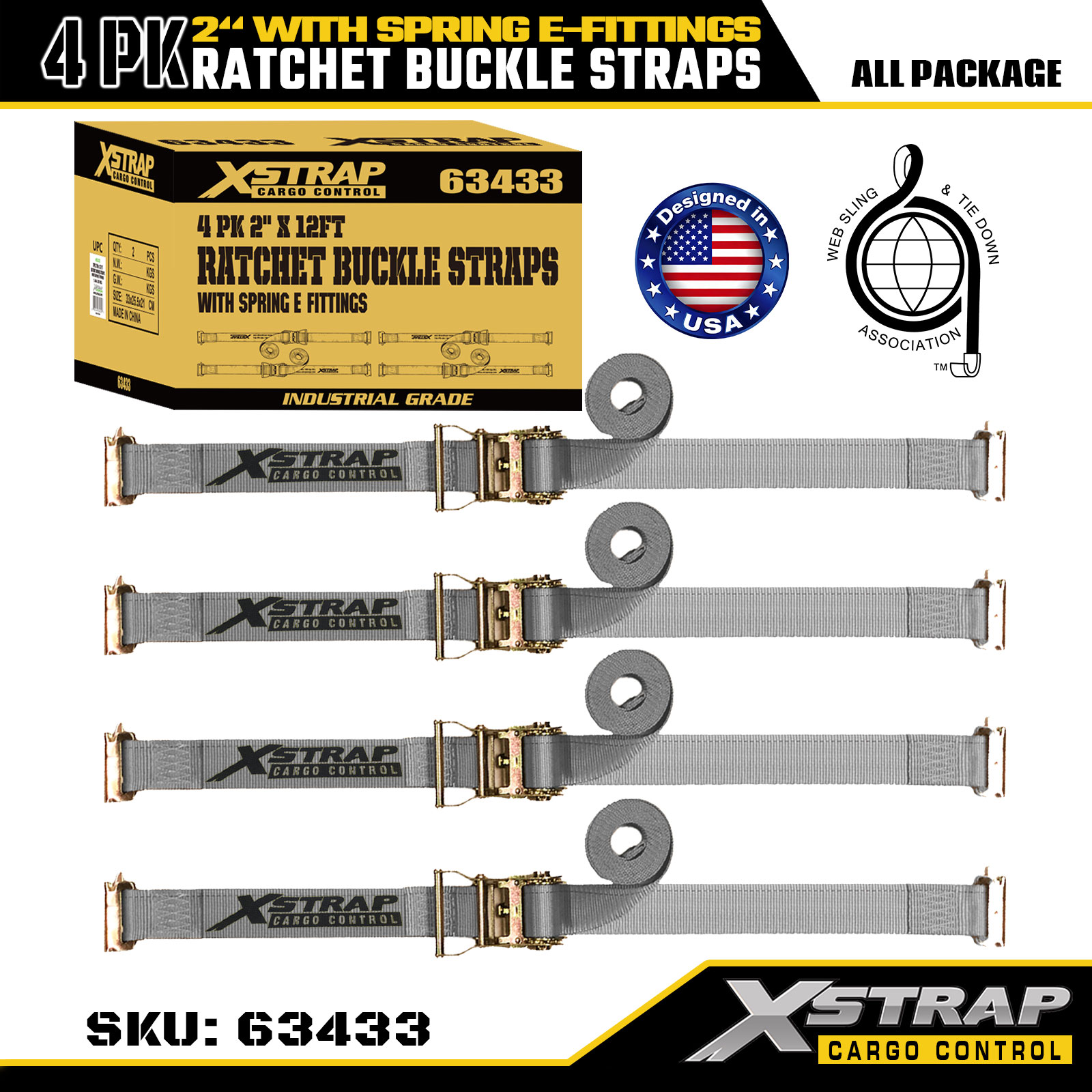
E Track Ratchet Straps use a specialized E Track system for installation. E Track rails are typically installed on the floor, walls, or ceiling of vehicles. The ratchet straps are then attached by inserting hooks or attachments into the E Track rail, allowing for quick and efficient installation. On the other hand, traditional ratchet straps are manually fixed onto D-rings, hooks, or similar attachments, requiring more steps and a higher level of skill from the operator.
2. Safety Comparison
E Track Ratchet Straps are designed with systematic safety in mind. The connection between the E Track rail system and the ratchet straps ensures that the straps stay firmly in place during the transportation process, minimizing the risk of slippage or loosening. In contrast, traditional ratchet straps are more susceptible to external forces, leading to potential loosening or detachment, especially in more complex transportation environments.
3. Ease of Operation
E Track Ratchet Straps offer a distinct advantage in terms of ease of operation. With the E Track system, the operator only needs to insert the ratchet straps into the track and use the ratchet mechanism to tighten them. This streamlined process increases efficiency, particularly in large-scale logistics operations and high-frequency cargo transportation. Traditional ratchet straps, however, require more manual steps, including checking the fixed state multiple times. The skill level of the operator can directly affect the effectiveness of the load securing process.
4. Load Capacity and Tensioning Force
When it comes to load capacity and tensioning force, E Track Ratchet Straps generally have a higher load-bearing capacity. This is because the E Track rail system is specifically designed to support high-load transportation, evenly distributing the tension across the ratchet straps and enhancing stability and durability. In contrast, traditional ratchet straps rely solely on the strength of the strap itself, which may be influenced by factors like attachment points and material, often not providing the same level of stability as E Track Ratchet Straps.
5. Durability and Longevity
E Track Ratchet Straps are typically made of high-strength materials and come with durable E Track attachments. These factors contribute to their superior longevity. Even in harsh weather conditions such as heavy rain or extreme temperatures, E Track Ratchet Straps maintain high performance. Traditional ratchet straps, however, may show signs of wear and tear more quickly, especially when exposed to extreme conditions, resulting in potential damage such as fraying or breaking.
6. Versatility
One of the key advantages of E Track Ratchet Straps is their versatility. The E Track system is not just limited to ratchet straps; it can be combined with a variety of accessories like support racks, dividers, and more, allowing for customized load-securing solutions. Traditional ratchet straps, on the other hand, are more limited in functionality, typically used only for securing loads in straightforward transportation scenarios.
7. Application Range
E Track Ratchet Straps are suitable for heavy-duty transportation, bulk shipments, and long-distance hauling. The system is designed for frequent, efficient loading and unloading of goods, making it ideal for high-demand logistics operations. Traditional ratchet straps, however, are more commonly used in lighter transport scenarios, such as personal vehicles or short-distance shipments. They are not well-suited for the complex and demanding needs of large-scale or high-weight cargo transportation.
8. Maintenance Costs
E Track Ratchet Straps tend to have lower maintenance costs due to their systematic design. The E Track rails are durable, and the ratchet straps remain securely in place, reducing the need for frequent replacements or repairs. Traditional ratchet straps require more regular checks, and damaged straps or attachments may need to be replaced, leading to higher maintenance expenses over time.
9. Environmental Adaptability
E Track Ratchet Straps offer greater environmental adaptability. The E Track system and ratchet straps can perform reliably in various weather conditions, including wet, cold, or high-temperature environments. Their robust design ensures stable operation even in harsh environments. Traditional ratchet straps, however, are more vulnerable to environmental factors, such as freezing temperatures that may cause the materials to stiffen or break, affecting their functionality.
Popular Products
Recent News
 How Do You Choose the Right Utility Tie Downs and Bungee Cords for Your Needs
Introduction
When it comes to securing your gear for transport, storage, or organization, Utility Tie Downs and Bungee Cords are essential tools. Whether you're hauling heavy loads...
 The Ultimate Guide to Ratchet Straps: Choosing, Using, and Maintaining Them
Introduction to Ratchet Straps
What Are Ratchet Straps?
Ratchet straps, also known as tie-down straps or cargo straps, are a type of load securement tool widely used in transportat...
 How Can Ratchet Tie Down Standard Duty Straps Ensure Safe and Reliable Cargo Securement
What Are Ratchet Tie Down Straps and Why Are They Important for Cargo Securement?
Introduction to Ratchet Tie Down Straps
Ratchet tie down straps are essential tools for anyone inv...
 What are Ratchet Straps and how do they help you transport your items safely
What Are Ratchet Straps?
Ratchet straps, also known as ratchet tie-downs or cargo straps, are heavy-duty fastening tools designed to secure items during transportation. They consis...
 How to Properly Use Light Duty Ratchet Tie Downs for Maximum Load Security
Understanding the Basics of Ratchet Tie Down Light Duty Straps
Ratchet tie-down straps are a critical tool in the transportation, storage, and securement of goods. They are used to...
-
 +86-18112697781qindan355@gmail.comNo. 21 Yuefeng Road, Yangshe Town, Zhangjiagang City, Suzhou City, Jiangsu Province
 -
Quick Links
Social Media
-
OEM Partner
-


Copyright © 2025 Zhangjiagang SMK MFG. Co., Ltd. All rights reserved.
 Wholesale Tension Strap Manufacturers
Wholesale Tension Strap Manufacturers