
 English
 Français
 Español

Home / News / Industry News / Are Regular Ratchet Straps Safe for Towing, or Do You Need Specific Car Tie Down Straps
Are Regular Ratchet Straps Safe for Towing, or Do You Need Specific Car Tie Down Straps
2026-02-13
Understanding the Role of Car Tie Down Straps in Vehicle Transport
Safety is the primary consideration when transporting a vehicle. Although standard cargo straps may look similar to Car Tie Down Straps, they have fundamental differences in engineering and safety factors. A car is a "dynamic load" that generates immense inertia and vibration during transit, requiring straps with high tensile strength and superior abrasion resistance.
Safety Factors and Compliance
Professional Car Tie Down Straps are typically made from high-strength industrial polyester webbing. This material is characterized by low stretch and high UV resistance. During emergency braking or high-speed cornering, each Car Tie Down Strap must withstand forces several times the static weight of the vehicle. Using straps with insufficient strength can lead to catastrophic failure.
Core Parameter Comparison: Professional Car Tie Down Straps vs. Standard Straps
| Parameter | Professional Car Tie Down Straps (2-4 inch) | Standard Utility Straps (1 inch) |
| Working Load Limit (WLL) | Typically 3,333 lbs - 5,000 lbs+ | Approx. 300 lbs - 1,000 lbs |
| Break Strength (BS) | 10,000 lbs - 15,000 lbs | Approx. 900 lbs - 3,000 lbs |
| Webbing Material | Heavy-duty Polyester (Coated) | Standard Nylon or Thin Polyester |
| Hardware Hooks | Forged R-Hooks / J-Hooks / Snap Hooks | Simple S-Hooks or Pressed Steel |
| Ratchet Mechanism | Heavy-duty Long Handle (High Leverage) | Small Short Handle Ratchet |
| Application | Cars, SUVs, Pickup Trucks | Motorcycles, Lawnmowers, Furniture |
Why "Break Strength" Is Not the Only Standard
When choosing Car Tie Down Straps, you must focus on the Working Load Limit (WLL). According to safety standards, the WLL is usually only 1/3 of the break strength. For example, even if a strap has a break strength of 10,000 lbs, its actual allowable working load is only 3,333 lbs. For a car weighing 4,000 lbs, a single standard strap is nowhere near sufficient for a safety margin.
Hook Designs
Professional Car Tie Down Straps feature hooks specifically designed to fit vehicle chassis holes. The S-Hooks used on standard straps can easily unhook when the vehicle's suspension compresses over bumps. Professional automotive hooks often include safety latches or specific shapes to ensure they remain secure even when the strap is momentarily slack.
Types of Car Tie Down Straps: Which One Do You Need?
The specific Car Tie Down Straps you choose depends on the vehicle type, ground clearance, and trailer anchor points. Different securing methods impact the suspension and tires differently.
Common Professional Categories
- Wheel Nets (Over-the-Tire Straps): These Car Tie Down Straps wrap over the top of the tire and anchor to the trailer deck at two or three points.
- Pros: They do not compress the vehicle's suspension, allowing the body to move naturally and reducing pressure on shock absorber seals.
- Best For: Low-clearance sports cars or modified vehicles.
- Axle Straps: These wrap around the front or rear axles or solid control arms before connecting to the ratchet.
- Pros: Extremely secure; ideal for older vehicles without specific tie-down points.
- Caution: Must avoid brake lines and electrical sensors.
- Lasso Straps: A versatile Car Tie Down Strap where the webbing passes through the wheel rim to form a loop.
- Pros: Fast and easy to use on most vehicles with open-spoke wheels.
- Caution: May scratch high-end alloy wheels; use with protective sleeves.
Technical Performance Comparison Table
| Tie-Down Type | Contact Point | Suspension Impact | Installation Difficulty | Recommended Application |
| Wheel Nets | Tire surface only | No Compression | Medium | Race cars, Exotics, Show cars |
| Axle Straps | Axle or Control Arm | Full Compression | High (crawl under car) | Off-roaders, Pickups, Classics |
| Lasso Straps | Wheel Rim/Axle | Partial Compression | Simple (Fastest) | Standard Sedans, Towing |
Key Selection Indicators: Width and Strength
When purchasing any Car Tie Down Straps, verify these standard parameters:
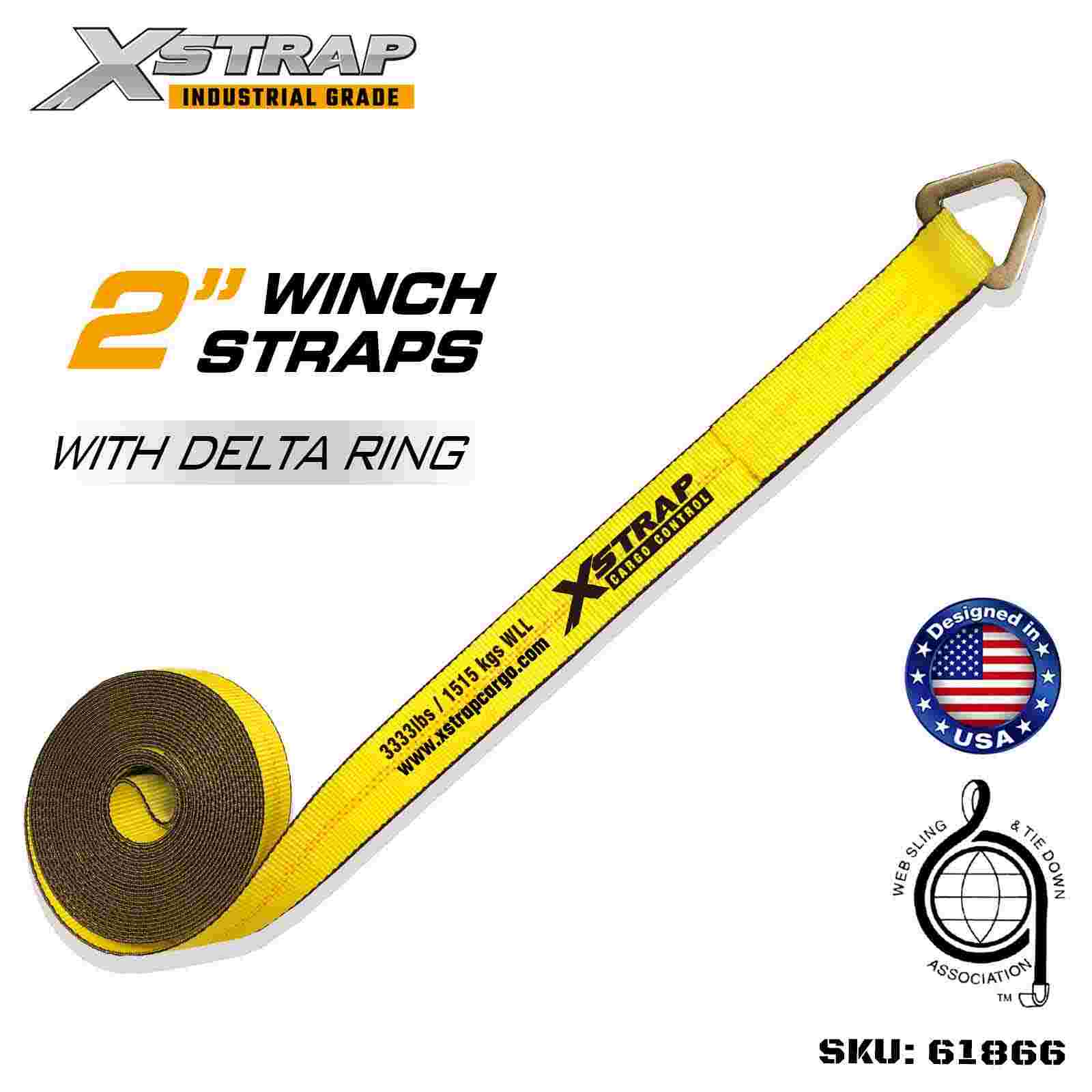
- 2-inch (50mm) Width: The industry standard for vehicle transport, providing a 3,333 lbs WLL.
- Protective Sleeves: Quality Car Tie Down Straps include thick sleeves in wear-prone areas to prevent the webbing from fraying against sharp edges.
Step-by-Step Guide: How to Properly Secure a Vehicle
Correct installation of Car Tie Down Straps is the final line of defense. Improper securing can damage the suspension or cause dangerous swaying at high speeds.
Step 1: Vehicle Positioning and Weight Distribution
Follow the 60/40 Rule when loading:
- Weight Distribution: Approximately 60% of the weight should be in front of the trailer axles, and 40% behind.
- Tongue Weight: This should be 10% - 15% of the total trailer weight to prevent fishtailing.
Step 2: Inspect the Car Tie Down Straps
Before securing, perform a quick check of every Car Tie Down Strap:
- Webbing: Check for cuts, fraying, or UV-related brittleness.
- Ratchet: Ensure the gears are lubricated and the spring latch resets correctly.
Step 3: Implement the Four-Point Tie-Down Method
Safety standards require one Car Tie Down Strap at each corner of the vehicle.
- Front Securing: Pull the straps forward and down to the trailer D-rings.
- Rear Securing: Pull the straps backward and down. This opposing tension ensures the vehicle remains stable during both braking and acceleration.
Strategy Comparison: Straight Pull vs. X-Pattern
| Method | Stability Performance | Advantages | Disadvantages |
| Straight Pull | Strong longitudinal hold | Fastest install; less friction against the chassis. | Weaker lateral (side-to-side) hold. |
| X-Pattern | Strong all-around hold | Provides extra lateral stability to prevent sliding. | One loose strap can pull the car off-center. |
Step 4: Ratcheting and Tension Control
Do not over-tighten your Car Tie Down Straps.
- Operation: Pull the slack through the ratchet by hand first, then engage the handle.
- Tension Level: The strap should be tight like a guitar string, but do not bottom out the suspension.
- Excess Webbing: Secure the loose ends so they don't flap in the wind and damage the paint.
Step 5: Road Test and Re-tightening
Polyester Car Tie Down Straps have a roughly 3% stretch rate after initial loading.
- Initial Check: Stop and check/tighten the ratchets after the first 15-20 km.
- Regular Checks: Check every 100 km or every 2 hours thereafter.
Common Mistakes to Avoid When Using Car Tie Down Straps
Mistake 1: Routing Over Sharp Edges
Webbing’s greatest enemy is cutting force. Metal edges act like saws under the vibration of transport.
- Solution: Use sliding sleeves or thick rubber pads at contact points.
Mistake 2: Anchoring to Fragile Suspension Components
Never hook Car Tie Down Straps to tie rods or aluminum control arms.
| Anchor Point Safety | Component Type | Recommendation | Risk |
| Highest | Tires (via Wheel Nets) | 5 Stars | Safest; does not affect chassis geometry. |
| High | Factory Chassis Slots | 4 Stars | Designed by manufacturers for high strength. |
| Medium | Solid Axle Housing | 3 Stars | Strong, but must avoid brake lines. |
| Extreme Risk | Tie Rods / Control Arms | Forbidden | Easily bent, causing mechanical failure. |
Mistake 3: Ignoring Suspension Compression
When using frame hooks, the car's suspension can compress over bumps, causing the strap to go slack.
- Solution: Always use Car Tie Down Straps equipped with Snap Hooks (safety latches).
Mistake 4: Incorrect Ratchet Winding
Winding too much webbing onto the ratchet mandrel.
- Correct Way: Pull all slack through before ratcheting to ensure only 1.5 to 2 turns of webbing are on the mandrel.
Mistake 5: Overlooking Webbing Degradation
| Damage Type | Safety Impact | Recommendation |
| Fading | UV damage reduces strength | Prepare to replace |
| Fraying | Massive drop in break strength | Retire Immediately |
| Ratchet Rust | Risk of lock failure | Clean/Lubricate or Replace |
| Burns/Melting | Destroyed fiber structure | Retire Immediately |
Maintenance and Storage for Longevity
Cleaning
- Method: Use warm water and mild detergent. Never use bleach or acid-based chemicals.
- Ratchet Care: Use a dry lubricant on the gears. Keep lubricant away from the webbing to prevent slipping.
Storage
- Dry Thoroughly: Ensure straps are dry before storage to prevent mold.
- Sun Protection: Store in a dark toolbox or bag to prevent UV degradation.
Performance: Maintained vs. Neglected
| Status | Expected Life | Strength | Safety Risk |
| Regularly Cleaned | 5+ Years | 100% Original | Minimal |
| UV Exposure | 1-2 Years | 10% - 30% Loss | High |
| Stored Dirty/Salty | Under 1 Year | Fiber erosion | Critical |
Retirement Criteria: When to Replace?
- Missing Label: Cannot identify the Working Load Limit (WLL).
- Edge Cuts: Any cut deeper than 3mm.
- Discoloration: Significant whitening/fading.
- Broken Stitching: Any loose threads in the load-bearing sections.
FAQ
- Can I use 1-inch ratchet straps for a car?
- Absolutely not. The WLL is too low. Professional Car Tie Down Straps are at least 2 inches wide.
- Should the car be in gear during transport?
- Yes (Park or 1st Gear), but the Car Tie Down Straps must do all the work to protect the transmission.
- How many straps are legally required?
- Most regulations require at least 4 independent Car Tie Down Straps, one for each corner.
- What if the strap is too long?
- Fold and zip-tie the excess. Never let it flap, as it can damage paint or wrap around axles.
- How often should I check strap tension?
- Check after the first 15-20 km, then every 80-100 km during your trip.
Popular Products
Recent News
 How Do You Choose the Right Utility Tie Downs and Bungee Cords for Your Needs
Introduction
When it comes to securing your gear for transport, storage, or organization, Utility Tie Downs and Bungee Cords are essential tools. Whether you're hauling heavy loads...
 The Ultimate Guide to Ratchet Straps: Choosing, Using, and Maintaining Them
Introduction to Ratchet Straps
What Are Ratchet Straps?
Ratchet straps, also known as tie-down straps or cargo straps, are a type of load securement tool widely used in transportat...
 How Can Ratchet Tie Down Standard Duty Straps Ensure Safe and Reliable Cargo Securement
What Are Ratchet Tie Down Straps and Why Are They Important for Cargo Securement?
Introduction to Ratchet Tie Down Straps
Ratchet tie down straps are essential tools for anyone inv...
 What are Ratchet Straps and how do they help you transport your items safely
What Are Ratchet Straps?
Ratchet straps, also known as ratchet tie-downs or cargo straps, are heavy-duty fastening tools designed to secure items during transportation. They consis...
 How to Properly Use Light Duty Ratchet Tie Downs for Maximum Load Security
Understanding the Basics of Ratchet Tie Down Light Duty Straps
Ratchet tie-down straps are a critical tool in the transportation, storage, and securement of goods. They are used to...
-
 +86-18112697781qindan355@gmail.comNo. 21 Yuefeng Road, Yangshe Town, Zhangjiagang City, Suzhou City, Jiangsu Province
 -
Quick Links
Social Media
-
OEM Partner
-


Copyright © 2025 Zhangjiagang SMK MFG. Co., Ltd. All rights reserved.
 Wholesale Tension Strap Manufacturers
Wholesale Tension Strap Manufacturers