
 English
 Français
 Español
Home / News / Industry News / Why Are Stainless Steel Tie Downs the Ultimate Choice for Extreme Environments
Why Are Stainless Steel Tie Downs the Ultimate Choice for Extreme Environments
2026-05-01
Technical Specifications: What Makes a Premium Stainless Steel Tie Down?
Evaluating the quality of a Stainless Steel Tie Down requires a deep dive into its microstructure and macro-mechanical parameters. Stainless steel is not a single substance; its alloy composition determines its performance under different operating conditions.
Grade Analysis: 304 vs. 316
The two most common specifications on the market are SS304 and SS316.
304 Stainless Steel: Contains 18% Chromium and 8% Nickel. It offers excellent corrosion resistance and processability, making it suitable for most indoor environments and general outdoor construction.
316 Stainless Steel: Adds 2% Molybdenum to the 304 base. The addition of this trace element provides a quantum leap in resisting chloride erosion such as seawater and road salt.
Tensile Strength and Load Limits
Mechanical strength is the foundation of a Stainless Steel Tie Down. Typically, a heavy-duty stainless steel band with a width of 7.9mm can achieve a minimum breaking strength of over 250 lbs (approx. 114 kg), whereas a nylon tie of the same specification often has only one-third of that strength.
Parameter Comparison Table: Direct Analysis of Different Fastener Materials
| Performance Index | Nylon (Nylon 66) | Galvanized Carbon Steel | SS304 Stainless Steel | SS316 Stainless Steel |
| Operating Temp Range | -40C to +85C | -60C to +200C | -80C to +538C | -80C to +538C |
| UV Resistance | Weak (Easy to embrittle) | Strong | Extremely Strong | Extremely Strong |
| Salt Spray Resistance | Strong | Average (Rusts if coated is damaged) | Excellent | Superior |
| Flame Retardancy | UL94 V-2 | Non-combustible | Non-combustible | Non-combustible |
| Design Life | 1-3 Years | 5-10 Years | 20+ Years | 30+ Years |
Surface Finishes and Locking Mechanisms
Edge Finish: Premium Stainless Steel Tie Downs undergo fully rounded edge polishing to ensure they do not cut cable jackets or the operator's hands during tightening.
Ball-Lock Mechanism: This is the most common automatic locking method. A steel ball moves within a tapered track; once the band is tightened, the ball wedges firmly into the band, achieving a one-way lock where higher tension results in a tighter grip.
Marine and Coastal Applications: Defying Saltwater Corrosion
In marine engineering, salt spray is a nightmare for all metallic materials. The use of a Stainless Steel Tie Down is almost mandatory here.
On offshore oil rigs, thousands of kilometers of sensor cables and hydraulic lines must be secured to steel structures. Because chloride ions in seawater quickly penetrate the oxide layer of ordinary metals causing pitting, SS316 grade Stainless Steel Tie Downs must be used.
Furthermore, as the marine environment involves violent wave impacts and structural vibrations, the physical stability of stainless steel fasteners ensures that bundles do not loosen due to long-term micro-vibrations. In shipbuilding, from high-temperature pipes in engine rooms to communication antennas on decks, the Stainless Steel Tie Down remains the last line of defense for system integration integrity.
Heavy Industrial and Infrastructure Integration
In modern urban infrastructure construction, the Stainless Steel Tie Down acts as an invisible skeleton.
Electrical and Telecommunications
In high-voltage substations or subway tunnels, strong currents generate electromagnetic fields and heat. Traditional plastic ties age rapidly under long-term thermal cycling. A Stainless Steel Tie Down is not only heat-resistant but its non-magnetic or weakly magnetic nature also reduces interference with sensitive electronic signals.
Solar Energy Systems
Solar power plants are usually built in deserts or areas with intense sunlight. UV aging is the nemesis of polymer materials. Using a Stainless Steel Tie Down to secure combiner box cables on the back of PV panels ensures the fasteners last for the 25-year life cycle of the solar module, significantly reducing long-term maintenance costs.
Transportation and Logistics: Safety First
Safety in the transportation industry depends largely on the quality of cargo securing.
Heavy Cargo Transport: When flatbed trucks transport steel, timber, or large equipment, a Stainless Steel Tie Down combined with a ratchet mechanism provides constant tension, preventing cargo displacement during high-speed travel or emergency braking.
Aerospace: In confined, extremely high-temperature spaces like aircraft engine nacelles, stainless steel ties are used to secure insulation layers. This requires not just strength, but an extremely high strength-to-weight ratio and reliability.
Automotive Industry: Heat shields on modern exhaust manifolds typically use specially designed Stainless Steel Tie Downs. Only stainless steel can maintain its physical elasticity amidst the violent temperature fluctuations from ambient to over 800C caused by frequent engine starts and stops.
Installation Best Practices for Maximum Security
While a Stainless Steel Tie Down appears simple, incorrect installation can compromise its performance.
Proper tensioning techniques
During the tightening process, one should not aim for an absolute dead tight grip, especially when bundling pipes with thermal expansion and contraction characteristics; a tiny buffer space should be reserved.
Professional tools assistance
While manual operation is possible, using a specialized tensioning tool allows for precise pre-setting of tension and achieves a flush cut, avoiding sharp metallic tail residues.
Preventing galvanic corrosion
When a Stainless Steel Tie Down is used to secure aluminum piping, it is recommended to use a coated such as epoxy or polyester stainless steel band to insulate the two metals with different potentials and prevent electrochemical reactions.
Strategic Advantages: Choosing the Right Fastening System
Choosing a Stainless Steel Tie Down is a strategic decision with a long-term perspective.
Durability and Longevity
Although the unit price is higher than plastic products, from a Total Cost of Ownership perspective, stainless steel fasteners eliminate the labor costs of frequent replacement and the losses associated with system downtime.
Temperature Resistance
In the event of a fire, plastic ties melt quickly, causing cables to fall, potentially blocking fire exits or damaging fire suppression systems. The melting point of a Stainless Steel Tie Down is approximately 1400C, allowing it to maintain structural integrity under extreme fire conditions and buy critical time for rescue operations.
Buying Guide: How to Source High-Quality Stainless Steel Tie Downs
When selecting a supplier or product, pay attention to the following:
Material Verification: Request a Material Test Report (MTR) to ensure Ni and Cr content meets standards.
Load Certification: Check if the product has undergone tensile testing by a third-party agency.
Application Matching: Choose between bare or coated bands based on the environment. In high-vibration scenarios or where cable protection is paramount, a coated Stainless Steel Tie Down provides extra cushioning.
Frequently Asked Questions (FAQ) and Knowledge Base
Q: Will a stainless steel tie down rust?
A: Stainless does not mean never rusts. In environments with strong acids, alkalis, or long-term dust accumulation, the passivation layer (Chromium Oxide) on the surface can be damaged. However, its corrosion rate is extremely slow compared to carbon steel. SS316 material can remain free of structural corrosion for decades in most natural environments.
Q: What is Galling?
A: This is a common issue with stainless steel fasteners. When two stainless steel surfaces rub at high speed under pressure, the oxide layer peels off, causing metal atoms to bond directly, resulting in locking up. Slow application of force and the use of lubricants when installing threaded Stainless Steel Tie Downs can effectively avoid this.
Q: How to distinguish between SS304 and SS316?
A: It is impossible to tell with the naked eye. Professional methods involve using a spectrometer or chemical testing reagents. After applying specific reagents, SS316 will show a different color reaction than SS304 due to the presence of molybdenum.
Q: Is this product environmentally friendly?
A: Very much so. Stainless steel is a 100% recyclable material. Compared to disposable plastic ties that are difficult to degrade naturally, a Stainless Steel Tie Down has high recovery value after disposal, aligning with sustainable industrial trends.
Q: Is a special tool required to install stainless steel ties?
A: For small household tasks, ordinary needle-nose pliers can be used to tighten and bend the tail. However, in industrial construction, a specialized tensioning and cutoff tool must be used to ensure consistent tension for every tie and to avoid leaving sharp ends that could cut skin.
Popular Products
Recent News
 How Do You Choose the Right Utility Tie Downs and Bungee Cords for Your Needs
Introduction
When it comes to securing your gear for transport, storage, or organization, Utility Tie Downs and Bungee Cords are essential tools. Whether you're hauling heavy loads...
 The Ultimate Guide to Ratchet Straps: Choosing, Using, and Maintaining Them
Introduction to Ratchet Straps
What Are Ratchet Straps?
Ratchet straps, also known as tie-down straps or cargo straps, are a type of load securement tool widely used in transportat...
 How Can Ratchet Tie Down Standard Duty Straps Ensure Safe and Reliable Cargo Securement
What Are Ratchet Tie Down Straps and Why Are They Important for Cargo Securement?
Introduction to Ratchet Tie Down Straps
Ratchet tie down straps are essential tools for anyone inv...
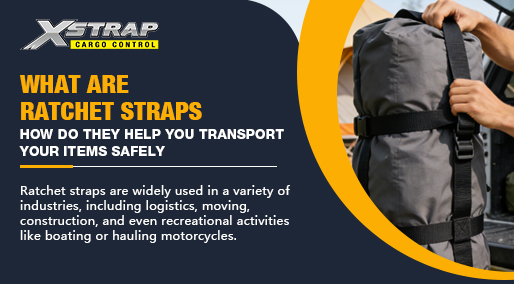 What are Ratchet Straps and how do they help you transport your items safely
What Are Ratchet Straps?
Ratchet straps, also known as ratchet tie-downs or cargo straps, are heavy-duty fastening tools designed to secure items during transportation. They consis...
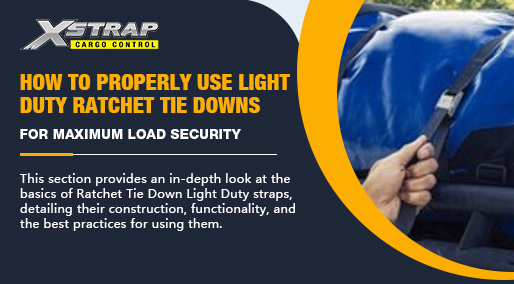 How to Properly Use Light Duty Ratchet Tie Downs for Maximum Load Security
Understanding the Basics of Ratchet Tie Down Light Duty Straps
Ratchet tie-down straps are a critical tool in the transportation, storage, and securement of goods. They are used to...
-
 +86-18112697781qindan355@gmail.comNo. 21 Yuefeng Road, Yangshe Town, Zhangjiagang City, Suzhou City, Jiangsu Province
 -
Quick Links
Social Media
-
OEM Partner
-


Copyright © 2025 Zhangjiagang SMK MFG. Co., Ltd. All rights reserved.
 Wholesale Tension Strap Manufacturers
Wholesale Tension Strap Manufacturers