
 English
 Français
 Español

What Are the Best Tie Down Straps for Trailers, Trucks and Boats
2026-05-15
In freight transport, vehicle hauling, and outdoor equipment securing, tie down strap systems are the core safety equipment. Whether it is camper tie downs on a long road trip or tow truck straps used in professional recovery operations, different application scenarios place entirely different demands on product specifications, materials, and operating methods.
camper tie downs and truck bed tie downs: The Foundation of Road Securing Systems
camper tie downs are dedicated securing systems used to anchor a camper body to a pickup truck chassis. Their design must simultaneously handle vertical vibration loads and lateral inertial forces during travel. A typical four-corner tensioning layout is used, with a Working Load Limit (WLL) generally ranging from 1,000 lbs to 3,500 lbs depending on the weight of the camper and the chassis specification.
truck bed tie downs refer to built-in or aftermarket anchor point systems installed inside a pickup truck bed, used in combination with D-rings and rail anchors. Standard rail spacing is 6 inches, and anchor point rated loads typically fall between 500 lbs and 1,500 lbs. When selecting, always verify that the anchor points are compatible with the OEM rail specifications of the specific truck model to ensure reliable engagement.
Before securing any cargo, confirm that the combined WLL of all anchor points exceeds 1.5 times the cargo weight. This is the basic compliance requirement under DOT (U.S. Department of Transportation) regulations for highway cargo securement.
short ratchet straps and truck tie down straps: Active Tensioning Systems
short ratchet straps typically refer to ratchet straps with a strap length between 1 foot and 4 feet. They are best suited for scenarios where the cargo is positioned close to the anchor point. The key advantage is minimal excess strap length after tensioning, reducing the risk of loose ends interfering with the load or the vehicle. Industrial-grade ratchet mechanisms feature 30 or more teeth, enabling fine adjustment of tension.
truck tie down straps are the most versatile strap type for pickup truck transport applications. Strap width is the primary specification, available in 1-inch, 2-inch, and 4-inch sizes. The table below provides a direct parameter comparison:
| Strap Width | WLL (Working Load Limit) | Break Strength | Common Applications |
|---|---|---|---|
| 1 inch | 500 lbs | 1,500 lbs | Light cargo, motorcycle accessories |
| 2 inch | 1,333 - 3,335 lbs | 4,000 - 10,000 lbs | Motorcycles, ATVs, light equipment |
| 4 inch | 5,400 lbs | 16,200 lbs | Heavy machinery, large vehicles |
motorcycle straps and tire tie down straps: Vehicle-Specific Securing Solutions
The design of motorcycle straps must balance frame protection with securing reliability. Professional motorcycle straps typically use soft loop attachments to prevent metal hooks from directly contacting painted surfaces or aluminum components and causing scratches. During securing, downward pressure is applied independently at the front and rear forks. A minimum of four straps arranged in a diagonal cross pattern is recommended, placing the suspension system under slight preload compression.
tire tie down straps transfer the securing force through the tire directly to the floor, making them the most widely used solution for transporting motorcycles and small race vehicles. These straps work best when combined with a wheel chock, which locks the tire in the fore-aft direction while the straps provide lateral clamping force. Core specification requirements: minimum strap width of 2 inches, WLL of no less than 1,500 lbs, and hooks must include an anti-slip locking mechanism.
utv tie down straps: Dedicated Securing Solutions for Side-by-Side Vehicles
utv tie down straps are optimized for the structural characteristics of UTVs (Utility Task Vehicles). UTV weight typically ranges from 1,200 lbs to 2,500 lbs, and their higher center of gravity demands straps with greater WLL ratings as well as longer strap lengths to accommodate the wider body geometry. Recommended specification: 2-inch width, WLL of 3,000 lbs or above per strap, with no fewer than four straps per UTV. Anchor points should be selected on metal frame crossmembers rather than plastic body panels.
When securing a UTV, avoid routing straps near steering linkages, brake lines, or electrical wiring harnesses, as the compressive force from tensioned straps can easily damage these components.
boat tie down straps and boat trailer winch strap: Dual Protection for Marine Equipment
boat tie down straps are used to secure a boat hull to its trailer, preventing longitudinal displacement and lateral tilting during transport. The standard practice is to position two straps fore and aft of the hull's center of gravity in a V-pattern, pressing down firmly onto the keel supports. For material, select polyester webbing with UV inhibitor treatment and mold-resistance treatment to extend service life in marine environments.
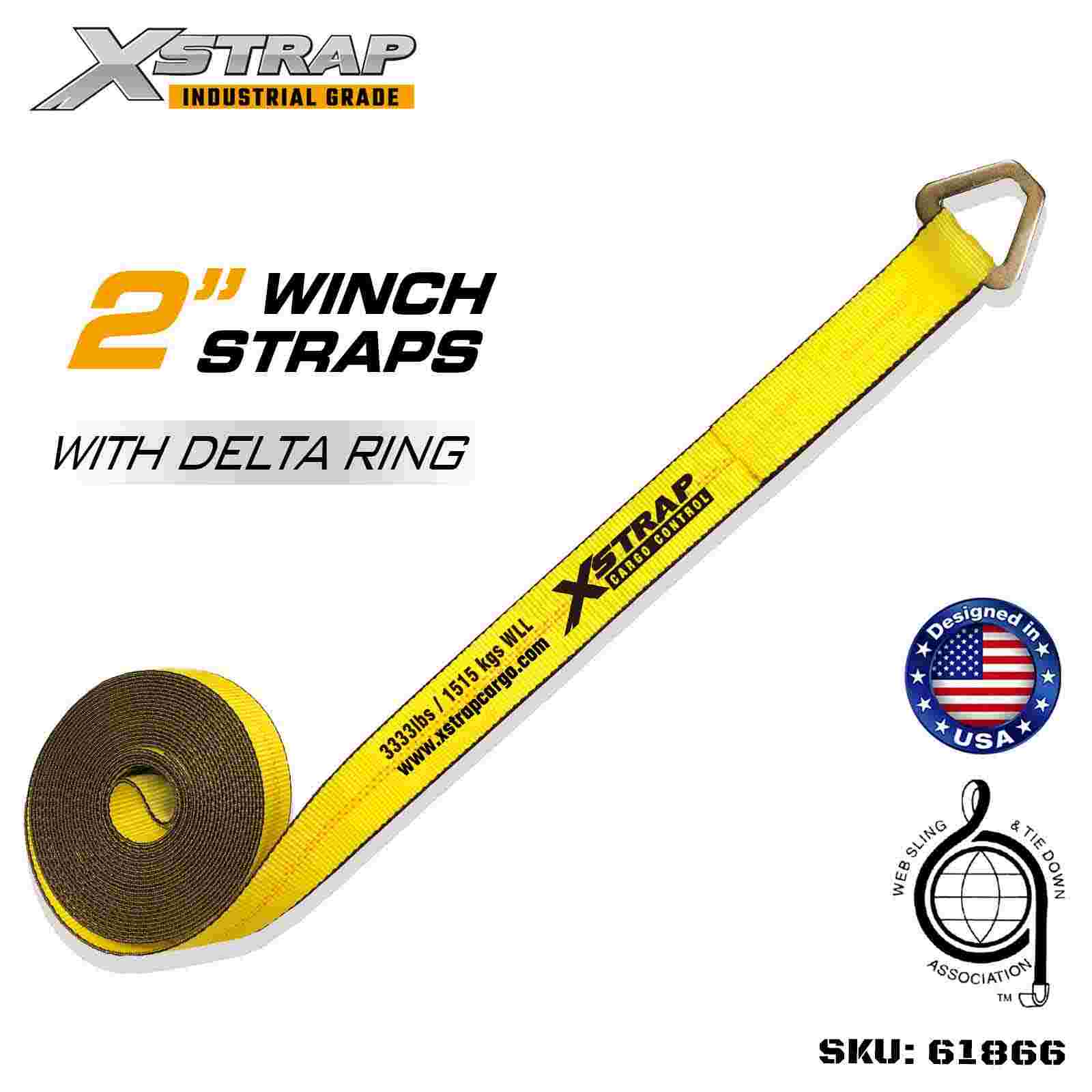
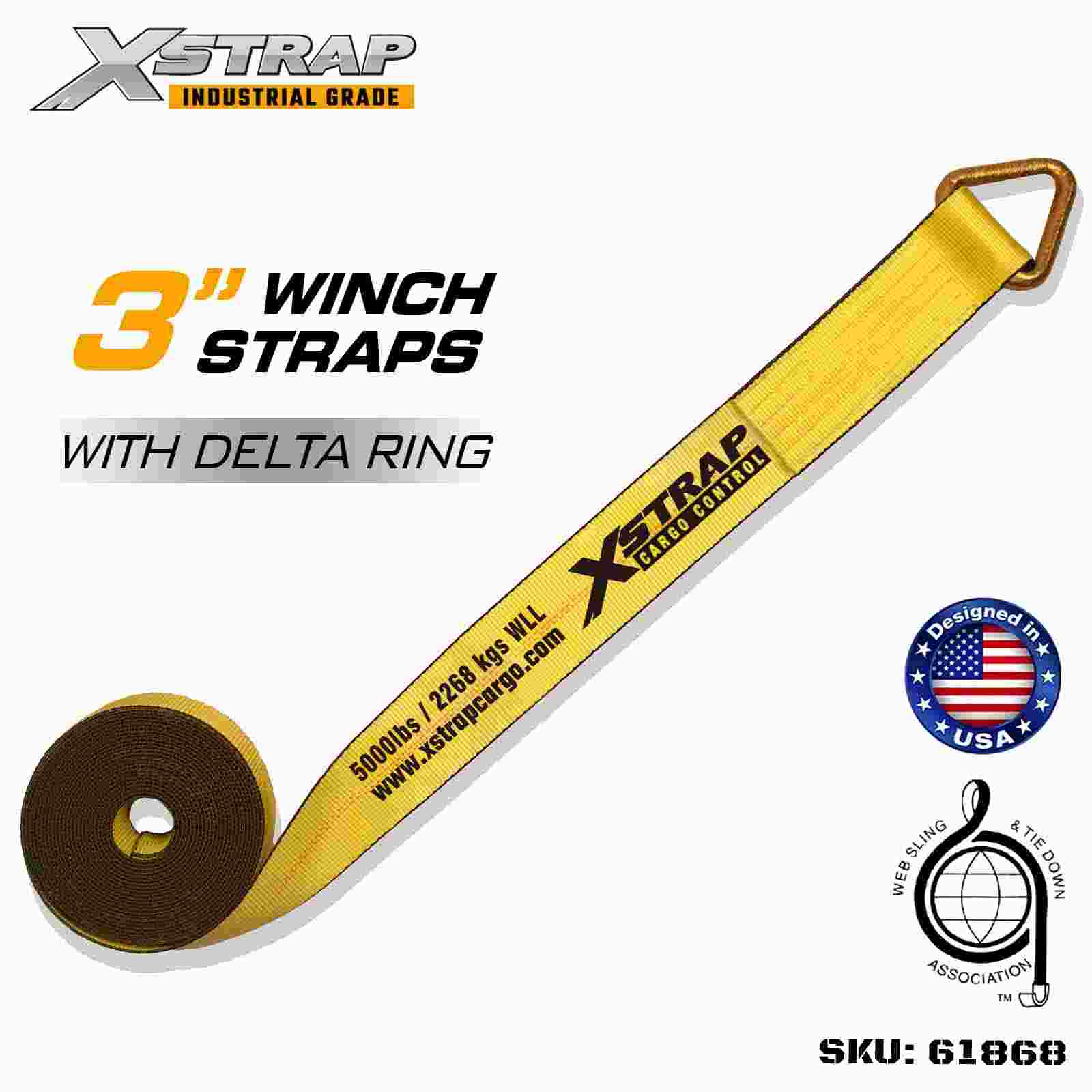
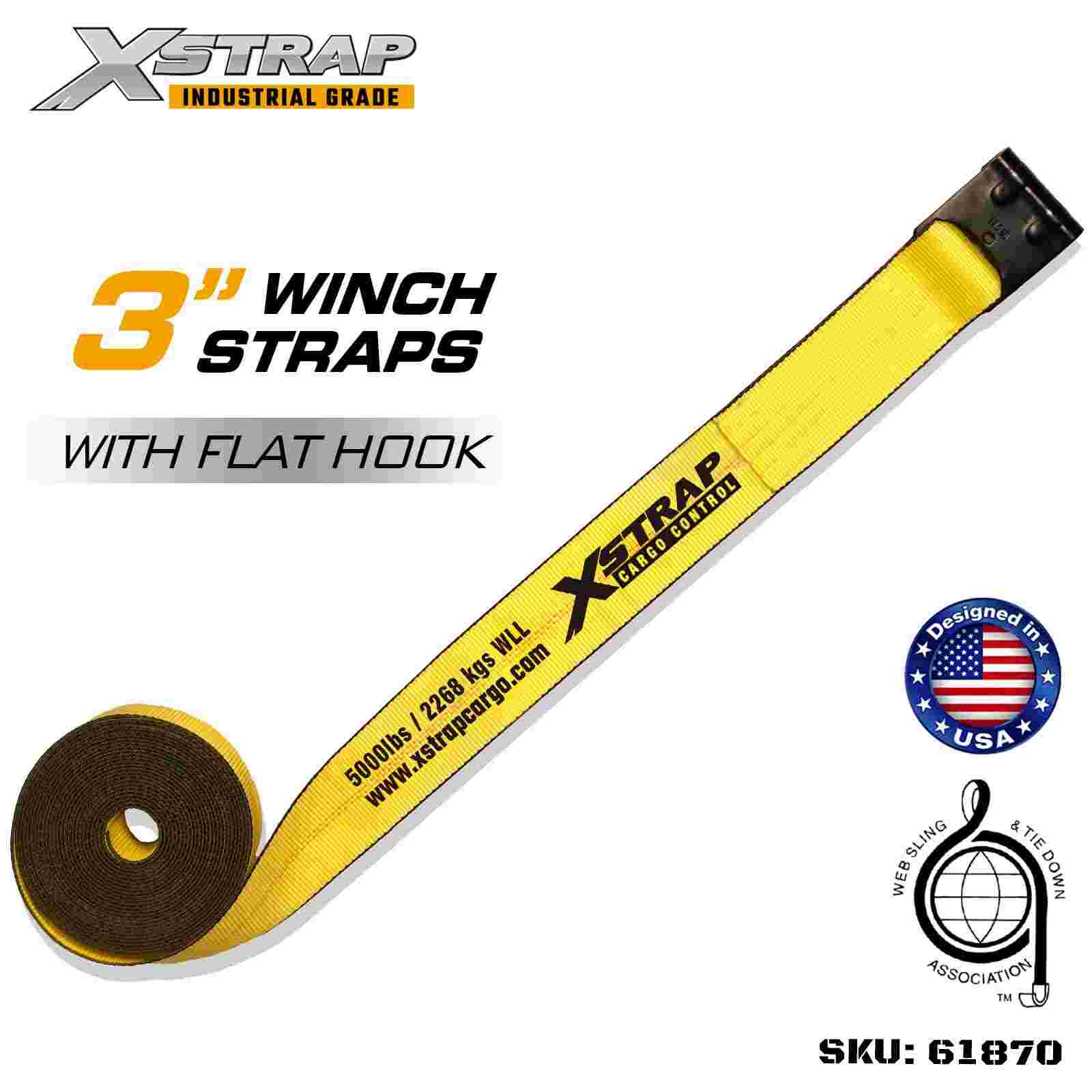
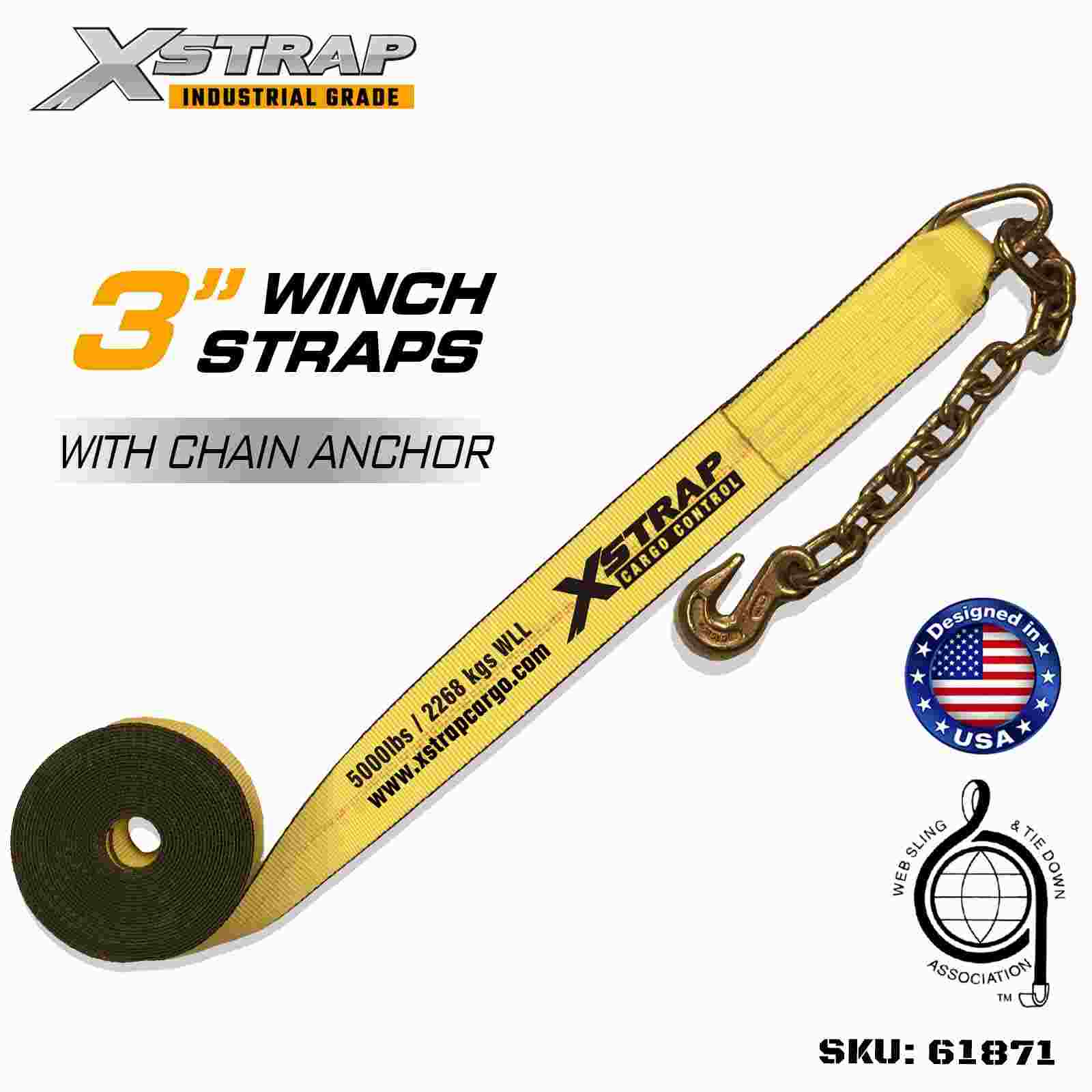
The boat trailer winch strap serves the active pulling function of drawing the hull forward onto its support bunks, complementing the passive restraint role of boat tie down straps. The rated load of the winch strap must match the rated pull capacity of the winch. The most common specification is 2-inch width with a 10,000 lbs break strength. End connection types include hook style and loop end style, with the loop end preferred for high-frequency use as it produces more even wear distribution.
| Parameter | boat tie down straps | boat trailer winch strap |
|---|---|---|
| Function | Passive restraint, prevents shifting | Active pulling, loads hull onto trailer |
| Typical Width | 1.5 - 2 inch | 2 inch |
| Common Break Strength | 3,000 - 6,000 lbs | 8,000 - 10,000 lbs |
| UV Resistance Requirement | Mandatory | Recommended |
| Replacement Interval | Inspect every season | Inspect every 50 uses |
trailer tie down anchors: The Primary Load-Bearing Nodes of Any Securing System
trailer tie down anchors are the critical components that connect directly to the trailer structure, forming the foundation of the entire securing chain. The three main anchor point types are E-track anchors, D-ring anchors, and L-track anchors, each suited to different trailer floor construction types.
The E-track system is widely used in enclosed trailers because of its high adjustability. Anchor points slide along the track and lock at any position, providing maximum flexibility in cargo securing layout. D-ring anchors are known for their simple structure and high strength, with common single-point WLL ratings from 3,330 lbs to 5,000 lbs, making them well-suited for heavy equipment transport where anchor positions are fixed.
| Anchor Type | Single-Point WLL | Installation Method | Best Application |
|---|---|---|---|
| E-track anchor | 1,000 - 2,500 lbs | Slide-in locking | Enclosed trailers with varied cargo |
| D-ring anchor | 3,330 - 5,000 lbs | Welded or bolted | Heavy equipment, large vehicles |
| L-track anchor | 2,000 - 3,500 lbs | Rail-embedded | Open flatbed trailers |
tow truck straps and car trailer straps: Professional Recovery and Transport Securing Systems
tow truck straps are the core tools in recovery and towing operations, available in two main types: wheel net straps and wheel hook straps. Wheel net straps allow for rapid securing across a range of tire sizes, as their elastic design accommodates variation in tire dimensions. Wheel hook straps provide a more rigid connection and are preferred for long-distance transport, though installation takes slightly longer.
car trailer straps are used for transporting passenger vehicles and light trucks on flatbed trailers, typically combining tire securing and chassis securing in a dual-method approach. Tire straps limit lateral movement, while chassis straps using J-hooks latched to the vehicle frame provide longitudinal restraint. The WLL of each strap type must independently satisfy the vehicle weight requirement. Multiple low-WLL straps cannot simply be combined to substitute for a single high-strength strap, as each individual strap must independently meet the required safety factor.
Service Life and Inspection Standards for All Tie Down Straps
All tie down strap products listed above are safety-critical components and require a scheduled inspection program. The following are mandatory retirement criteria for all strap categories. Any single condition below is sufficient grounds for immediate removal from service:
Longitudinal cuts, transverse tears, or delamination of webbing caused by abrasion. Metal hook deformation, cracking, or hook opening exceeding 10 percent of the original dimension. Ratchet mechanism failure including pawl malfunction, worn ratchet teeth, or insufficient locking force. Label markings are illegible and WLL specification cannot be confirmed. Severe UV-induced discoloration, which typically corresponds to a strength reduction exceeding 30 percent.
Compliant tie down strap products must carry a permanent label meeting WSTDA (Web Sling and Tie Down Association) standards, clearly stating WLL, strap width, material, and manufacturer information. Always verify label integrity before each use. This is the most basic indicator of product compliance.
Material Selection Reference
| Material | Elongation | UV Resistance | Recommendation |
|---|---|---|---|
| Polyester | Low (approx. 3-7%) | Excellent | Primary choice for most outdoor applications |
| Nylon | High (approx. 8-15%) | Moderate | Suited to shock-load scenarios |
| Polypropylene (PP) | Medium | Poor | Not recommended for prolonged outdoor use |
Popular Products
Recent News
 How Do You Choose the Right Utility Tie Downs and Bungee Cords for Your Needs
Introduction
When it comes to securing your gear for transport, storage, or organization, Utility Tie Downs and Bungee Cords are essential tools. Whether you're hauling heavy loads...
 The Ultimate Guide to Ratchet Straps: Choosing, Using, and Maintaining Them
Introduction to Ratchet Straps
What Are Ratchet Straps?
Ratchet straps, also known as tie-down straps or cargo straps, are a type of load securement tool widely used in transportat...
 How Can Ratchet Tie Down Standard Duty Straps Ensure Safe and Reliable Cargo Securement
What Are Ratchet Tie Down Straps and Why Are They Important for Cargo Securement?
Introduction to Ratchet Tie Down Straps
Ratchet tie down straps are essential tools for anyone inv...
 What are Ratchet Straps and how do they help you transport your items safely
What Are Ratchet Straps?
Ratchet straps, also known as ratchet tie-downs or cargo straps, are heavy-duty fastening tools designed to secure items during transportation. They consis...
 How to Properly Use Light Duty Ratchet Tie Downs for Maximum Load Security
Understanding the Basics of Ratchet Tie Down Light Duty Straps
Ratchet tie-down straps are a critical tool in the transportation, storage, and securement of goods. They are used to...
-
 +86-18112697781qindan355@gmail.comNo. 21 Yuefeng Road, Yangshe Town, Zhangjiagang City, Suzhou City, Jiangsu Province
 -
Quick Links
Social Media
-
OEM Partner
-


Copyright © 2025 Zhangjiagang SMK MFG. Co., Ltd. All rights reserved.
 Wholesale Tension Strap Manufacturers
Wholesale Tension Strap Manufacturers