
 English
 Français
 Español

Home / News / Industry News / Ready to master industrial tie downs: Are you choosing the right straps for secure transportation
Ready to master industrial tie downs: Are you choosing the right straps for secure transportation
2025-12-11
Understanding the Role of Industrial Tie Downs in Secure Transportation
Defining Industrial Tie Downs and Their Purpose
Industrial Tie Downs, also known as cargo securement straps or heavy-duty load straps, are tools specifically designed for commercial transport and heavy industrial applications. Their core function is to secure cargo safely (cargo securement), preventing it from shifting, sliding, tipping, or falling during transit. Unlike light-duty household straps, industrial tie downs must meet stringent standards for strength and durability. They are typically used to secure: Heavy machinery and equipment Construction materials and steel Large pipes and lumber Bulk or palletized goods within containers
The Critical Importance of Industrial Tie Downs for Safety
The correct use of Industrial Tie Downs is not only a commercial necessity to protect the cargo from damage but is also a legal requirement for ensuring public and transportation safety.
| Aspect | Explanation of Importance | Potential Consequences |
| Public Safety | Prevents cargo from falling onto the roadway, posing a fatal hazard to other vehicles and pedestrians. | Traffic accidents, casualties, road closures. |
| Driver Safety | Ensures the truck or trailer maintains balance and control during braking, turning, or acceleration. | Loss of vehicle control, rollovers. |
| Compliance & Regulations | Satisfies cargo securement regulations set by agencies such as the DOT and CVSA in the US. | Fines, violation points, vehicle detention. |
| Cargo Protection | Prevents cargo from shifting and chafing during transport, thus avoiding damage and loss. |
A Snapshot of Industrial Tie Downs Types and Common Applications
Industrial Tie Downs are made up of three main components: webbing, a tensioning device, and end fittings. Their types are primarily categorized based on the tensioning mechanism and load capacity:
| Type | Tensioning Mechanism | Typical Applications | Key Characteristics |
| Ratchet Straps | Ratchet | Heavy cargo, vehicles, long-haul transport | Provides extremely high pre-tension, strong securing force. |
| Cam Buckle Straps | Cam Buckle | Light-to-medium cargo, quick tie-down | Simple and fast operation, lower pre-tension limit, suitable for fragile items. |
| E-Track Straps | Ratchet or Cam Buckle with E-Track fitting | Inside enclosed trucks/vans | Specific to E-Track systems, offers flexible anchor points. |
| Chain Binders | Chain and Binder | Super heavy machinery, engineering equipment | Extreme strength, suitable for maximum weight and harsh environments. |
Types of Industrial Tie Downs and Webbing Materials
In-depth knowledge of different types of Industrial Tie Downs is crucial, as each type has unique advantages, disadvantages, and best use cases. Choosing the wrong strap can lead to cargo movement and safety hazards.
Ratchet Straps: The Power of Tension
Ratchet straps are the most common and popular type of Industrial Tie Downs for heavy-duty and commercial cargo securement.
Description and Uses: Heavy duty ratchet straps use a mechanical ratchet to tighten the webbing. The operator pulls the ratchet handle back and forth to gradually and precisely apply high-strength tension until the strap tightly secures the cargo. They are ideal for heavy cargo, machinery, vehicle transport, and long-haul trips requiring high pre-tension to keep the load immobile during transit.
Advantages and Disadvantages:
| Advantages | Disadvantages |
| High Pre-tension | Slower to release, relatively complex. |
| Secure Lock | Can potentially damage soft cargo if overtightened. |
| Wide WLL Range | The ratchet mechanism can become jammed by dirt or corrosion. |
Cam Buckle Straps: Speed and Ease
Cam buckle straps are generally used for lighter and more pressure-sensitive cargo than heavy duty ratchet straps.
Description and Uses: A cam buckle is a device that clamps the webbing by pressing a release lever, threading the webbing through, and releasing the lever. The tension is limited to the force exerted by the user pulling the webbing manually, as no mechanical tension is applied. They are an ideal choice for light-to-medium duty cargo, fragile items, furniture, or roof-top luggage, suited for quick tie-downs where high tension is not required.
Advantages and Disadvantages:
| Advantages | Disadvantages |
| Quick setup and release | Limited tension; WLL is generally lower than ratchet straps. |
| Simple operation | Weaker tension holding capability when cargo settles or shifts. |
| Cargo protection | Eliminates the risk of overtightening damage common with ratchets. |
E-Track Straps: System-Specific Securement
E-Track straps are specialized Industrial Tie Downs designed for use with E-Track or A-Track systems installed inside trucks or trailers.
Description and Uses: These Industrial Tie Downs are equipped with specific E-Track spring fittings on both ends, allowing them to quickly lock directly into the E-Track slots mounted along the walls or floor. They significantly improve the flexibility and efficiency of securing pallets and boxes inside enclosed vans and freight trailers.
Advantages and Disadvantages:
| Advantages | Disadvantages |
| Flexible and variable anchor points | Only suitable for vehicles equipped with an E-Track system. |
| Installation and removal very fast | Relatively higher initial system investment. |
| Customizable length and tensioning mechanism |
Chain Binders: Securing the Heaviest Loads
Chain binders, typically used with high-strength alloy chains, are the highest capacity type of industrial chain tie downs.
Description and Uses: Chain binders (or load binders) come in ratchet style and lever style. They secure extremely heavy cargo by tightening the chain, such as large construction machinery like excavators and bulldozers, steel plates, heavy pipes, or large containers. They are indispensable in construction and mining transport.
Advantages and Disadvantages:
| Advantages | Disadvantages |
| Extremely High WLL | Binders and chains are heavy and cumbersome to handle. |
| Exceptional Durability | May scratch or damage the surface of the cargo. |
| Resistant to extreme environments |
Webbing Materials in Industrial Tie Downs
The webbing material of heavy duty cargo tie downs is a critical factor determining their strength, durability, and suitability for specific environments.
| Material | Strength and Stretch | Abrasion Resistance | Chemical Resistance | Best Use Scenarios |
| Polyester | High strength, extremely low stretch (<3%) | Good | Excellent (Resistant to acids, oils, most chemicals) | Most Industrial Tie Downs applications; use in harsh weather requiring high tension. |
| Nylon | High strength, higher stretch (6% - 8%) | Excellent | Good (But susceptible to acid degradation) | Certain tie-down applications; use where some elasticity is desired to absorb shock or vibration. |
Why Choose Polyester? Polyester is the preferred material for Industrial Tie Downs mainly because it exhibits almost no stretch when wet and has excellent UV resistance. Its low stretch ensures a continuous securing force on the cargo throughout the journey.
Key Factors for Selecting the Best Industrial Tie Downs
When selecting the appropriate heavy duty cargo tie downs, you cannot rely only on appearance or price. The factors below directly affect the strap's safety, compliance, and lifespan, and must be carefully evaluated.
Working Load Limit (WLL) vs. Breaking Strength: The Safety Equation
This is the most critical safety indicator for all industrial chain tie downs. Understanding these two terms and their relationship is essential for legal and safe cargo securement. Breaking Strength (BS): Refers to the maximum static load a brand-new strap can withstand before breaking. This is a laboratory tested value, often used for marketing reference, but must never be reached in actual use. Working Load Limit (WLL): Refers to the maximum load the strap is designed to safely and consistently withstand under normal conditions of use. This is the only safety and compliance indicator.
| Parameter | Definition and Use | Caution |
| Breaking Strength (BS) | The maximum tension the strap can handle before failure. | Must not be used to calculate actual securement requirements. |
| Working Load Limit (WLL) | The maximum load permitted for safe operation of the strap. | Must be used to calculate the total required securing force, and is the basis for compliance. |
| Safety Factor | Industry standard (usually 3:1) to ensure safe operation. | Ensure the selected straps meet the required total WLL. |
Key Compliance Tip: Federal and industry regulations require that the sum of the WLL of all tie downs used to secure cargo must be at least equal to 50% of the weight of the cargo (depending on the securement angle and method). Therefore, you must use WLL, not BS, to calculate the number of tie-down devices needed.
Length and Width of Straps
The dimensions of the tie-down strap affect its performance and applicability. Length: Matching Straps to Load Size: The strap length must be sufficient to go over the cargo and connect to the vehicle's anchor points on both sides. Overly long webbing is hard to manage, but too short a strap cannot secure the load. Avoiding Redundancy: Extra length adds time to tensioning and complexity to storage. Width: Load Capacity: Wider webbing generally means a higher WLL. For example, a 4-inch wide Industrial Tie Down typically has a much higher capacity than a 2-inch one. Effect on Cargo: Wider webbing better distributes pressure, reducing the risk of pressure damage to the surface of soft or fragile cargo.
End Fittings (Hooks, D-rings, etc.)
End fittings are the critical link between the Industrial Tie Down and the vehicle's anchor point, must match the type of anchor point, and their WLL must be equal to or greater than the WLL of the webbing itself.
| End Fitting Type | Typical Shape and Use | Best Attachment Points | Applicability Notes |
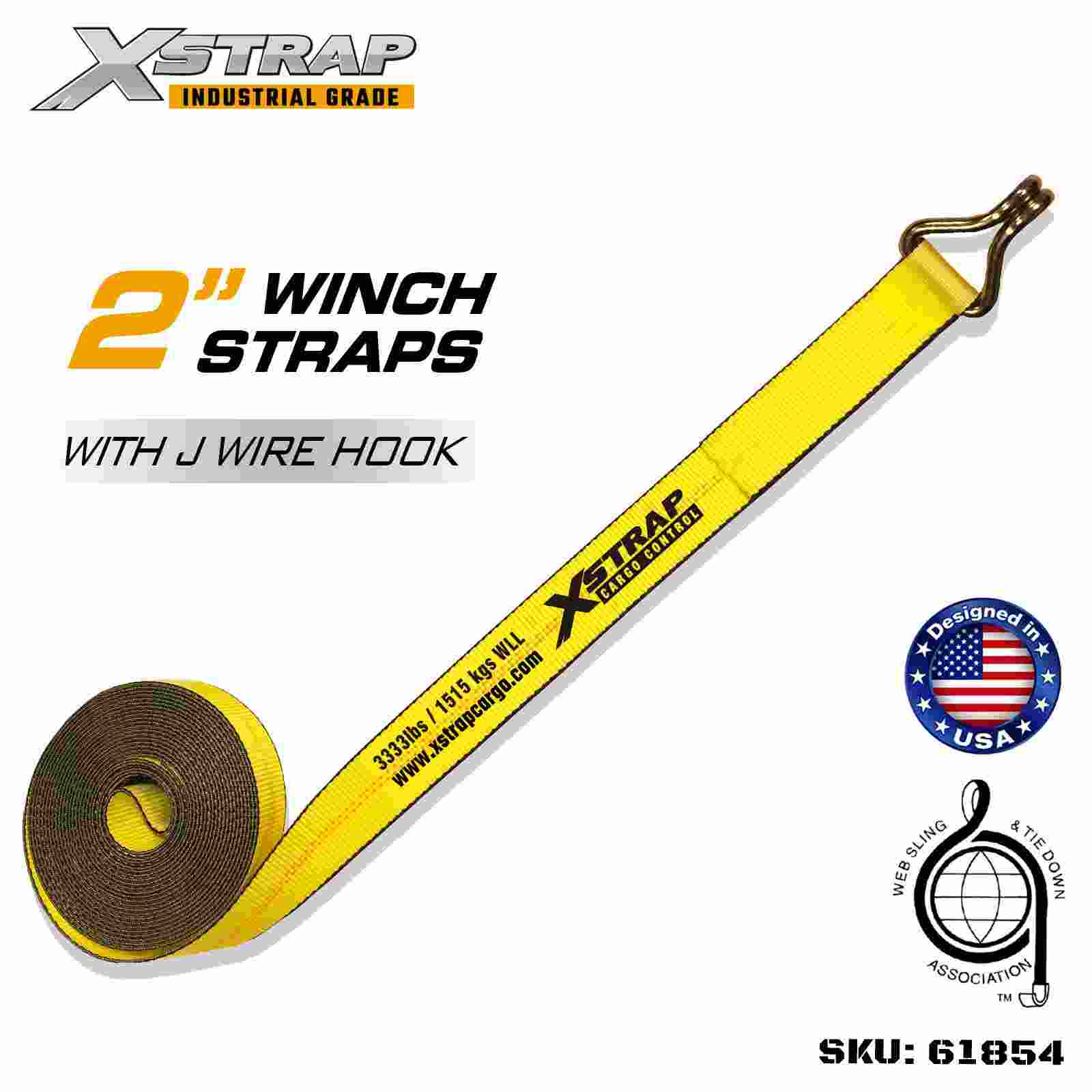
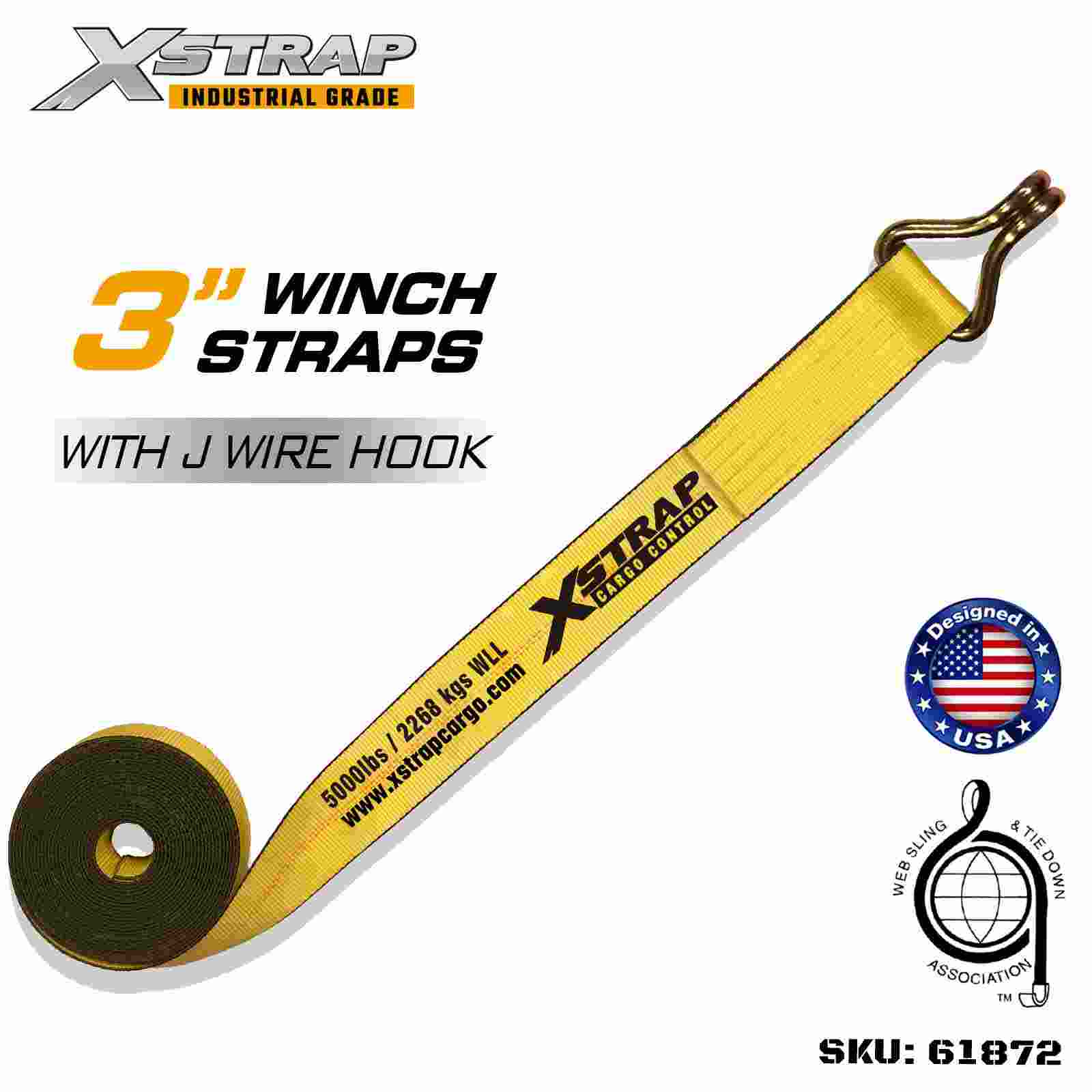
| J-Hook | Common in heavy transport; deeper, more secure hook. | Rub rails or stake pockets on flatbed trailers. | High strength, less likely to accidentally detach. |
| S-Hook | Common in lighter duty or smaller Industrial Tie Downs. | D-rings or rails on small trailers. | Quick connection, but lower strength than J-Hooks. |
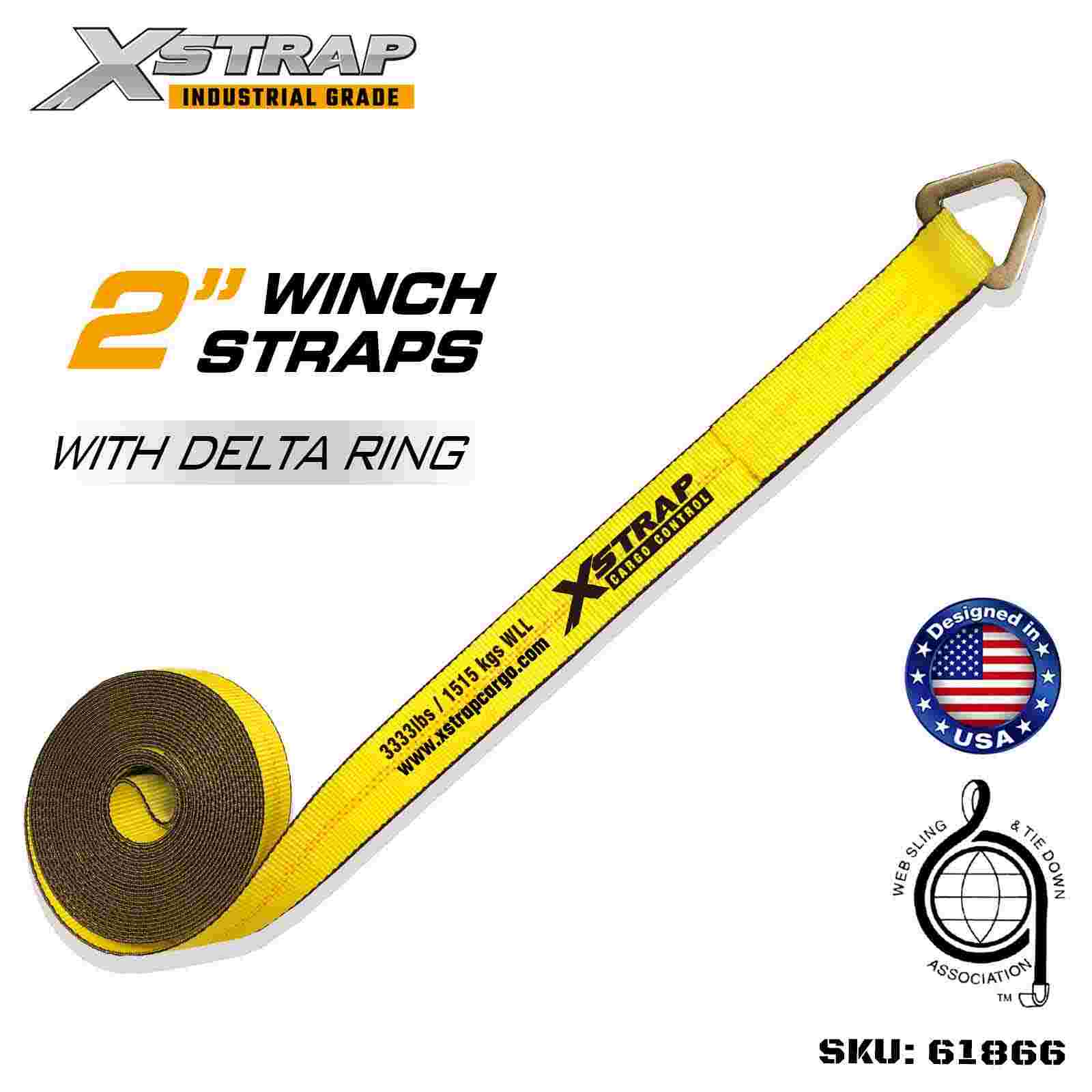
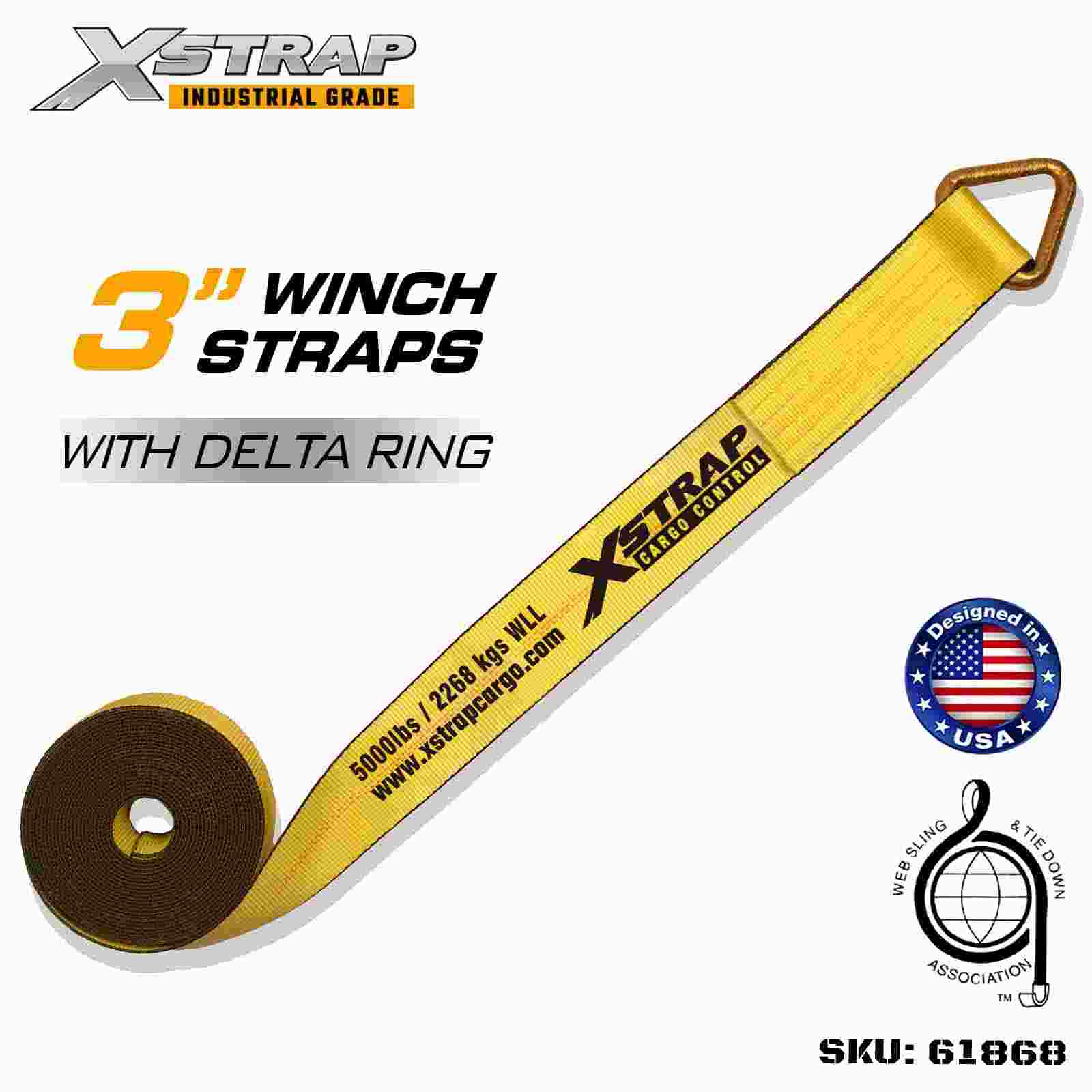
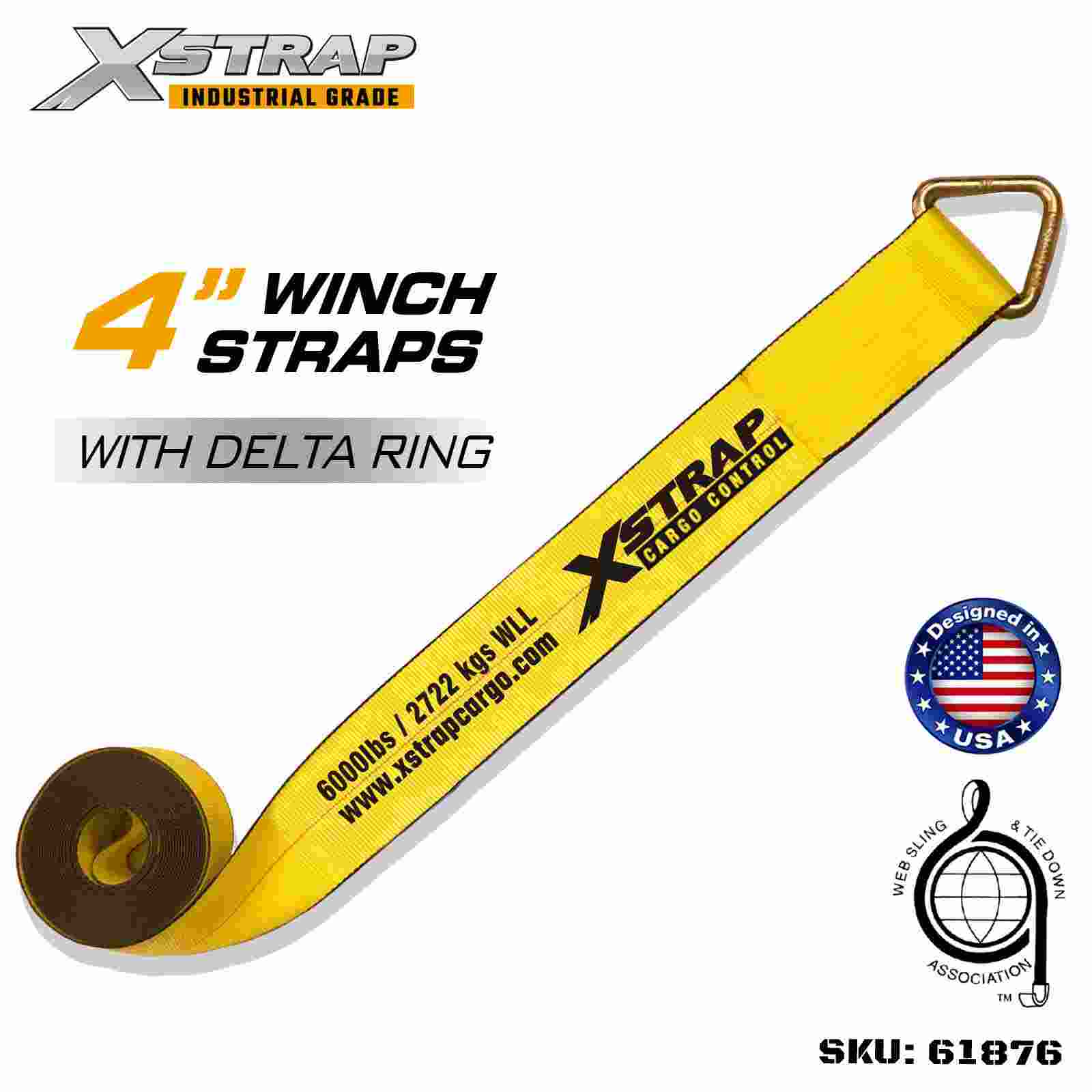
| D-Ring / Delta Ring | Connects directly to bolt-down or chain connection points. | Permanent anchor points on Industrial Tie Downs. | Used when a chain or hook needs to be connected to the strap itself. |
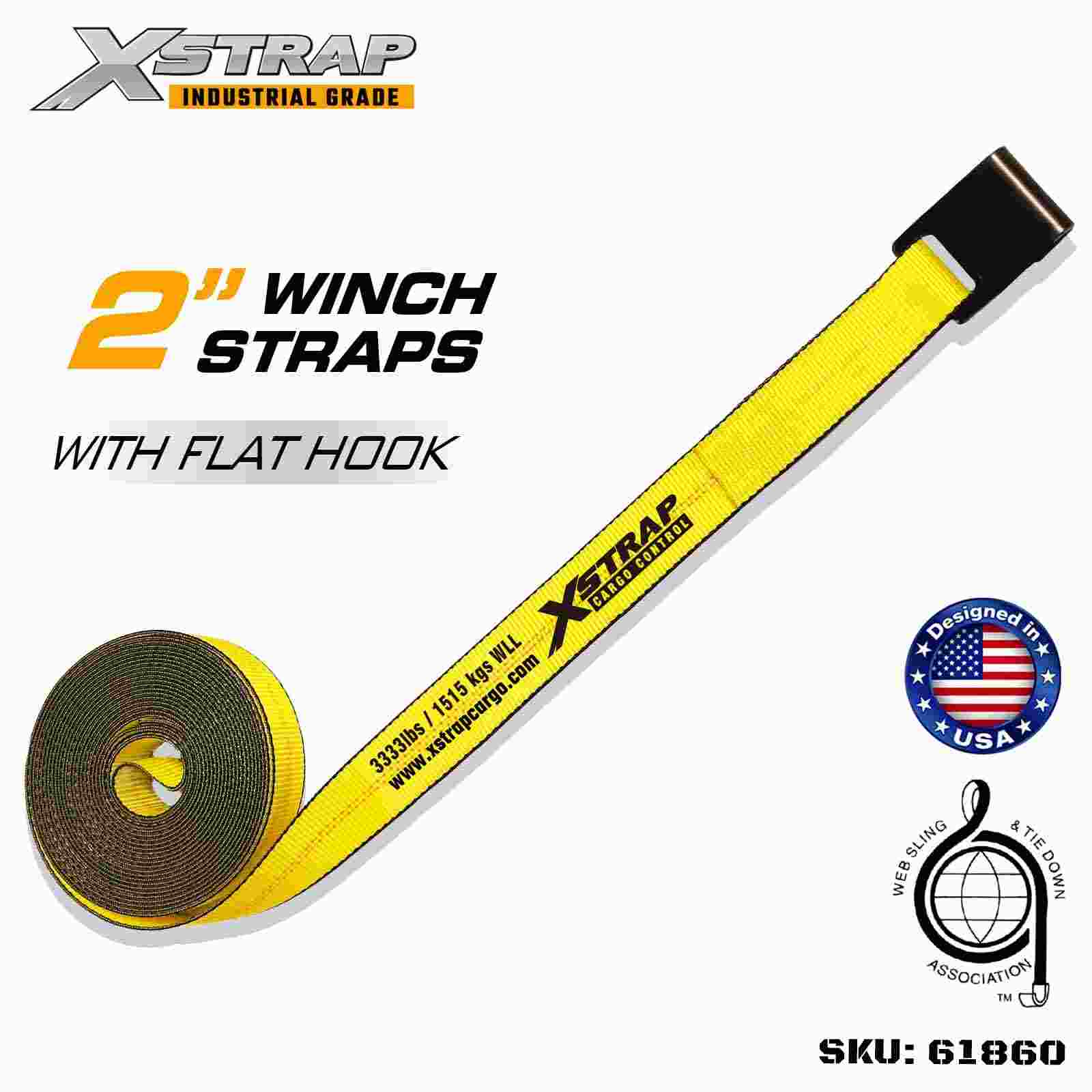
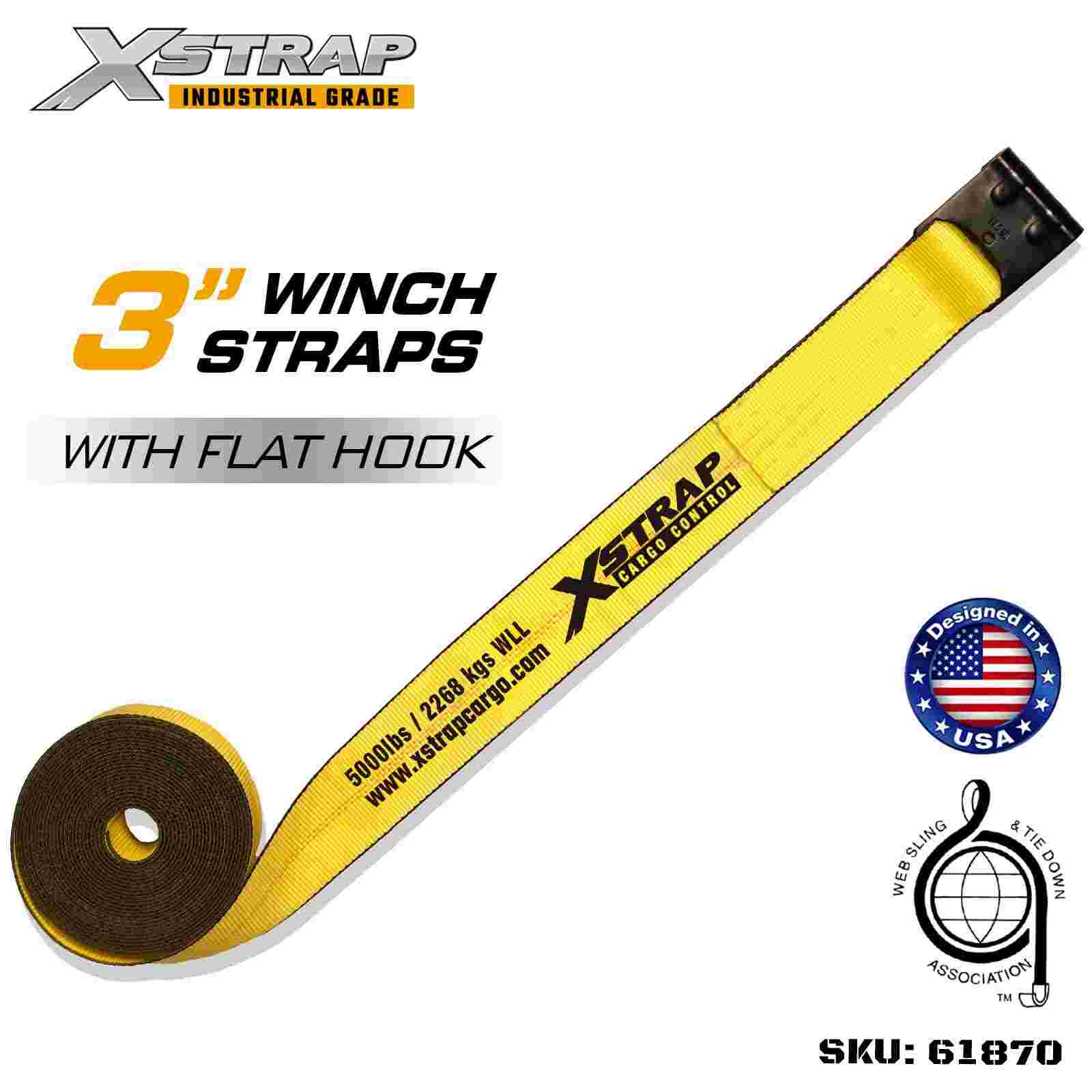
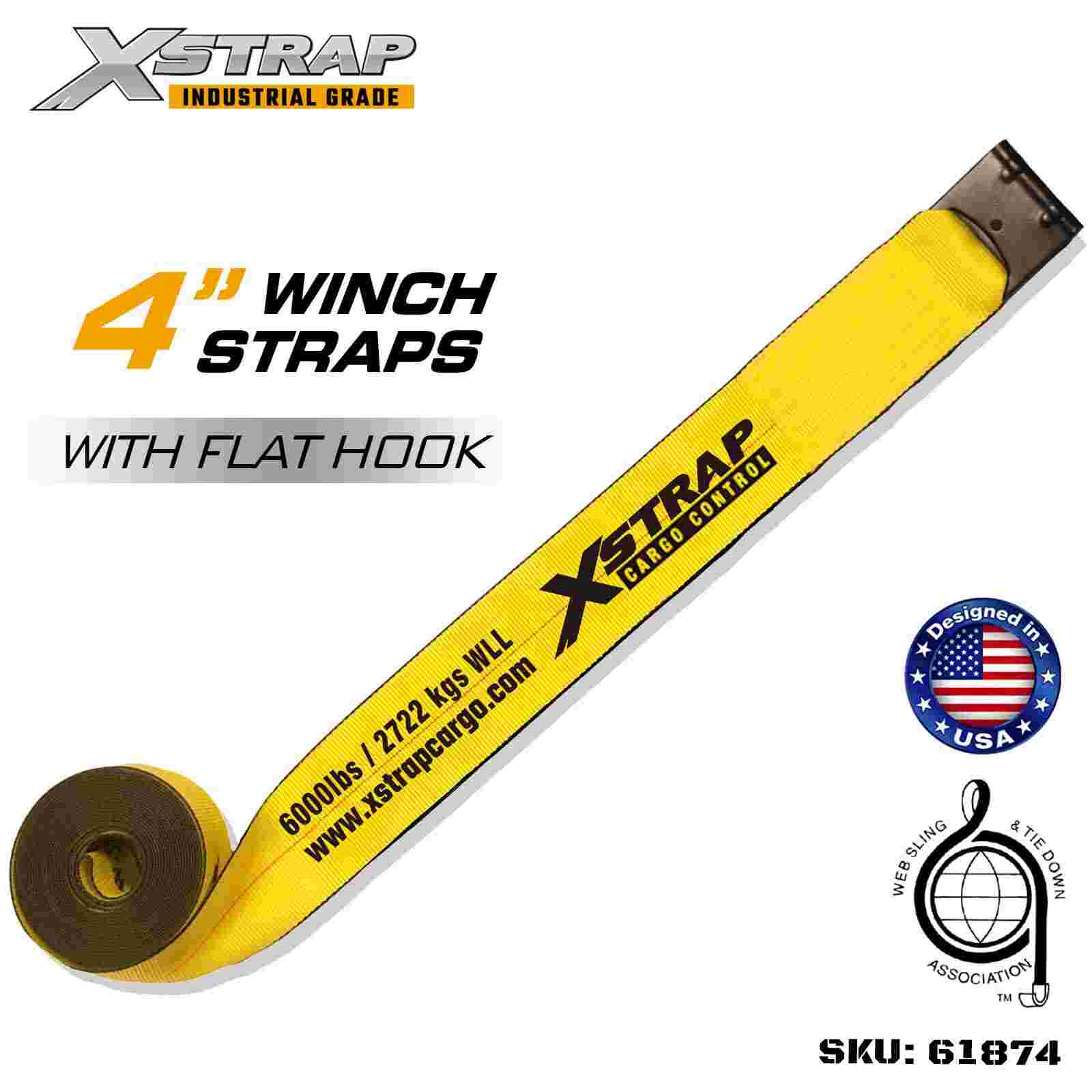
| Flat Hook | Suitable for thin, flat attachment points. | Edge rails of flatbed trailers. | Protects the rail edge and reduces webbing abrasion. |
Material Durability and Resistance
Industrial Tie Downs are often exposed to harsh environments. The durability of the webbing and hardware directly affects their lifespan and safety. Weather Resistance: Polyester has excellent water and Ultraviolet (UV) resistance. Nylon and polypropylene exposed to sunlight for long periods may degrade and weaken. Abrasion Resistance: Chafing of the webbing against the cargo, anchor points, or trailer edges is a primary cause of damage. Many high-quality Industrial Tie Downs feature edge protectors or sleeves on the webbing to enhance abrasion resistance. Abrasion can significantly reduce the WLL. Chemical Resistance: Polyester: Excellent resistance to most acids, oils, greases, and organic solvents. Nylon: Good resistance to alkalis, but susceptible to acid attack. Nylon straps should be avoided if the cargo involves acidic substances (like batteries or certain chemicals).
How to Use Industrial Tie Downs Properly
Even when choosing high-quality Industrial Tie Downs that meet WLL requirements, improper operation can lead to securement failure. Correct usage is key to safe transportation, particularly for high-tension devices like ratchet straps.
Step-by-Step Guide for Securing a Load
Here are the basic steps for securing cargo using a ratchet-style Industrial Tie Down:
- Preparation and Inspection:
- Check WLL: Confirm that the selected Industrial Tie Downs' total WLL meets or exceeds the regulatory requirements (usually 50% of the cargo weight).
- Check Condition: Inspect the webbing, ratchet, and fittings for any cuts, abrasion, breaks, or corrosion.
- Position Cargo: Ensure the cargo is centered and stable on the trailer, preferably snug against the front wall (if applicable).
- Position the Webbing:
- Run the webbing over the cargo, from an anchor point on one side (like a D-ring or rub rail) to the anchor point on the other side.
- Ensure Tie-Down Angle: Ideally, the strap should be tensioned at an angle between 30° and 60° to the horizontal surface of the deck. Angles too close to the horizontal provide poor securement.
- Install and Thread the Strap:
- Connect the end fitting of the ratchet mechanism to the anchor point.
- Thread the loose end of the webbing through the bottom of the ratchet axle and then out the top slot.
- Initial Tightening:
- Pull the loose end by hand until the strap is nearly taut, removing most of the slack.
- Apply Tension:
- Pump the ratchet handle back and forth to tighten the Industrial Tie Down. Apply enough tension to prevent the cargo from shifting during transport.
- Important Note: Do not overtighten. Excessive tension can damage the cargo or the strap itself. Stop when the webbing feels very firm and the ratchet becomes difficult to operate.
- Lock and Secure:
- Press the ratchet handle fully down until the ratchet locks into the closed position.
- Secure any excess loose webbing to prevent it from flapping at high speeds or getting caught in the wheels.
Ensuring Proper Tension
Appropriate tension is crucial for successful securement. The strap must be tight enough to exert a downward force on the cargo (friction) while preventing lateral and longitudinal movement.
| Tension Status | Description | Potential Risk | Inspection Method |
| Under-tensioned | The strap can be easily lifted off the cargo surface by hand. | Cargo is prone to shifting and sliding during turns or braking. | Check: The strap should fit snugly against the cargo and cannot be easily lifted with fingers. |
| Properly Tensioned | The strap conforms tightly to the cargo, and the ratchet is securely locked. | Optimal State. | Check: Gently attempt to shake the cargo; no noticeable slack should be felt. |
| Over-tensioned | The webbing or cargo edges are compressed, deformed, or damaged. | Damage cargo, Industrial Tie Downs may be damaged due to concentrated pressure. | Check: Avoid using auxiliary tools (like steel pipes) to increase ratchet tension. |
Avoiding Twists and Knots
When using Industrial Tie Downs, the webbing must strictly be kept free of twists or knots. Twists: Twists significantly reduce the WLL of the strap because tension is not distributed evenly across the full width of the webbing but is concentrated at the twist point. Twisted webbing also increases abrasion. Knots: Never tie a knot in the webbing to adjust the length or secure the slack. A knot can reduce the WLL of the strap by up to 50%, as tension concentrates at the sharp bends of the knot. Keep Flat: Always ensure the Industrial Tie Down lies flat against the cargo and anchor points to maximize its securing force and prolong its service life.
Safety Standards and Regulations
When using Industrial Tie Downs for commercial transport, compliance is as critical as safety. Many countries and regions have strict regulations governing cargo securement to prevent accidents.
DOT Regulations (Department of Transportation)
The US Department of Transportation (DOT), through the Federal Motor Carrier Safety Administration (FMCSA), issues detailed Cargo Securement Rules that apply to commercial motor vehicles engaged in interstate commerce.
Key DOT Cargo Securement Principles
| Rule Point | Description | Minimum Force Requirement |
| Securing Force Need | Sufficient Industrial Tie Downs must be used to prevent cargo movement in all directions. | 50% of the total cargo weight in securing force (sum of friction and tie-down force). |
| Braking Securement Force | Straps must withstand the maximum inertial force generated during forward braking. | Forward: 80% of the cargo weight |
| Lateral/Rearward Force | Straps must withstand the forces generated when the vehicle moves sideways and rearward. | Rearward: 50% of the cargo weight |
| Lateral: 50% of the cargo weight | ||
| Use of WLL | The securing capacity of all tie downs must be calculated based on their Working Load Limit (WLL). | Breaking Strength (BS) is strictly prohibited for compliance calculations. |
> DOT Compliance Requirement: If cargo is not secured by friction (i.e., solely by the tension applied by the tie downs), at least two straps must be used. There are also specific requirements for the number of straps for certain cargo lengths (e.g., for cargo over 10 feet long, an additional securement device is required for every 10 feet or fraction thereof).
CVSA Guidelines (Commercial Vehicle Safety Alliance)
The Commercial Vehicle Safety Alliance (CVSA) is a non-profit organization focused on improving commercial vehicle safety in North America. They publish the North American Standard Out-of-Service Criteria, which enforcement officers strictly follow during roadside inspections. CVSA Inspection Focus: Enforcement officers not only check if the number of Industrial Tie Downs meets the minimum DOT requirements but also examine the actual condition and method of use of the straps. Webbing Wear: Checking for cuts, tears, burns, or excessive abrasion on the webbing. Hardware Damage: Checking ratchets, cam buckles, and hooks for deformation, cracks, or corrosion. Labeling Requirement: The WLL must be clearly and legibly marked on the strap. Straps with missing or damaged labels are considered non-compliant. Consequences of Violation: If Industrial Tie Downs are found to be insufficient, damaged, or improperly secured, the driver or carrier may be issued a fine, and the vehicle may be ordered Out-of-Service until the issue is corrected, leading to severe transport delays and financial losses.
Manufacturer Guidelines
In addition to official regulations, adhering to the specific instructions provided by the manufacturer of the Industrial Tie Downs is also crucial.
| Compliance Type | Description | Importance |
| Rated WLL | The safe load limit provided by the manufacturer for the lifespan of the product. | Never exceed the WLL on the label, even if the strap appears to be in good condition. |
| Operating Instructions | Steps on how to properly thread, tension, and release the ratchet or cam buckle. | Ensures the mechanism is not damaged or jammed due to improper use. |
| Retirement Criteria | The manufacturer specifies the extent of wear, cuts, or hardware damage at which the Industrial Tie Down must be scrapped. | Ensures unsafe equipment is retired before a failure occurs. |
Maintenance and Inspection of Tie Downs
Regular maintenance and inspection are the most effective ways to prolong the lifespan of Industrial Tie Downs and maintain their rated Working Load Limit (WLL). Damaged tie downs no longer meet safety standards and must be immediately retired.
Regular Inspection Checklist
A pre-trip inspection should be conducted before every use of Industrial Tie Downs, supplemented by more thorough periodic deep inspections.
Webbing Inspection Points
| Check Item | Description and Potential Hazard | Example Retirement Criteria |
| Cuts and Tears | Any cuts on the edges or surface of the webbing caused by knives, sharp objects, or cargo. | Any cut deeper than 1/16 inch of the webbing thickness. |
| Abrasion | Fiber wear or breakage caused by repeated rubbing against anchor points or cargo surfaces. | Fiber wear or breakage covering more than 25% of the area in any one spot. |
| Burns and Melting | Damage caused by contact with hot objects (like exhaust pipes) or welding sparks. | Any degree of heat damage alters material strength and requires immediate retirement. |
| Chemical Damage | Fading or stiffening marks left after contact with acids, alkalis, oils, or solvents. | Webbing becomes stiff, brittle, or shows visible signs of corrosion. |
| Stitching Damage | Broken or loose stitching at the ends of the strap where it is sewn. | Any visible break in the stitching. |
Hardware Inspection Points
| Check Item | Description and Potential Hazard | Example Retirement Criteria |
| Ratchet/Cam Buckle | Check for cracks, deformation, bending, or excessive corrosion; ensure smooth operation. | Ratchet handle is bent and cannot be fully closed and locked. |
| End Fittings (Hooks) | Check J-Hooks, S-Hooks, etc., for widened openings, blunted tips, or fatigue cracks. | Hook opening is 10% or more wider than the original opening. |
| Rivets/Pins | Check for loose or missing rivets or pins that attach the webbing to the ratchet or the fitting to the webbing. | Any visible loose or missing fasteners. |
Identifying Damage and Retirement
Once any part of the Industrial Tie Down fails to meet safety standards, especially if the WLL label is missing or illegible, it must be immediately retired. > Retirement Procedure: To prevent damaged tie downs from being mistakenly reused, it is recommended to cut them into unusable pieces before safe disposal. Never attempt to repair damaged webbing, as any repair will fail to restore its original WLL.
Proper Storage Techniques
Correct storage can significantly prolong the lifespan of Industrial Tie Downs and reduce unnecessary damage.
| Storage Tip | Purpose and Benefit | |
| Clean and Dry | Remove dirt, grime, salt, or chemical residues before storage and ensure they are completely dry. | Prevents mildew growth, metal corrosion, and chemical degradation. |
| Neatly Coiled | Coil the webbing tightly and store it neatly to prevent it from knotting or twisting in storage. | Prevents unnecessary creases and abrasion, facilitating quick deployment next time. |
| Avoid Exposure | Store in a cool, dry, well-ventilated area, away from direct sunlight and high heat sources. | Prevents UV degradation and heat damage. |
| Isolate Chemicals | Avoid storing straps near fuel, battery acids, or other corrosive chemicals. | Prevents invisible damage from chemical vapors or leaks. |
Common Mistakes to Avoid
Even experienced operators can make mistakes due to oversight or misunderstanding when using Industrial Tie Downs. Avoiding the following common errors is crucial for ensuring effective cargo securement and transport safety.
Using Straps Beyond Their WLL
This is the most common cause of securement failure and accidents. Definition Error: Many mistakenly use the strap's Breaking Strength (BS) as the safe limit for actual use. As discussed, only the Working Load Limit (WLL) is the indicator for safe use. Calculation Error: Failure to correctly calculate the total required WLL. If the cargo weighs 20,000 lbs and you only use straps with a total WLL of 8,000 lbs, the securing force is insufficient and non-compliant. Avoidance Methods: Always use Industrial Tie Downs with clearly legible WLL labels. Follow FMCSA/DOT regulations, ensuring the total WLL of all securement devices meets the minimum percentage of the cargo weight required (e.g., typically 50%).
Improper Attachment
If the anchor points for the strap are poorly chosen or the connection method is wrong, the entire securement system can fail. Wrong Anchor Points: Connecting the strap to non-structural, fragile parts of the vehicle (e.g., trim pieces, non-load-bearing side rails). Avoidance Methods: Always connect to manufacturer-specified anchor points, D-rings, or structural components with known WLL. Mismatched Fittings: Using end fittings that do not properly match the trailer anchor point. For example, hooking a J-hook onto a very thin rail edge may allow the hook to detach during bumps. Avoidance Methods: Ensure the hook or fitting is fully seated or locked into the anchor point, with a secure connection. Connecting to Itself: Never connect the strap to itself (i.e., hooking the hook back onto the webbing), as this creates a knot or abrasion point and severely reduces its WLL.
Neglecting Inspections
Failing to conduct systematic inspections of Industrial Tie Downs is the main reason damaged or weakened equipment is put into use. Using Damaged Equipment: Using webbing with cuts, excessive abrasion, or heat damage. Even minor cuts can rapidly expand under sustained tension during transit, leading to strap failure. Avoidance Methods: Perform the thorough inspection described in Section 6 before every use. Any damaged strap must be immediately retired. Ignoring Tension Slack: During long-haul transport, especially when securing compressible cargo (like lumber or cardboard boxes), the load may settle under pressure, causing the Industrial Tie Downs to become slack. Avoidance Methods: Conduct a Check and Retension after a short distance (e.g., 50 miles) after starting the journey, and repeat this at every rest stop.
Avoiding Sharp Edges and Angles
Edge Contact: Allowing the Industrial Tie Down to directly contact sharp edges or rough surfaces of the cargo leads to webbing abrasion or cutting. Avoidance Methods: Always use edge protectors or corner guards at sharp edges. These protectors distribute pressure over a larger surface area while shielding the webbing from cuts. Wrong Angles: Tensioning the strap at an incorrect angle (e.g., an angle too small, close to the horizontal). Avoidance Methods: Whenever possible, position the strap perpendicular to the ground, ideal angle between 45° and 60°, to maximize the securing force. [Image illustrating optimal tie down angles for cargo securement]
Frequently Asked Questions (FAQ) About Industrial Tie Downs
To ensure you have a complete grasp of the core concepts related to the use and selection of Industrial Tie Downs, here are the answers to some common questions.
What is the difference between an Industrial Tie Down and a general-purpose strap?
| Feature | Industrial Tie Down | General-Purpose Strap |
| Purpose | Commercial transport, heavy industry, cargo securement requiring DOT compliance. | Household, recreational use (e.g., pickup truck bed, roof rack, camping). |
| WLL Range | Higher (typically $> 1,000$ lbs), and must be clearly labeled. | Lower, sometimes only the Breaking Strength (BS) is labeled. |
| Material | High-strength polyester or chain, focus on abrasion resistance and UV stability. | Nylon or polypropylene, lower strength and durability. |
| Fittings | Heavy-duty steel fittings, such as J-hooks, flat hooks, etc., with WLL matching the webbing. | Light-duty S-hooks, plastic buckles. |
Core Difference: Industrial Tie Downs are manufactured to strict WLL standards and safety factors, designed to withstand the dynamic loads and harsh environments of commercial transport.
How many Industrial Tie Downs are required for my load?
The number of required Industrial Tie Downs depends on the cargo weight, length, and the method of securement (friction-based or direct securement). According to DOT regulations, the first step is calculating the sum of the required WLL for all straps, which must be at least 50% of the cargo weight.
| Cargo Length | Minimum Number of Tie Downs (for non-friction-secured cargo) |
| ≤5 feet | 1 strap |
| >5 feet and ≤10 feet | 2 straps |
| >10 feet | 2 straps, PLUS 1 additional strap for every 10 feet of length or fraction thereof thereafter. |
Note: Even if the minimum quantity requirement is met, you must add extra Industrial Tie Downs if the total WLL is insufficient.
Can I repair a damaged Industrial Tie Down strap?
Absolutely not. Safety Risk: Any repair to the webbing or hardware (e.g., stitching the webbing or welding fittings) cannot restore its original, certified WLL. Compliance: Repaired straps no longer meet manufacturer or DOT standards, and using them will result in a violation during roadside inspections and could cause an accident. Correct Procedure: Upon finding any structural damage (cuts, melting, cracks, severe abrasion), the only correct action is immediate retirement (cut and dispose of it) and replacement with a new, WLL-compliant Industrial Tie Down.
How does the environment (e.g., cold weather) affect my Industrial Tie Downs?
Low Temperature Impact: Extreme cold can make Polyester webbing slightly stiffer, but it can also cause water on the ratchets and metal fittings to freeze, leading to difficult operation or seizing. Recommendation: In extreme cold, take extra time to ensure the ratchet mechanism operates smoothly, and recheck tension after tightening. Moisture and Salt Impact: Continuous moisture and road salt (de-icer) can accelerate the corrosion and rusting of metal hardware (hooks, ratchets), thereby weakening their strength. Recommendation: Industrial Tie Downs should be cleaned and dried immediately after transport, and metal parts should be lightly lubricated to prevent corrosion.
Popular Products
Recent News
 How Do You Choose the Right Utility Tie Downs and Bungee Cords for Your Needs
Introduction
When it comes to securing your gear for transport, storage, or organization, Utility Tie Downs and Bungee Cords are essential tools. Whether you're hauling heavy loads...
 The Ultimate Guide to Ratchet Straps: Choosing, Using, and Maintaining Them
Introduction to Ratchet Straps
What Are Ratchet Straps?
Ratchet straps, also known as tie-down straps or cargo straps, are a type of load securement tool widely used in transportat...
 How Can Ratchet Tie Down Standard Duty Straps Ensure Safe and Reliable Cargo Securement
What Are Ratchet Tie Down Straps and Why Are They Important for Cargo Securement?
Introduction to Ratchet Tie Down Straps
Ratchet tie down straps are essential tools for anyone inv...
 What are Ratchet Straps and how do they help you transport your items safely
What Are Ratchet Straps?
Ratchet straps, also known as ratchet tie-downs or cargo straps, are heavy-duty fastening tools designed to secure items during transportation. They consis...
 How to Properly Use Light Duty Ratchet Tie Downs for Maximum Load Security
Understanding the Basics of Ratchet Tie Down Light Duty Straps
Ratchet tie-down straps are a critical tool in the transportation, storage, and securement of goods. They are used to...
-
 +86-18112697781qindan355@gmail.comNo. 21 Yuefeng Road, Yangshe Town, Zhangjiagang City, Suzhou City, Jiangsu Province
 -
Quick Links
Social Media
-
OEM Partner
-


Copyright © 2025 Zhangjiagang SMK MFG. Co., Ltd. All rights reserved.
 Wholesale Tension Strap Manufacturers
Wholesale Tension Strap Manufacturers