
 English
 Français
 Español

Are 3 Inch Winch Straps Strong Enough for Your Boat Trailer
2026-10-23
3 inch winch straps carry the load whenever a boat has to be hauled onto a trailer, a machine has to be held down on a flatbed, or a heavy object has to stay put over a long road. The 3 inch boat trailer winch strap is the most visible version of the design: a wide polyester web that leaves the trailer winch drum, reaches the bow eye, and takes the full effort of pulling a hull up a slick ramp. A 3 inch boat winch strap spreads that effort across 76 mm of webbing instead of a thin cable or a single chain link, which protects gelcoat, keeps the bow eye aligned, and gives the user a clear visual record of wear.
76 mmWebbing width of 3 inch winch straps
2,270 kgTypical working load limit of a 3 inch polyester strap
6,800 kgTypical minimum breaking strength
3 : 1Common ratio between breaking strength and working load limit
Key Facts About 3 Inch Winch Straps
| Item | Typical specification |
|---|---|
| Webbing material | High-tenacity polyester filament |
| Width | 3 inch, about 76 mm |
| Working load limit (WLL) | About 2,270 kg (5,000 lb) |
| Minimum breaking strength | About 6,800 kg (15,000 lb) |
| Length for boat trailer winch use | 15 ft to 30 ft |
| Stretch at working load | About 3% to 5% |
| Service temperature range | About -40°C to 90°C |
| End fittings | Flat hook, snap hook with safety latch, D-ring, sewn loop |
| Main applications | Boat trailer winch pull, bow securing, flatbed load securing, equipment tie-down |
Figures describe common polyester construction. The label sewn into each strap states the exact rating, and that label always takes priority over any general table.
How 3 Inch Winch Straps Are Built
A 3 inch winch strap starts as continuous polyester filament yarn. Thousands of filaments are twisted and then woven on a narrow loom into a flat web about 76 mm wide and roughly 2 to 3 mm thick. Warp yarns run the length of the strap and carry almost all of the tension. Weft yarns lock the warp in place and keep the edges square. A tight selvage along both edges resists fraying when the strap rubs against a bow eye, a trailer fender, or a cargo corner.
Weave density decides how the strap behaves under load. A dense weave holds its width when tensioned, so pressure on a bow eye or a cargo edge stays even. A loose weave narrows under load and concentrates stress on the centre yarns. Well-made 3 inch winch straps keep a flat profile from the first pull to the last.
Finishing treatments adjust the surface. A light abrasion-resistant coating helps the web slide across rollers and gelcoat without catching, and UV stabilisers added to the yarn slow the breakdown caused by sunlight. A 3 inch boat winch strap that lives outdoors on an open trailer benefits from both treatments.
Webbing body
High-tenacity polyester, 76 mm wide, woven to a flat profile. The body carries the full working load along its length.
Stitching
Bonded polyester thread in a box-and-cross pattern at every loop and hook attachment. Stitch length and density match the rated breaking strength.
End fittings
Flat hooks, snap hooks, D-rings or sewn loops. Each fitting carries a rating equal to or above the web rating.
Protective sleeve
A slit nylon or PVC sleeve slid over high-wear zones near edges, corners, and bow eyes.
Anatomy of a 3 Inch Boat Trailer Winch Strap
A 3 inch boat trailer winch strap has two working ends. One end attaches to the winch drum, either through a drum slot with a sewn tail or through a looped eye on a drum pin. The other end carries the hook that engages the bow eye. Between the two ends the web runs across the trailer bunks or rollers, and that middle length takes the abrasion of daily launching and recovery.
The sewn label near the hook end records the working load limit, the material, the length, and a batch code. The batch code lets a user trace the strap to its production lot, which is useful when a strap needs to be matched with a replacement of the same rating.
| Component | Typical specification | Function |
|---|---|---|
| Web | Polyester, 76 mm wide, 2 to 3 mm thick | Carries tension from drum to bow eye |
| Drum end | Sewn tail or looped eye | Anchors the strap on the winch drum |
| Hook end | Snap hook with latch, or flat hook | Engages the bow eye of the hull |
| Stitch block | Box-and-cross pattern, contrast-colour thread | Joins web to hardware and shows damage early |
| Wear sleeve | PVC or nylon, 300 to 600 mm | Shields the strap near the bow roller |
| Rating label | WLL, length, material, batch code | Identifies the strap and its rated capacity |
Why a 3 Inch Width Suits Boat Trailer Winch Work
Width controls how force spreads across the contact surface. A 3 inch boat trailer winch strap puts a wider band against the bow roller and the bow eye than a 2 inch strap does, so pressure per square centimetre drops. Gelcoat, painted stems, and rubber bow stops all tolerate a wide web better than a narrow one.
Width also affects how the strap winds onto the drum. A 3 inch boat winch strap needs a drum wide enough to accept the full web without crowding the flanges. Trailer winches rated for heavier hulls are normally built with drums that fit this width, and a drum that is too narrow makes the strap stack unevenly and creep sideways under load.
| Width | Web width | Typical WLL | Typical breaking strength | Common use |
|---|---|---|---|---|
| 2 inch | About 50 mm | About 1,500 kg | About 4,500 kg | Small boats, light cargo |
| 3 inch | About 76 mm | About 2,270 kg | About 6,800 kg | Mid-size and larger boats, general flatbed securing |
| 4 inch | About 100 mm | About 2,450 kg | About 7,350 kg | Heavy machinery, large hulls |
Working Load Limit by Strap Width
Typical polyester webbing values. The step from 2 inch to 3 inch adds about 50% working capacity, while the step from 3 inch to 4 inch adds under 10%.
Polyester and Nylon in a 3 Inch Boat Winch Strap
Polyester and nylon look alike on a spool, yet the two fibres respond differently to water, sunlight, and tension. Polyester absorbs very little water, so a wet 3 inch boat winch strap keeps nearly all of its dry strength. Nylon takes on moisture, loses some strength when soaked, and stretches much further under the same pull.
Stretch matters on a ramp. A highly elastic strap stores energy while the winch cranks, and that stored energy releases suddenly if a hook slips or a link fails. A low-stretch polyester strap stores far less energy, which keeps the recovery steady and the failure behaviour milder.
| Property | Polyester | Nylon |
|---|---|---|
| Stretch at working load | About 3% to 5% | About 10% to 15% |
| Strength when wet | Nearly unchanged | Reduced by about 10% to 15% |
| Water absorption | Under 1% | Up to about 8% |
| UV resistance | Good | Moderate |
| Resistance to mild acids | Good | Poor |
| Best fit | Boat trailer winch pull, flatbed securing | Shock absorbing or towing recovery |
Strength Retained After UV Exposure
Polyester webbing Nylon webbing
Indicative laboratory trend for accelerated UV exposure, horizontal axis in hours. Real service life depends on climate, storage, and how often the strap sits in direct sun.
Stretch at Working Load
Lower stretch keeps the boat position predictable while the winch is cranking and leaves less stored energy in the strap.
Calculating the Pull on a 3 Inch Boat Trailer Winch Strap
The force a winch strap must carry depends on boat mass, ramp angle, and rolling resistance of the trailer bunks or rollers. A simple estimate is pull force = boat mass × (sin of ramp angle + rolling resistance × cos of ramp angle). With a rolling resistance coefficient of 0.05, a 3,000 kg boat on a 12° ramp needs a pull of roughly 770 kg-force, which is about one third of the rated capacity of a 3 inch boat trailer winch strap.
Steeper ramps raise the force quickly. The line chart shows how the pull climbs as a percentage of boat weight when the ramp angle moves from 4° to 14°.
Pull Force as a Percentage of Boat Weight
Calculated with a rolling resistance coefficient of 0.05. Keel friction, dry bunks, and marine growth on rollers can raise the figure.
| Boat mass | Pull at 8° ramp | Pull at 12° ramp | Pull at 14° ramp | Share of 2,270 kg WLL at 14° |
|---|---|---|---|---|
| 1,500 kg | About 283 kg-force | About 385 kg-force | About 436 kg-force | About 19% |
| 3,000 kg | About 566 kg-force | About 770 kg-force | About 871 kg-force | About 38% |
| 4,500 kg | About 849 kg-force | About 1,156 kg-force | About 1,307 kg-force | About 58% |
| 6,000 kg | About 1,132 kg-force | About 1,541 kg-force | About 1,742 kg-force | About 77% |
Shock loading
A sudden jerk on the strap can multiply the static pull by two to three times for a fraction of a second. A smooth, steady crank keeps the load near the table value. A 3 inch boat winch strap used with a 6,000 kg hull at a steep ramp has very little margin left for a jerk, so slow, even cranking is part of correct operation.
Choosing Strap Length and Drum Wraps
A 3 inch boat trailer winch strap has to reach from the drum to the bow eye with the boat fully floated at the end of the ramp, and still leave several full wraps on the drum. Wraps matter because friction between the layers of web on the drum holds the load. At least three full wraps should remain on the drum at the point of maximum extension.
| Boat length | Typical strap length | Notes |
|---|---|---|
| Up to 16 ft | 15 ft | Short trailers with a winch stand close to the bow |
| 17 ft to 20 ft | 20 ft | Allows for a longer launch distance on shallow ramps |
| 21 ft to 25 ft | 25 ft | Suits tandem-axle trailers and longer tongue distances |
| 26 ft and above | 30 ft | Check drum capacity before fitting the longer web |
Excess length is not harmless. A strap that is much longer than needed leaves a long unsupported tail that flaps, collects dirt, and tends to be run over by the trailer wheel. A strap that is too short has no wraps left at full extension. Measure from the drum to the bow eye with the boat in its farthest working position, then add the length required for three wraps and the hook tail.
Hooks, D-Rings, and End Fittings
The end fitting is the second most stressed part of a 3 inch boat winch strap. Rated hardware is stamped with its own working load limit, and that stamp has to match or exceed the web rating, because the weakest link sets the real limit of the assembly.
Snap hook with safety latch
The latch closes the hook throat and keeps the hook on the bow eye when the strap goes slack on a wave or a bump. Preferred for 3 inch boat trailer winch strap assemblies.
Flat hook
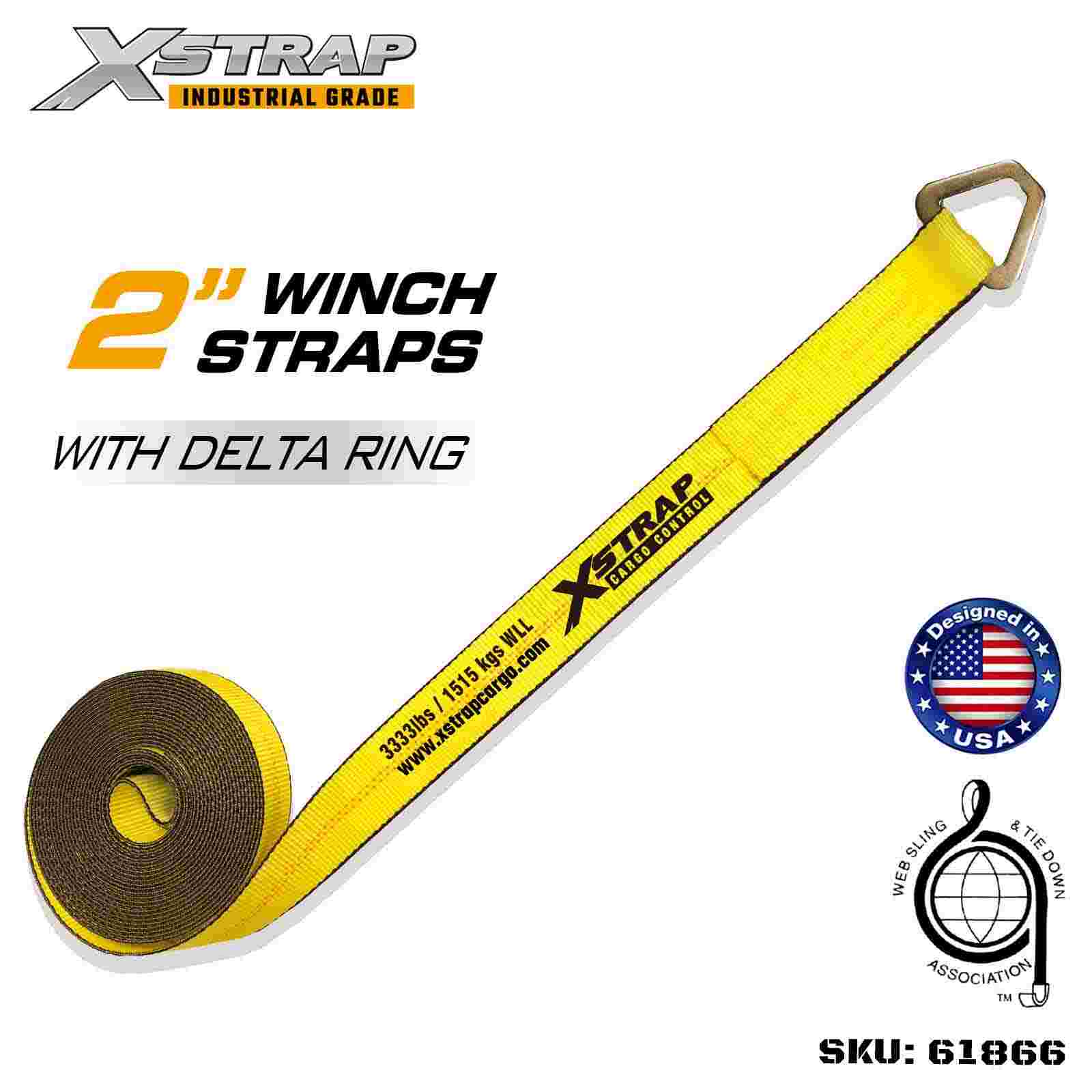
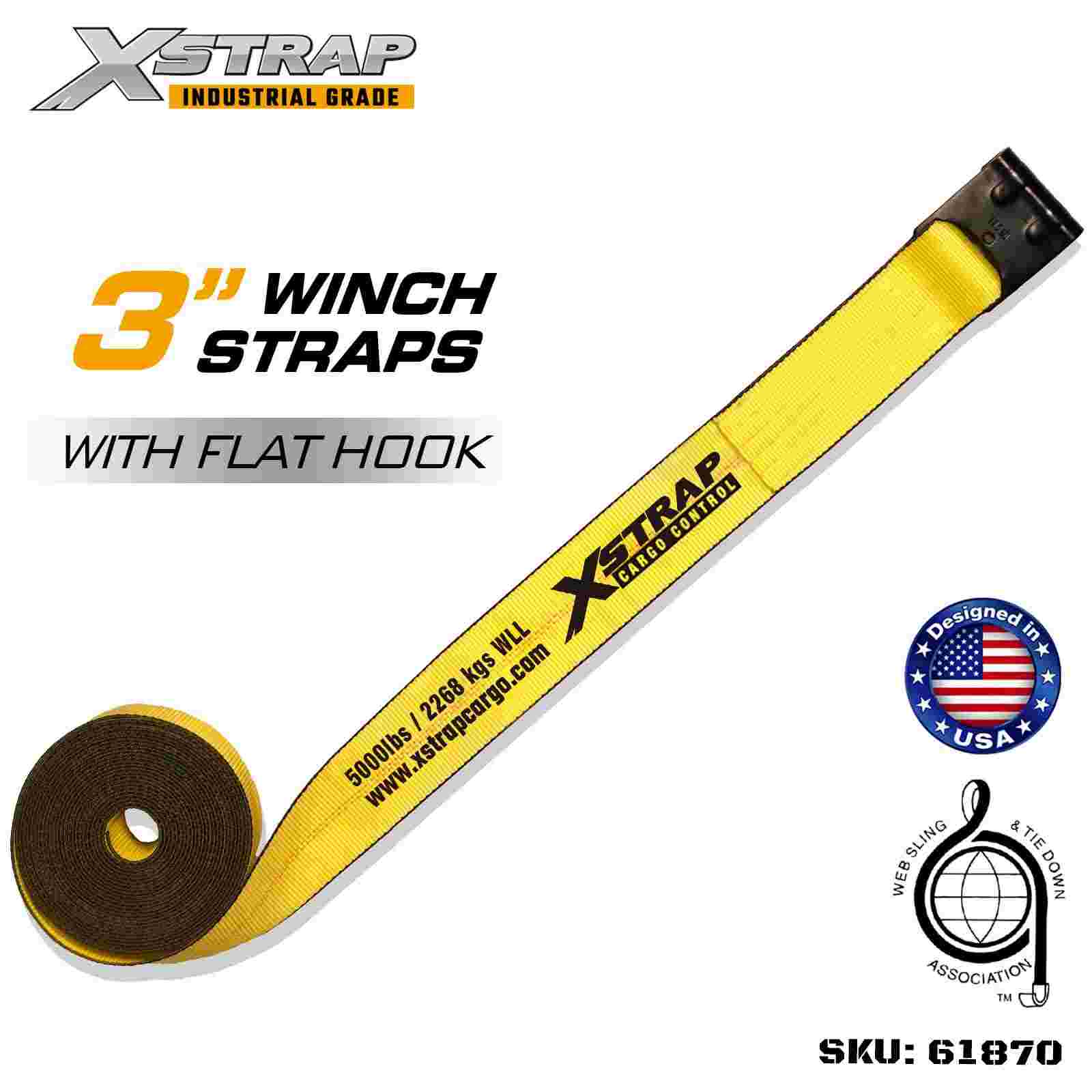
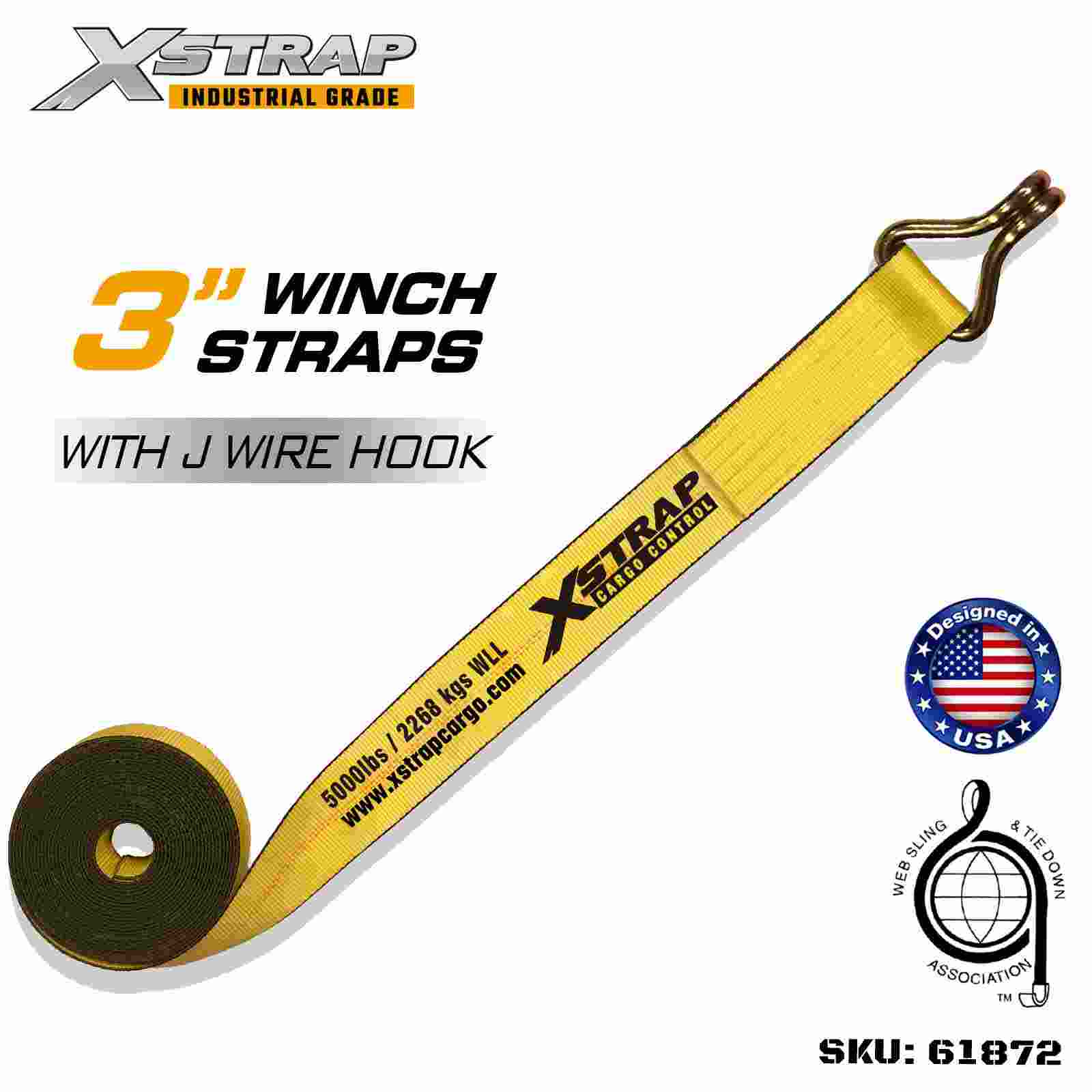
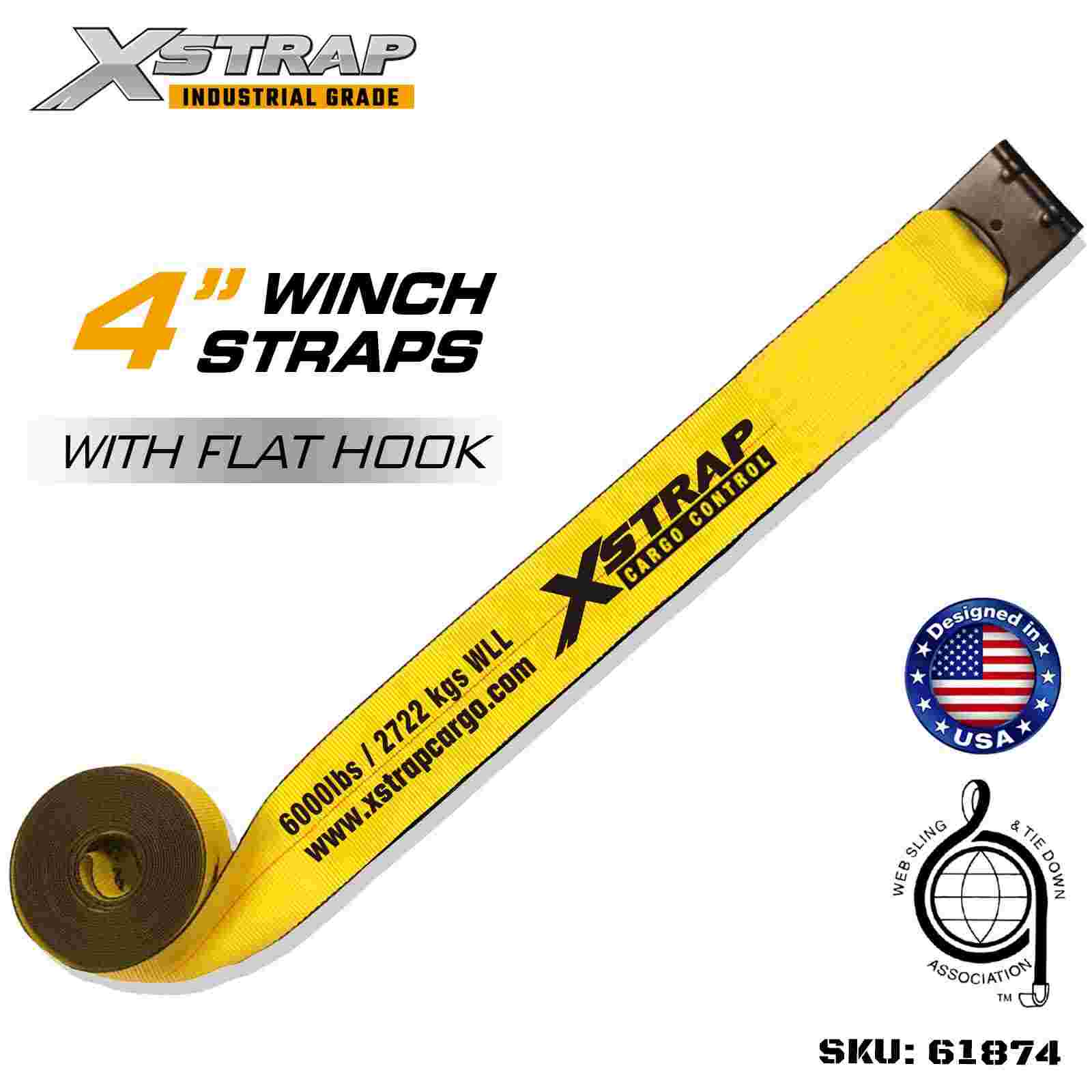
A wide, low-profile hook for flatbed rails and trailer stake pockets. Used where 3 inch winch straps secure cargo.
D-ring
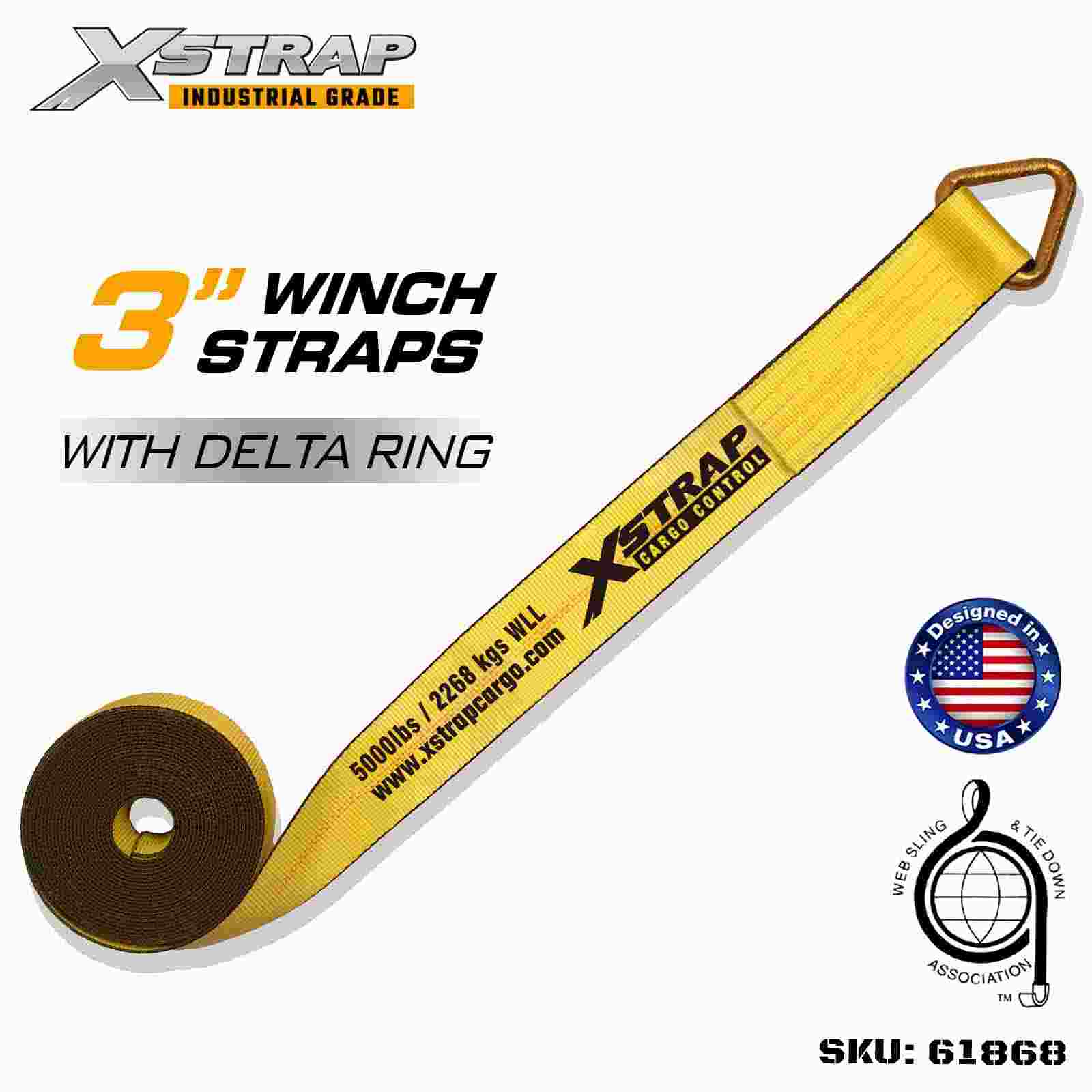
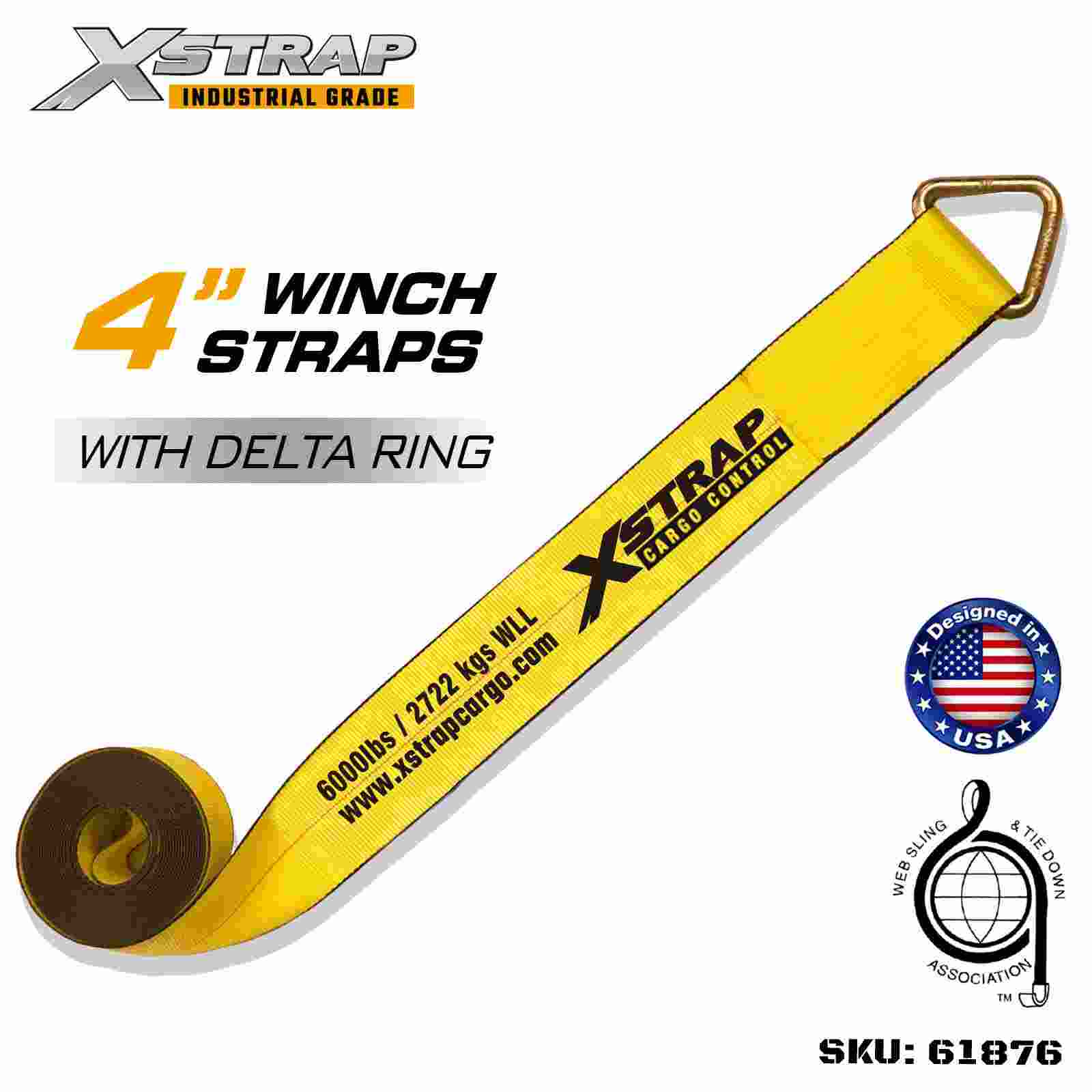
A closed ring that cannot open under load. Suited to fixed anchor points and to the drum end of a winch strap.
Sewn loop
A reinforced eye formed from the strap itself. Slides over posts, pins, and cleats and leaves no metal near a painted surface.
Stitching, Edge Finishing, and Proof Testing in Production
Manufacturing quality decides whether a rated strap behaves like its label. Each stage in the factory has a measurable output, and the stages repeat in the same order for every production lot.
Step 1
Webbing inspection
Width, thickness, and weight per metre are checked against the specification. Weaving faults such as skipped yarns are marked and cut out.
Step 2
Hot-knife cutting
A heated blade cuts and seals the web edge in a single motion, which stops fibres from unravelling at the cut.
Step 3
Stitching
Heavy-duty machines sew box-and-cross patterns with bonded polyester thread. Contrast-colour thread makes thread breaks easy to see in service.
Step 4
Hardware fitting
Hooks and rings are matched to the rating of the web and checked for deformation, burrs, and coating quality.
Step 5
Tensile sampling
Sample straps from each lot are pulled to breaking on a tensile machine. The result must reach the stated minimum breaking strength.
Step 6
Labelling and traceability
Each strap receives a label with WLL, length, material, and batch code, so the lot can be traced back to its test record.
Edge finishing deserves attention. Sealed edges prevent fraying, and a smooth edge reduces the chance of cutting into a neighbouring strap when two 3 inch winch straps run side by side on the same drum.
Installing a 3 Inch Boat Trailer Winch Strap
Step 1
Check the drum
Confirm that the drum is clean, free of burrs, and wide enough for 3 inch webbing. Remove any old strap remnants.
Step 2
Feed the tail
Pass the drum end through the slot or over the pin so the strap leaves the drum from the underside, in line with the direction of pull.
Step 3
Lay the first wraps
Wind the first wraps by hand with the web flat and square. Twists at this stage create bunching under load.
Step 4
Set the route
Run the strap across the bow roller without twisting. Position the wear sleeve over the contact zone.
Step 5
Engage the hook
Close the latch on the bow eye and tension the strap by hand before the first crank.
Step 6
Crank steadily
Wind with a smooth, even rhythm and keep the web level on the drum. A pause is better than a jerk.
Once the boat sits fully on the trailer, the winch lock engages and the strap holds the bow against the stop. A separate safety chain or secondary strap adds protection for road travel, so the primary 3 inch boat trailer winch strap does not carry the whole highway load alone.
Inspection Standards for 3 Inch Boat Winch Strap and Cargo Straps
Daily inspection takes less than a minute and removes most causes of strap failure. Run the strap through gloved hands from end to end and look at the stitching, the edges, and the hardware.
| Defect | What it looks like | Action |
|---|---|---|
| Cut or tear | Nick or slice in the web, especially at an edge | Remove from service |
| Abrasion | Fuzzy, shiny, or thinned patch where the web has rubbed | Remove from service when the web narrows or the weave is exposed |
| Burn or melt | Hard, glazed, or blackened area | Remove from service |
| Broken stitching | Loose, missing, or cut thread in a stitch block | Remove from service |
| Chemical damage | Discoloured or brittle patch | Remove from service |
| Bent or cracked hook | Opened throat, cracked weld, bent latch | Replace the hardware or the strap |
| Knot in the web | Any knot tied to shorten or join | Remove the knot and inspect for damage |
| UV hardening | Stiff web with faded colour | Replace when the web no longer flexes smoothly |
Care, Cleaning, and Storage
Recommended habits
Rinse the strap with fresh water after every saltwater outing. Wash with mild soap and a soft brush when dirt is visible. Hang to dry away from direct heat. Coil loosely and store in a dry, shaded, ventilated spot.
Habits to avoid
Do not dry a strap on a hot engine or beside a heater. Keep it away from battery acid, fuel, solvents, and bleach. Avoid dragging the strap across rough concrete or sharp metal edges.
Heat is the silent enemy of polyester webbing. Sustained temperatures above 90°C start to soften fibres, and direct flame or hot exhaust can melt a strap in seconds. A 3 inch boat trailer winch strap stored under a dark tarp in direct summer sun can reach temperatures high enough to speed up ageing, so shade and ventilation matter more than they seem.
Strap, Cable, and Chain on a Boat Trailer
Trailer winches accept straps, steel cable, and chain. Each material has a different profile for weight, hull protection, and visible wear.
| Feature | 3 inch polyester strap | Steel cable | Chain |
|---|---|---|---|
| Weight | Light | Medium | Heavy |
| Gelcoat protection | Excellent | Poor, can scratch | Poor, can chip |
| Corrosion | None | Rusts, strands corrode inside | Rusts without regular care |
| Stretch | Low | Very low | Very low |
| Visible damage | Easy to see | Hidden strand breaks | Link wear is visible |
| Handling | Soft, safe for hands | Can fray and cut skin | Heavy and cold to touch |
| Failure behaviour | Mild, low recoil | Whips back sharply | Can recoil heavily |
The soft handling and low recoil of a 3 inch boat winch strap suit family boaters who launch and recover without a second person on the ramp. Cable and chain remain in use where abrasion from rocky ramps is severe.
3 Inch Winch Straps for Flatbed and Equipment Securing
On a flatbed, 3 inch winch straps pull cargo down against the deck and resist sliding in braking, cornering, and bumps. Each strap hooks to a rail or stake pocket, crosses the load, and tensions through a winch on the trailer side.
A widely applied road-securing rule calls for the combined working load limit of the straps to equal at least half the weight of the cargo. Local regulations may ask for more, and the number of straps also depends on cargo length and on the number of tie-down points along it.
| Cargo mass | Aggregate WLL needed (50%) | Minimum count of 3 inch winch straps by WLL |
|---|---|---|
| 1,000 kg | 500 kg | 1 |
| 2,500 kg | 1,250 kg | 1 |
| 5,000 kg | 2,500 kg | 2 |
| 8,000 kg | 4,000 kg | 2 |
| 12,000 kg | 6,000 kg | 3 |
| 20,000 kg | 10,000 kg | 5 |
Counts reflect rated capacity only. Most loads require at least two straps to prevent rotation, and longer cargo needs additional straps along its length.
Edge protection is essential. Steel plates, angle iron, and crate corners can slice polyester webbing under tension. Corner guards or wear sleeves keep the web off the sharp edge. Winch straps are tie-down equipment. They are not rated for overhead lifting, and a lifting operation needs purpose-made lifting slings with their own rating.
Water Conditions and Climate
Saltwater
Salt crystals form inside the weave as the strap dries and work like fine sandpaper against fibres. Rinsing with fresh water after each trip washes the crystals out and protects the 3 inch boat winch strap and its hardware.
Freshwater and algae
Algae and mud cling to wet webbing and hide cuts. A quick brush and rinse keeps the surface readable for inspection.
Cold weather and ice
A wet strap can freeze stiff on a cold morning. Frozen web should be thawed slowly at room temperature before winding, because forcing a stiff strap onto the drum can crack fibres.
Troubleshooting 3 Inch Winch Straps
| Problem | Likely cause | Correction |
|---|---|---|
| Strap slips on the drum | Fewer than three wraps, or oily web | Add wraps, clean the web and drum surface |
| Strap bunches to one side | Drum too narrow or twisted web | Unwind, flatten the web, rewind squarely |
| Hook jumps off the bow eye | Slack strap and open latch | Close the latch and keep light tension during transport |
| Web fuzzes near the bow roller | Abrasion from a dry or dirty roller | Clean the roller and fit a wear sleeve |
| Strap fades and stiffens | UV ageing from long sun exposure | Replace the strap and store it in the shade |
| Ratchet or winch jams | Dirt, salt, or corrosion in the mechanism | Clean, lubricate, and test before the next outing |
Frequently Asked Questions About 3 Inch Winch Straps
What is a 3 inch boat trailer winch strap used for?
It connects the trailer winch to the bow eye of a boat and pulls the hull onto the trailer during recovery. It also holds the bow against the stop while the trailer is on the road.
How strong is a 3 inch boat winch strap?
A typical polyester version has a working load limit near 2,270 kg and a minimum breaking strength near 6,800 kg. The sewn label gives the exact figures for each strap.
Is polyester or nylon better for 3 inch winch straps on a boat?
Polyester suits boat use better because it stretches less, absorbs very little water, and holds strength when wet. Nylon stretches more and loses some strength in water.
How many wraps should stay on the winch drum?
At least three full wraps should remain on the drum at the point of maximum extension. The friction between the layers holds the load.
Can 3 inch winch straps be used for lifting?
No. Winch straps are tie-down equipment. Overhead lifting requires slings that are rated and marked for lifting.
How long should a 3 inch boat trailer winch strap be?
Common lengths run from 15 ft to 30 ft. Measure from the drum to the bow eye at the farthest working position, then add three wraps and the hook tail.
When should a 3 inch boat winch strap be replaced?
Replace it after any cut, burn, chemical damage, broken stitching, bent hardware, or stiff UV-aged web. A strap that has taken a severe shock load deserves replacement even when it looks intact.
Can one set of 3 inch winch straps serve both cargo and boat recovery?
Cargo use exposes straps to sharp edges, oil, and road grime. A dedicated 3 inch boat trailer winch strap kept clean and dry keeps its inspection record simple and its web in better condition.
Popular Products
Recent News
 How Do You Choose the Right Utility Tie Downs and Bungee Cords for Your Needs
Introduction
When it comes to securing your gear for transport, storage, or organization, Utility Tie Downs and Bungee Cords are essential tools. Whether you're hauling heavy loads...
 The Ultimate Guide to Ratchet Straps: Choosing, Using, and Maintaining Them
Introduction to Ratchet Straps
What Are Ratchet Straps?
Ratchet straps, also known as tie-down straps or cargo straps, are a type of load securement tool widely used in transportat...
 How Can Ratchet Tie Down Standard Duty Straps Ensure Safe and Reliable Cargo Securement
What Are Ratchet Tie Down Straps and Why Are They Important for Cargo Securement?
Introduction to Ratchet Tie Down Straps
Ratchet tie down straps are essential tools for anyone inv...
 What are Ratchet Straps and how do they help you transport your items safely
What Are Ratchet Straps?
Ratchet straps, also known as ratchet tie-downs or cargo straps, are heavy-duty fastening tools designed to secure items during transportation. They consis...
 How to Properly Use Light Duty Ratchet Tie Downs for Maximum Load Security
Understanding the Basics of Ratchet Tie Down Light Duty Straps
Ratchet tie-down straps are a critical tool in the transportation, storage, and securement of goods. They are used to...
-
 +86-18112697781qindan355@gmail.comNo. 21 Yuefeng Road, Yangshe Town, Zhangjiagang City, Suzhou City, Jiangsu Province
-
Quick Links
Social Media
-
OEM Partner
-


Copyright © 2025 Zhangjiagang SMK MFG. Co., Ltd. All rights reserved.
 Wholesale Tension Strap Manufacturers